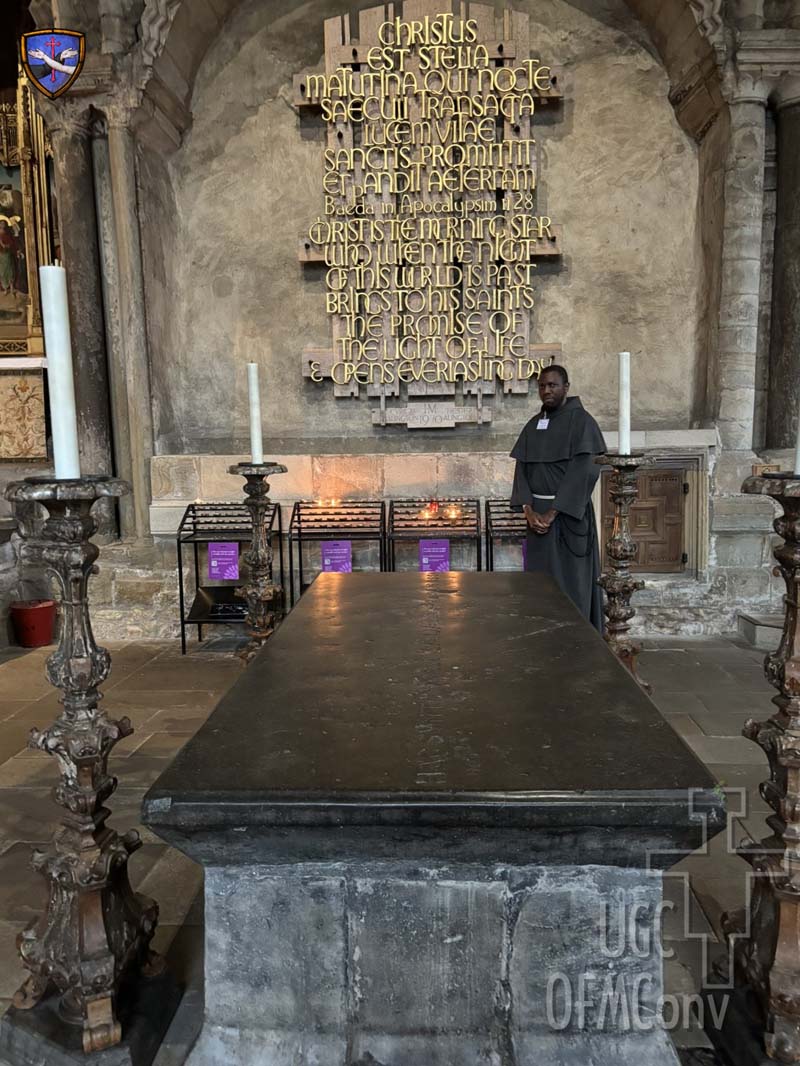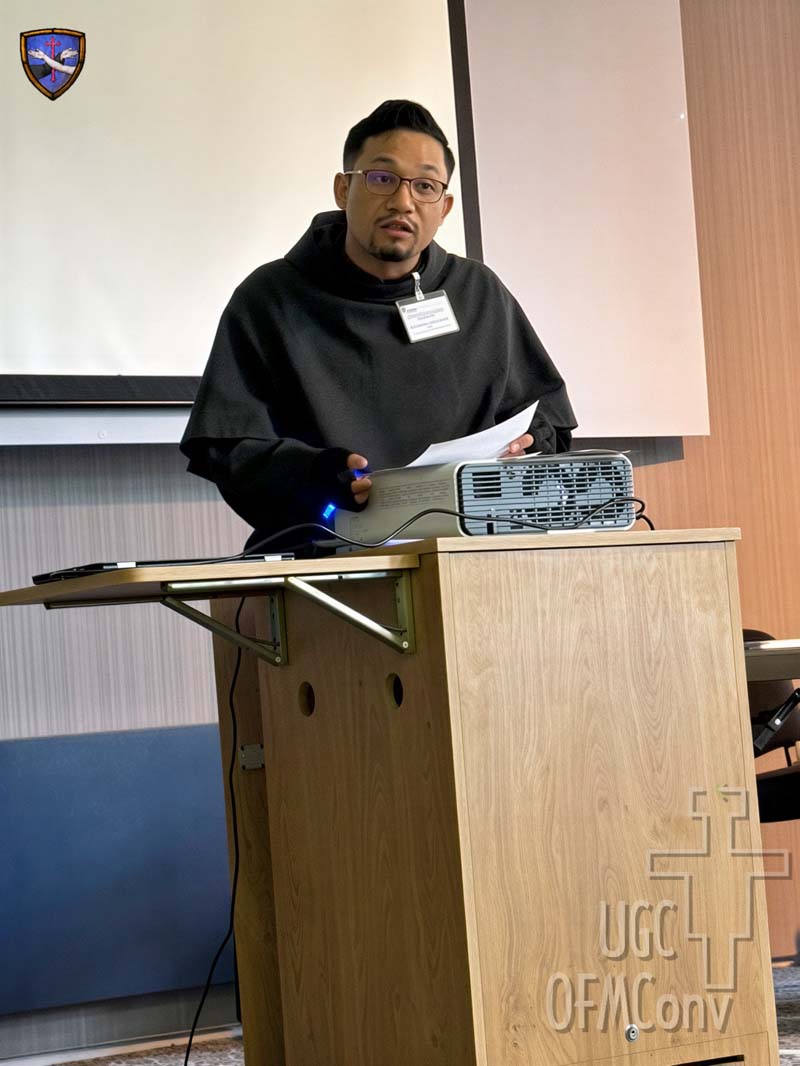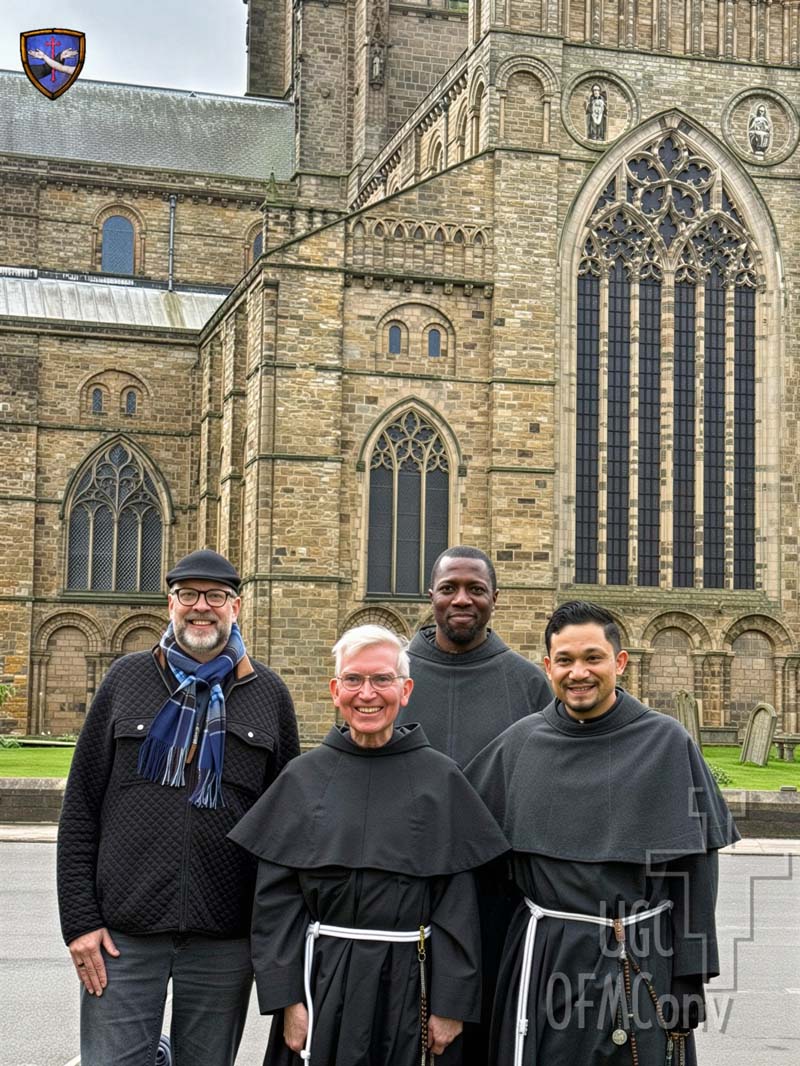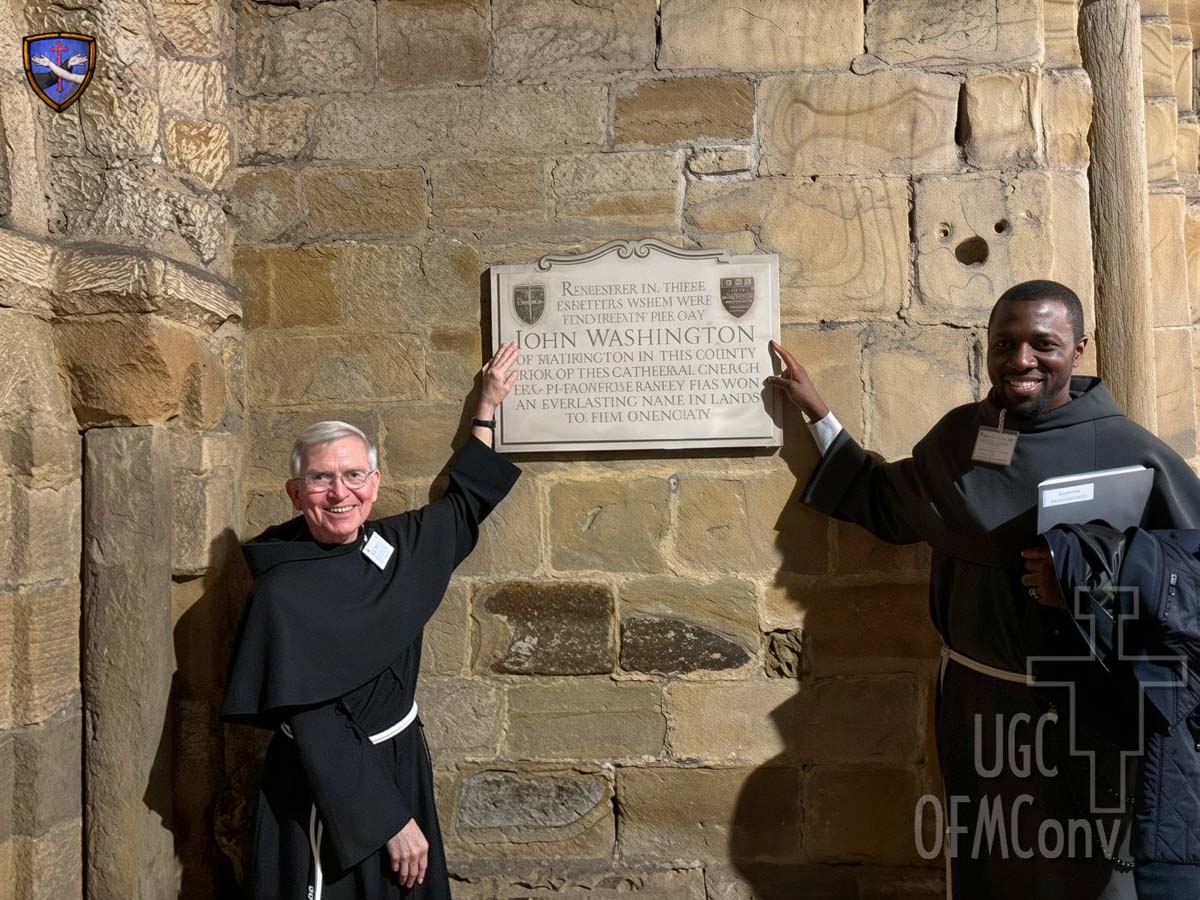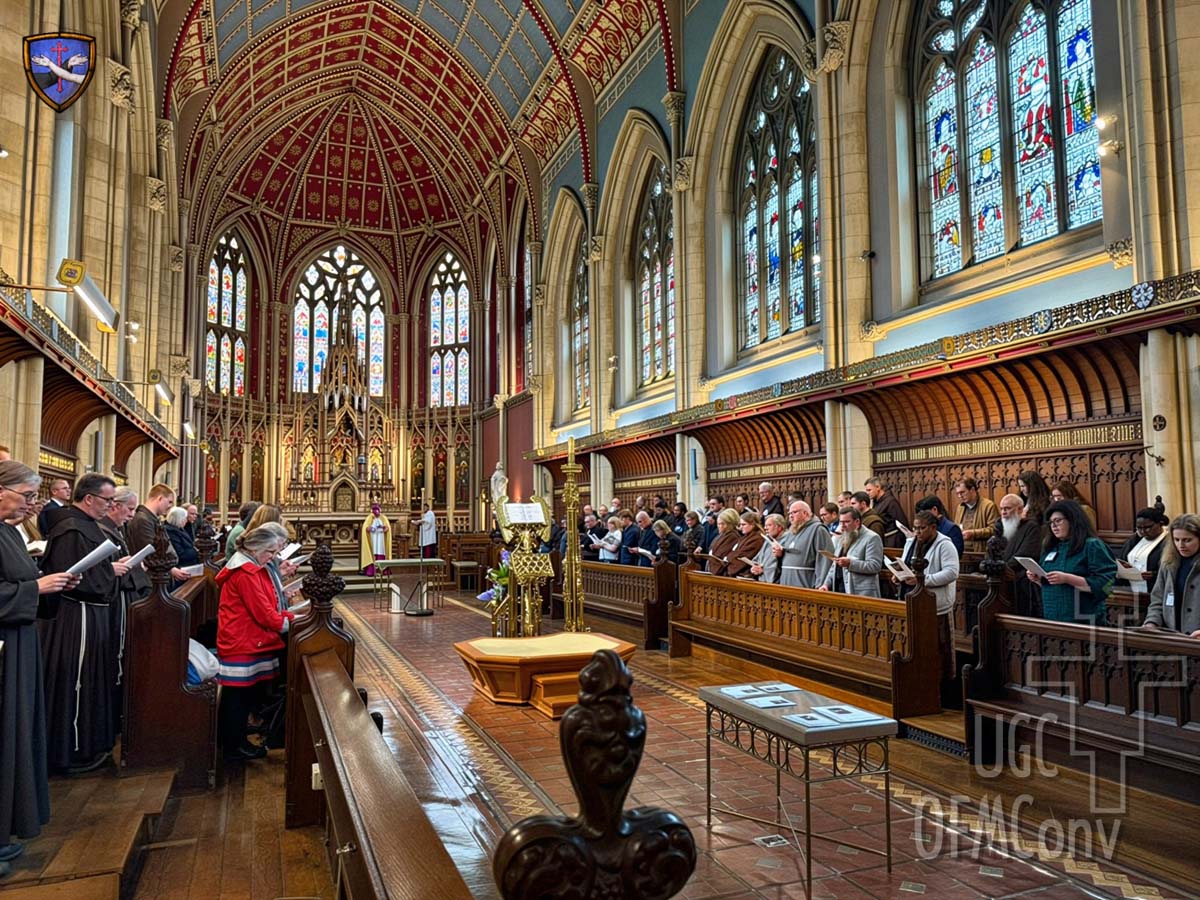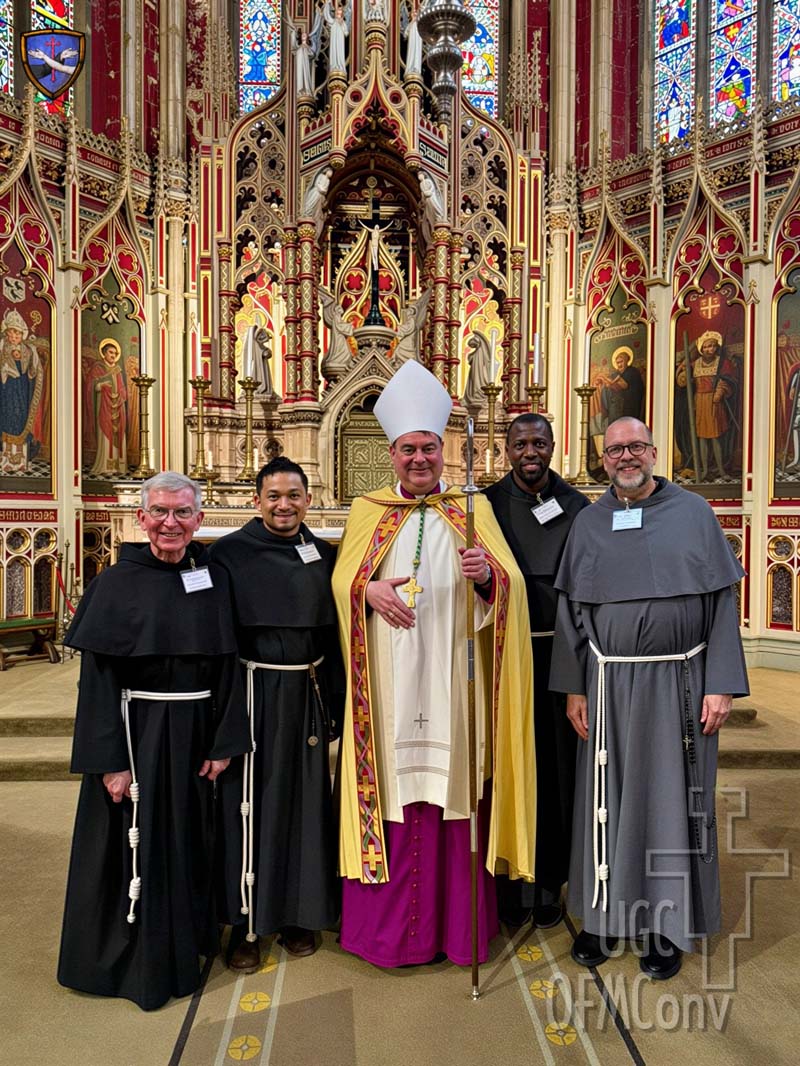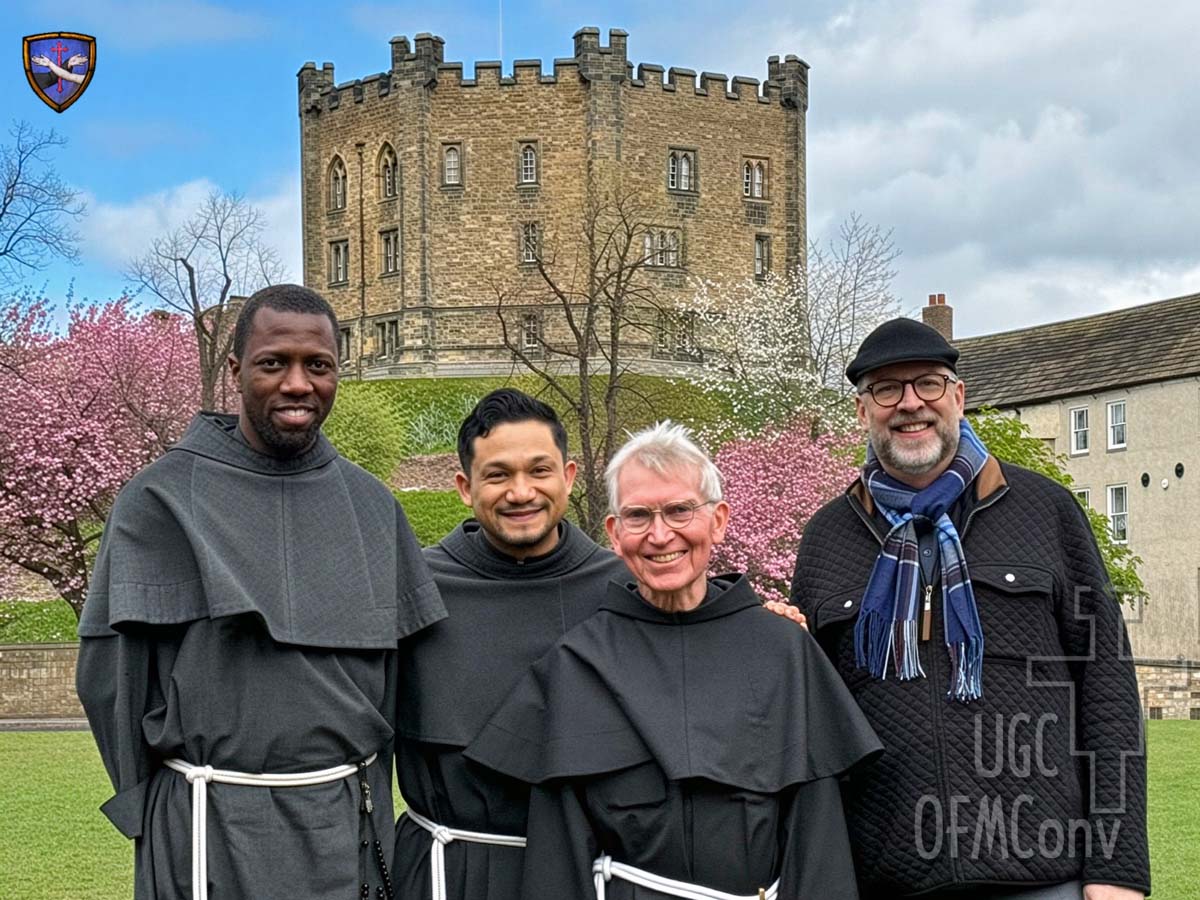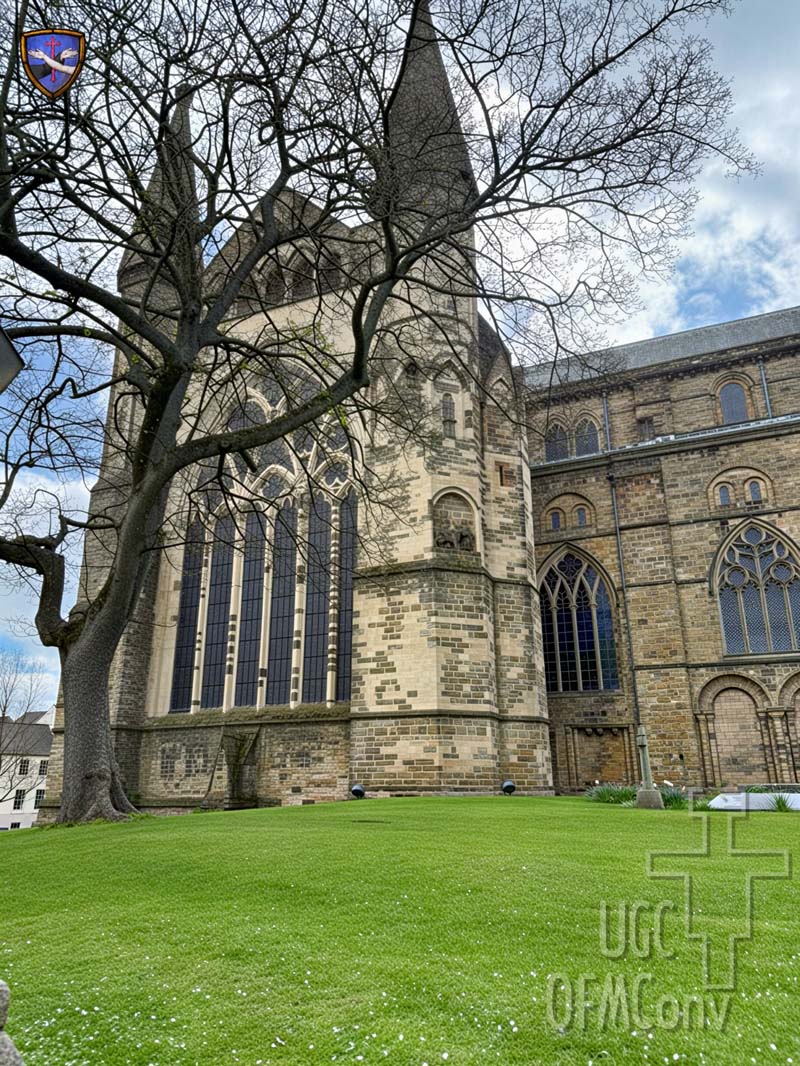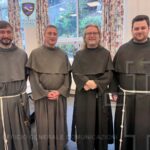



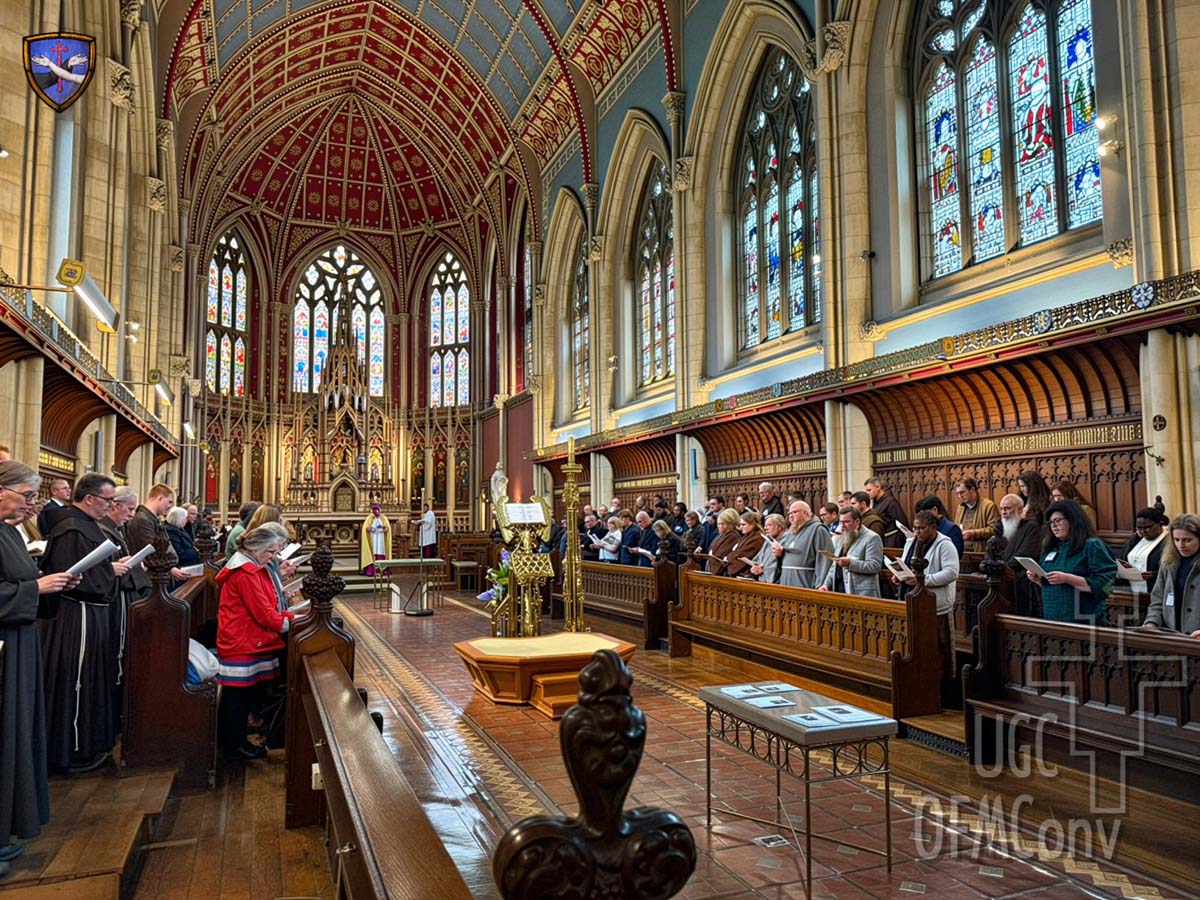
On April 14-16, 2026, Durham University in Great Britain welcomed 150 Franciscans―friars, sisters, laity, and students―from around the world for its International Franciscan Studies Conference. Among those present were four friars from the Province of Our Lady of the Angels in the USA: Cristofer FERNANDEZ, Antonio MOUALEU, Michael LASKY, and James MCCURRY. They took on various roles during the gathering. The conference combined scholarship, fraternity, and a clear sense of mission, while also marking an important institutional milestone for the Franciscan intellectual tradition.
A central focus of the conference was the recent inauguration of the Duns Scotus Chair, a professorial post now held for the first time by Dr. Billy CROZIER. It’s establishment marks a major development for Franciscan studies at Durham University’s Center for Catholic Studies. The first three courses being taught are The Thought of St. Bonaventure, Female Franciscan Mystics, and a distance-learning overview of the theological and spiritual “Stars of the Franciscan Tradition.” Together, they point to the breadth of the Franciscan heritage and the intention to make it accessible to students and scholars in multiple settings.
The financial backing for the Chair was also noteworthy. The Province of Our Lady of the Angels in the USA contributed $250,000 to the endowment, while even larger gifts—totaling £2.2 million—came from the Capuchin Franciscans, the Friars Minor, and several women’s Franciscan congregations across the English-speaking world. That support ensures that the Chair will not be a temporary initiative, but a lasting academic foundation. As part of the CCS Trust, the endowment is fully legally protected, ensuring that the Chair will endure for centuries to come. This permanence matters because the Chair serves a dual purpose. First, it aims to foster the Franciscan charism and transmit it to future generations. Second, it grounds that charism in the 800-year-old intellectual tradition of the Franciscan movement. In this way, the Chair does more than honor the past: it creates a stable foundation for the ongoing study, development, and faithful transmission of the Franciscan tradition.
Dr. CROZIER noted the strong appeal that the thought of St. Bonaventure and Blessed Duns Scotus is currently having among undergraduate and graduate university students. He also affirmed St. Bonaventure’s conviction that all learning is an exercise of love. In that spirit, he described the Franciscan intellectual tradition as being “at the service of love, evangelization, and peace-making.”
This is a fitting summary of the vision that guided the conference as a whole. Franciscan study is not merely about preserving texts or ideas, but about serving the Gospel and forming minds and hearts for the Church and the wider world.
Two of the friars from the Province of Our Lady of the Angels in the USA also contributed short lectures that added a concrete theological and pastoral dimension to the conference.
Friar Cristofer FERNÁNDEZ lectured on “Sister Mother Earth, Sister Death and Transfigured Franciscan Ecology.” In it, he reimagined Sister Death not only as a peaceful presence within the natural order of the world, but as a grieving witness of the desecration of Sister Mother Earth. He described creation as suffering through the distortion of its natural processes by human sin and broader structural harm. Within this Franciscan interpretation, the suffering of creation―visible at the frontlines of climate change and environmental degradation―forms a shared passion narrative in which Sister Death herself weeps alongside all creatures.
He also called for Franciscan prophetic witness and creative engagement across many spheres of life, including the Church, the United Nations, classrooms, local communities, and boardrooms. The aim is to transfigure our technocratic age into one marked by humble kinship and care for the planet. He also urged Franciscans, both scholars and ministers, to pay attention to emerging fields such as eco-theology, pastoral care, and caring for creation.
Friar Michael LASKY, the General Delegate for Justice Peace and Integrity of Creation (JPIC), gave a brief lecture on “Franciscan Mariology in Mosaic: The Apse of Santa Maria Maggiore and the Canticle of Creation.” In it, he examined how the apse mosaic of the Basilica of St. Mary Major in Rome reflects a profound development in Marian devotion within the Franciscan tradition. Commissioned by Friar-Pope Nicholas IV and executed by Friar Jacopo TORRITI, the mosaic was presented as a visual expression of Franciscan Mariology, deeply rooted in St. Francis’ Canticle of the Creatures and in the Franciscan understanding of the relationship between creation, humanity, and the divine. Friar Michael’s lecture highlighted the mosaic as a theological statement as well as a work of art—one that presents creation, redemption, and the role of the Blessed Virgin Mary within the cosmic order, inviting both medieval and modern pilgrims to respond to divine love with Mary’s wholehearted “yes.”
The conference also highlighted the broader cultural and spiritual significance of the Franciscan tradition, showing that Franciscan thought remains alive, not only in historical memory, but also in current scholarship, teaching, and formation. The inauguration of the Duns Scotus Chair is especially important in this regard: it offers a permanent academic setting in which the Franciscan intellectual tradition can be rigorously studied and transmitted with confidence.
The gathering concluded fittingly with prayer led by Friar James MCCURRY. That closing moment captured the spirit of the entire conference., which was not simply an academic event, but a Franciscan act of remembrance, gratitude, and hope—affirming that study, when rooted in charism and prayer, can truly serve love, evangelization, and peace-making.
Friar Michael LASKY