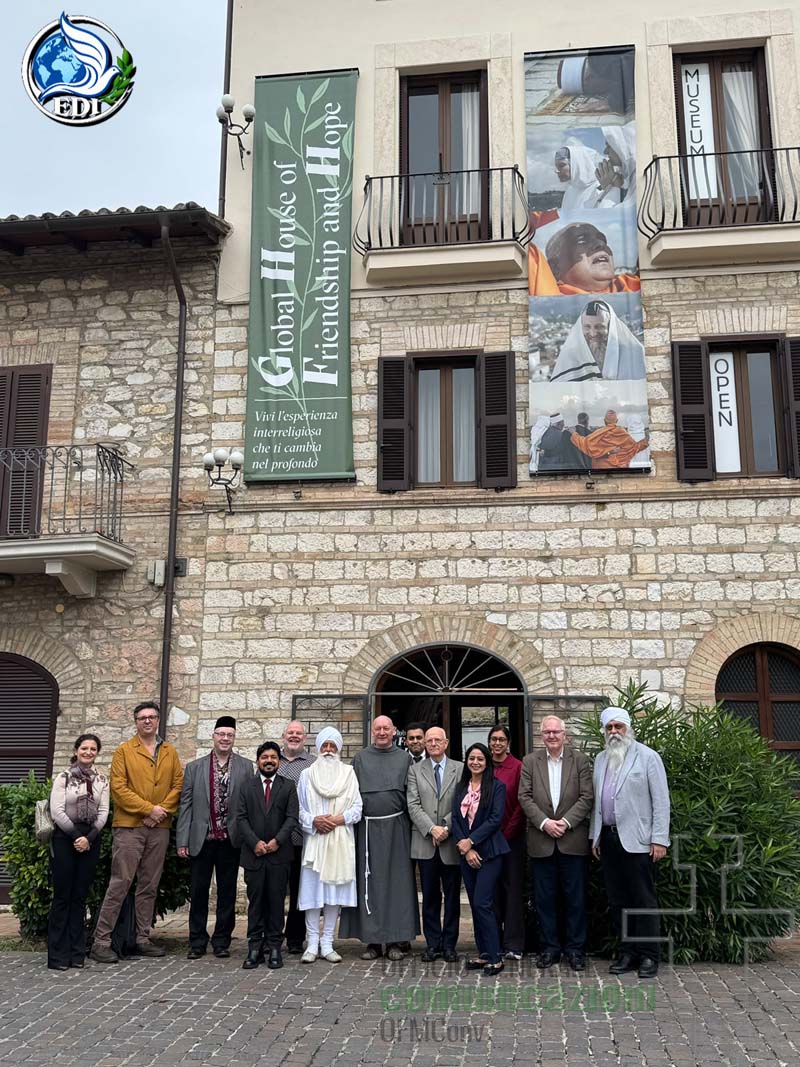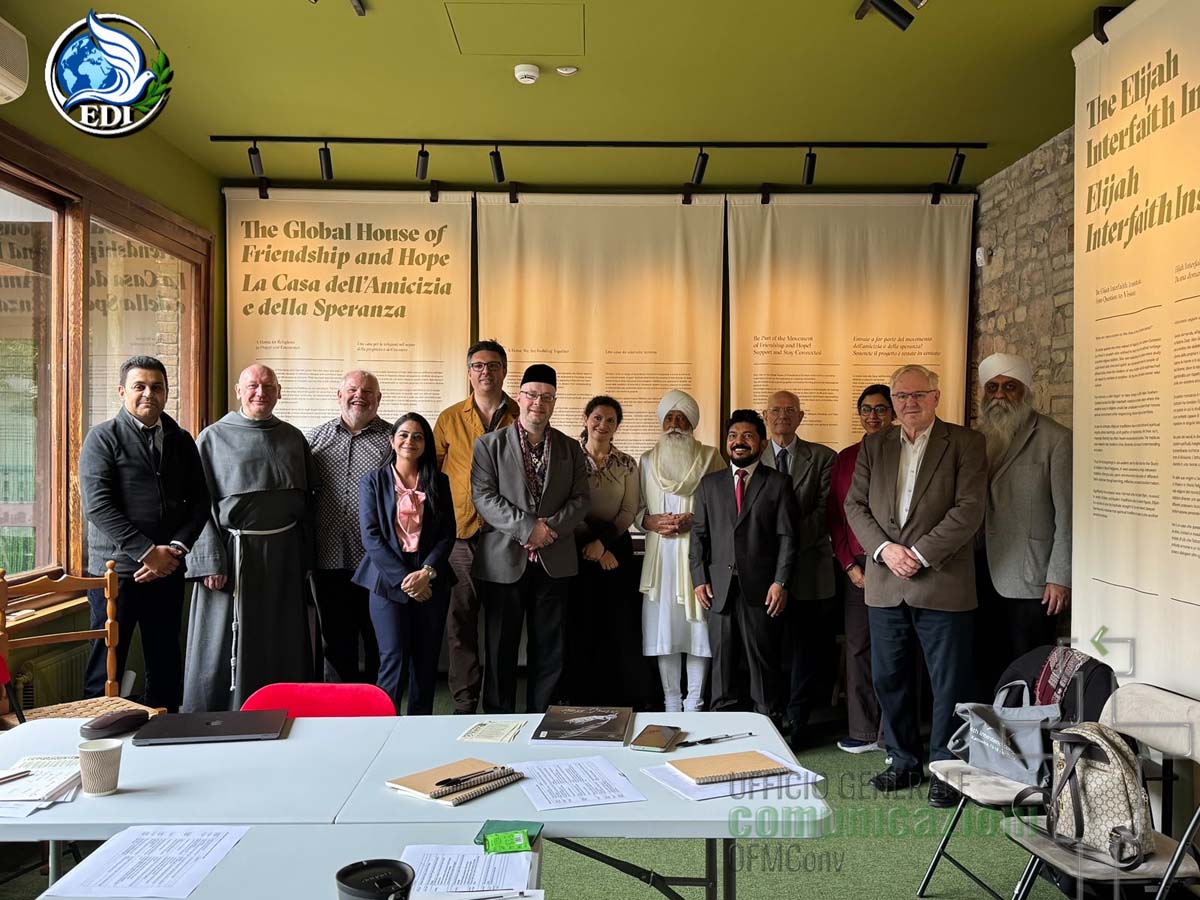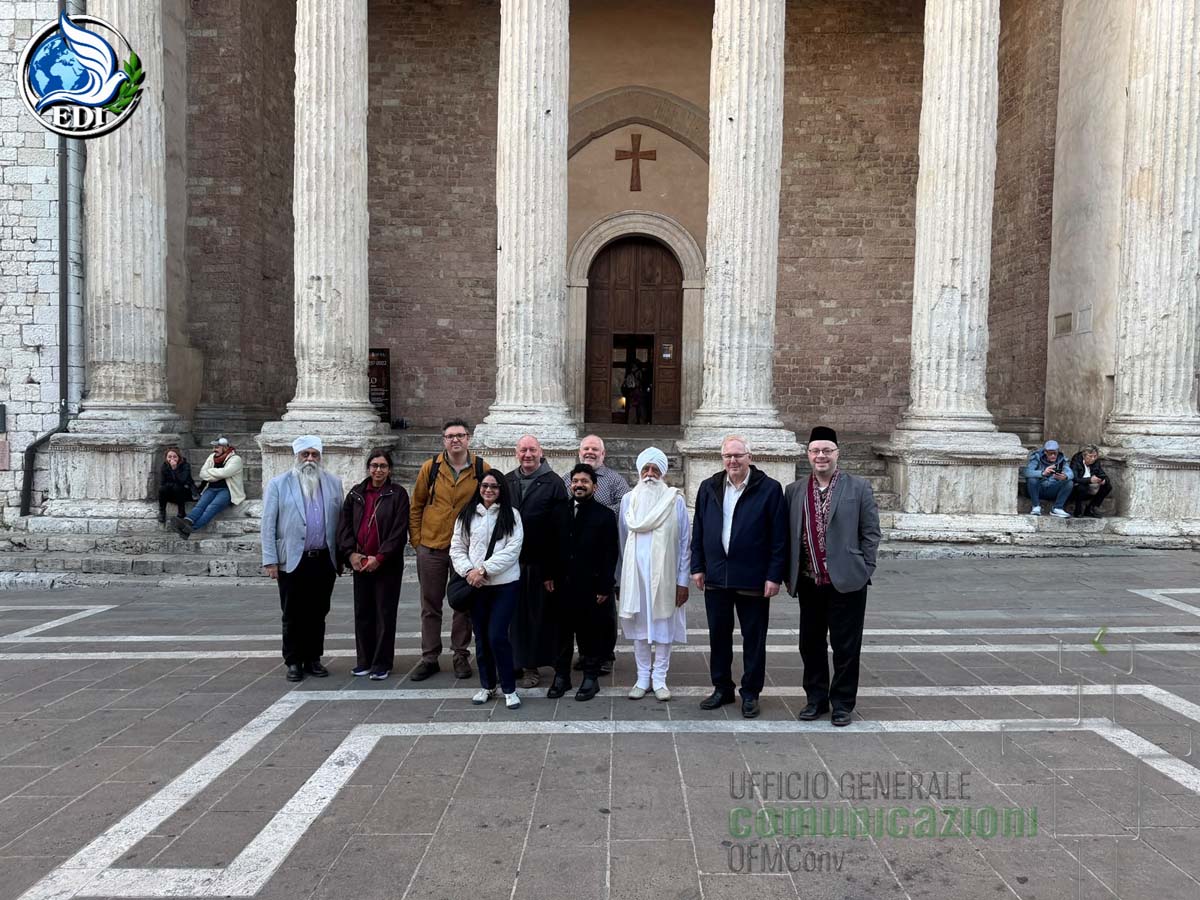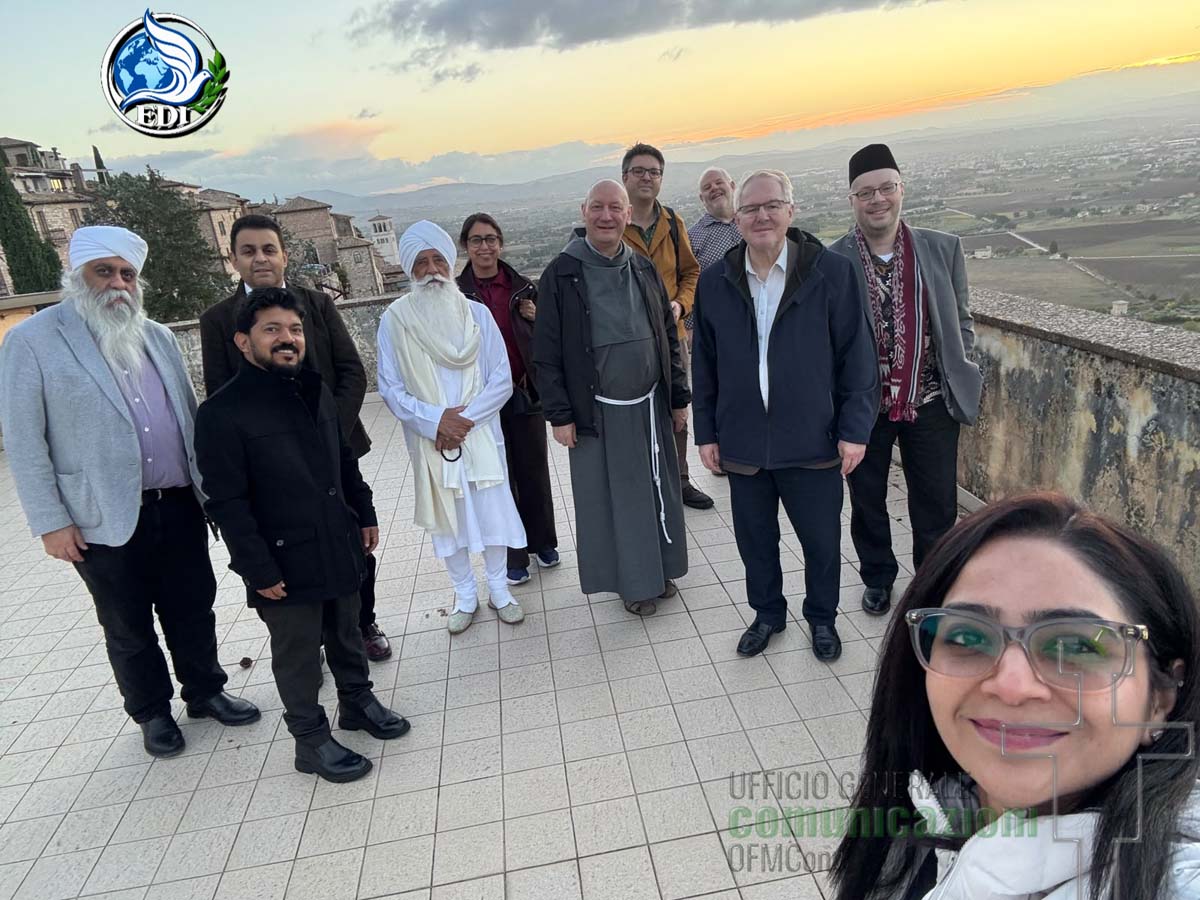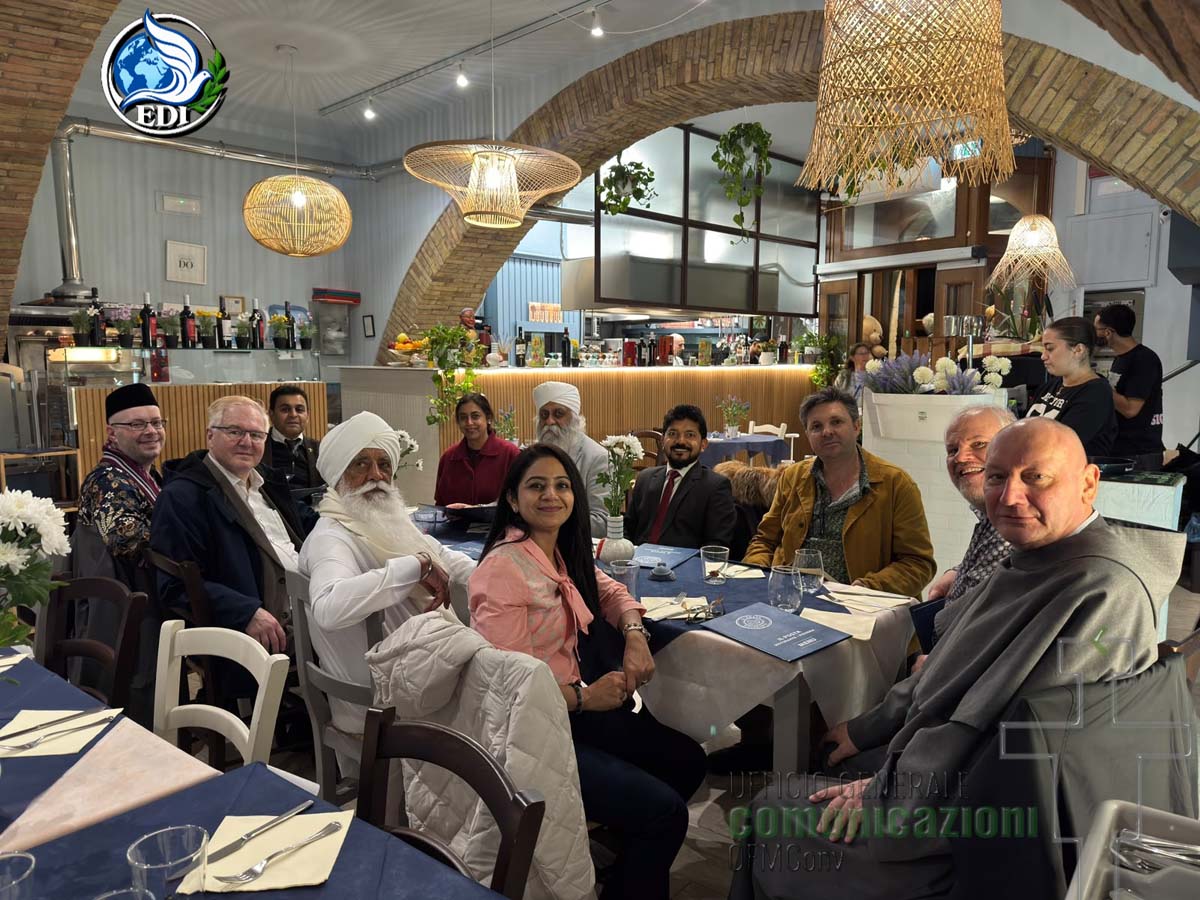



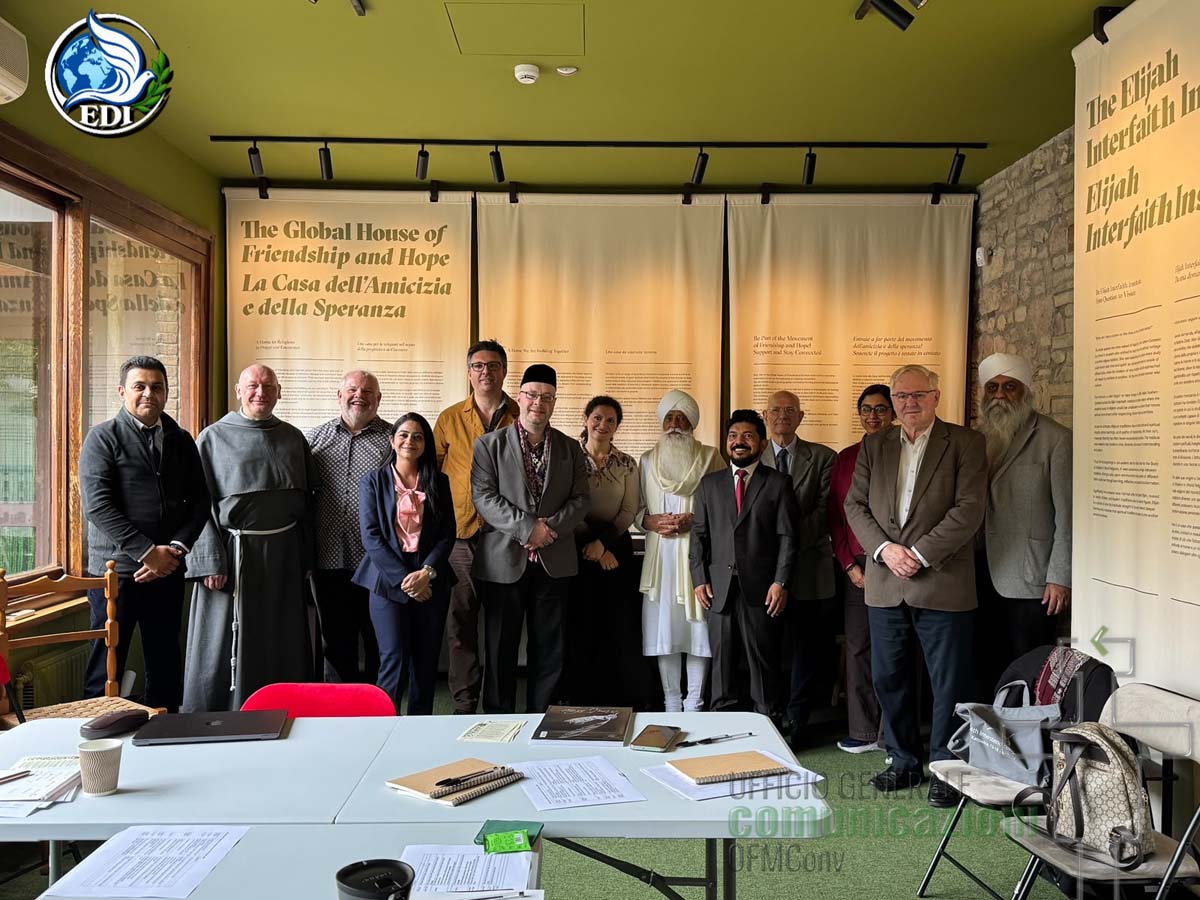
On October 24, 2026, a conference on forgiveness in interreligious dialogue took place at the Global House of Friendship and Hope, opposite the Basilica of Santa Maria degli Angeli in Assisi, Italy. The University of Birmingham in England organized the event.
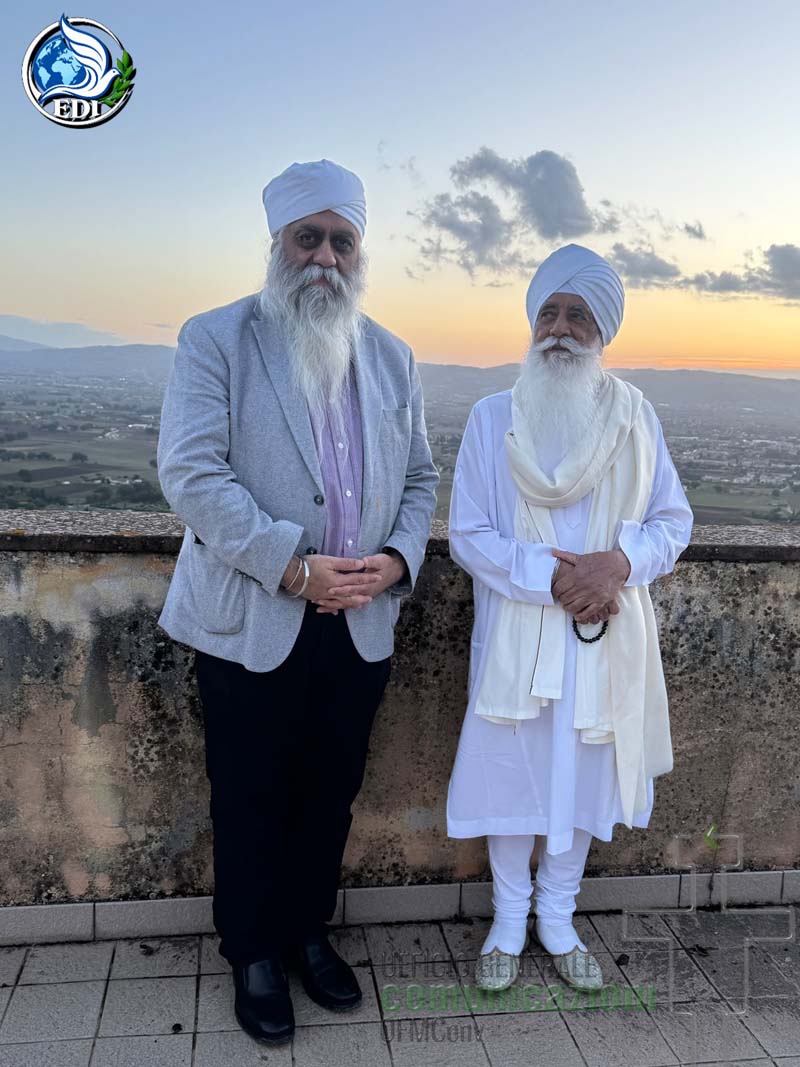
Most of the speakers came from the United Kingdom: Professor Andrew DAVIES; Professor Mohinder SINGH AHLUWALIA (Bhai Sahib, a Sikh spiritual leader and chairman of the Guru Nanak Nishkam Sewak Jatha – a UK-based charitable organization); Professor Abbas PANAKKAL; Professor William PURKIS; Dr. Juhi GUPTA; Dr. Josef BOEHLE; Shaykh Paul ARMSTRONG; and Mohammed ABASSI. Representatives from the Universities of Perugia, Italy (Professor Stefano BRUFANI); Milan, Italy (Professor Wael FAROOQ); and Jena, Germany (Professor Martin LEINER, who joined online) also participated. I represented the International Franciscan Center for Dialogue (CEFID) and, more broadly, the Franciscan world.
The conference brought together representatives of three main religious traditions: Sikhism, Islam, and Christianity. Throughout the presentations and discussions, we identified many points of convergence in how these religions approach forgiveness. First, we recognized that the expression “forgiveness between religions” is not entirely appropriate. It is more accurate to consider forgiveness in its personal dimension. After all, individuals are the ones who need forgiveness. In a religious context, forgiveness concerns the relationship between human beings and God, relationships among people, and, above all, our relationship with ourselves.
Second, forgiveness is closely linked to reconciliation, peace, and love. These themes appear in the teachings of the various religions, both in their sacred texts and in the lives of those who embody their values.
Assisi was a natural choice for the conference because of its close connection to St. Francis. On this occasion, I gave a presentation entitled “St. Francis and Forgiveness.” During the discussion that followed, we explored his approach to forgiveness in light of the “Franciscan model of dialogue.” The discussion revealed that St. Francis and his spirituality resonate with people of different faiths, who admire his unique spiritual gifts and charism. As I listened to the other speakers, I was struck by how closely St. Francis’s reflections on humanity and its relationship with God and the world align with certain perspectives found in other religions. Conferences of this kind always offer opportunities for mutual enrichment.
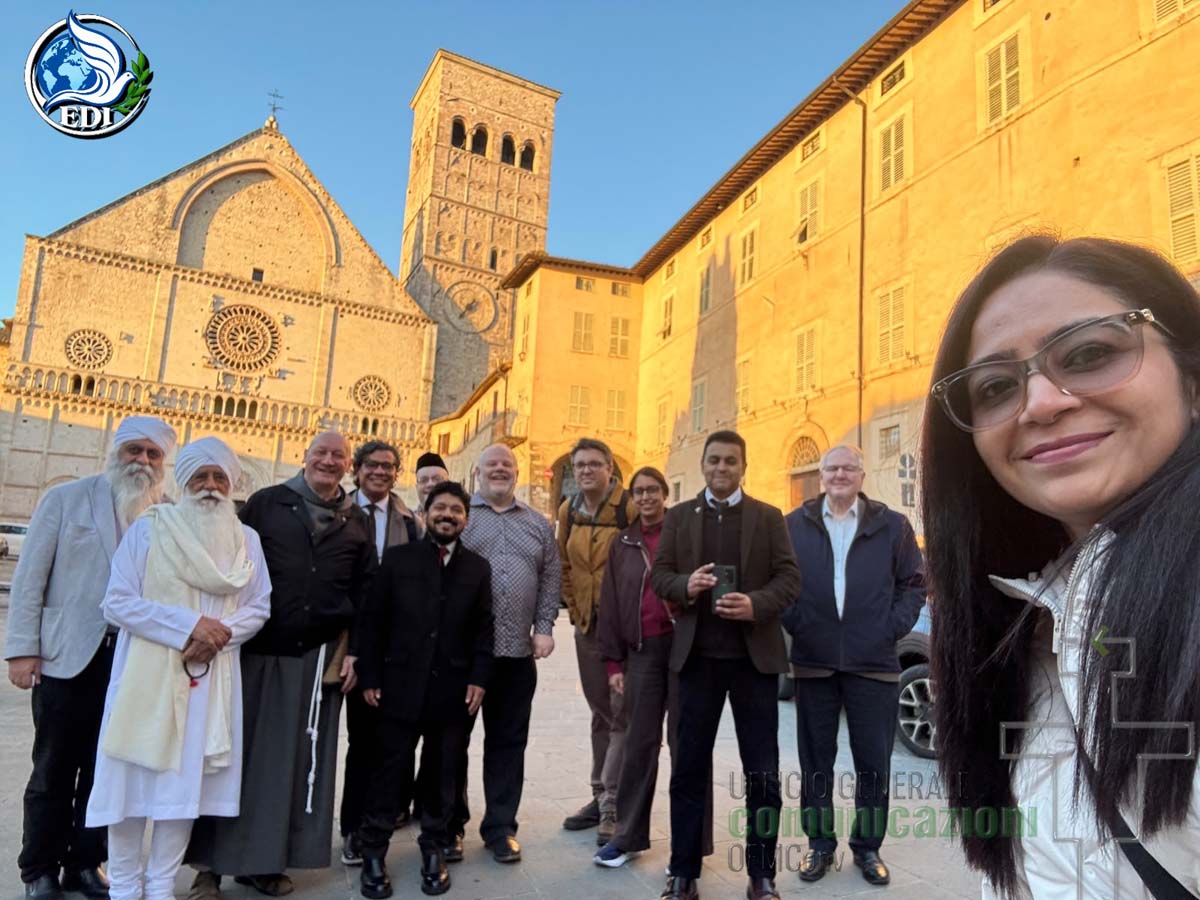
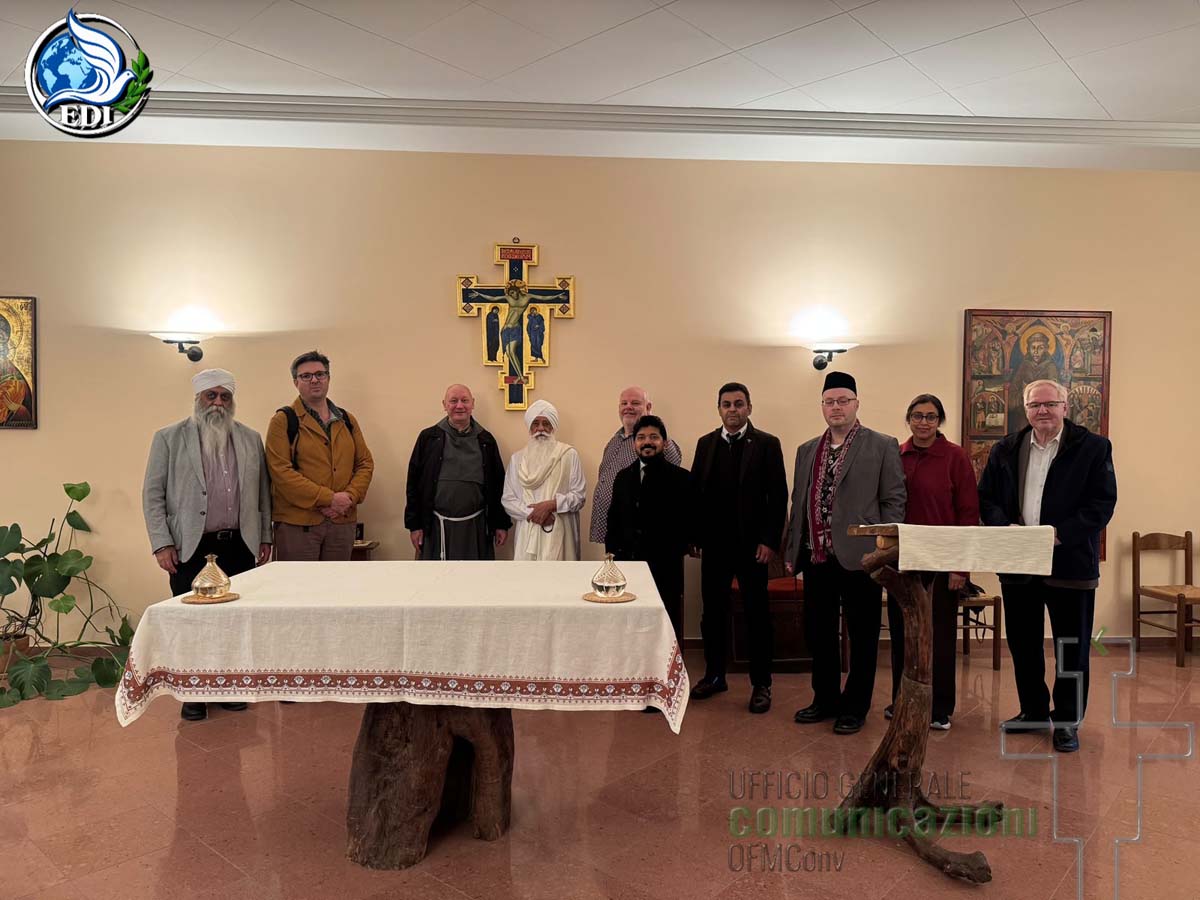
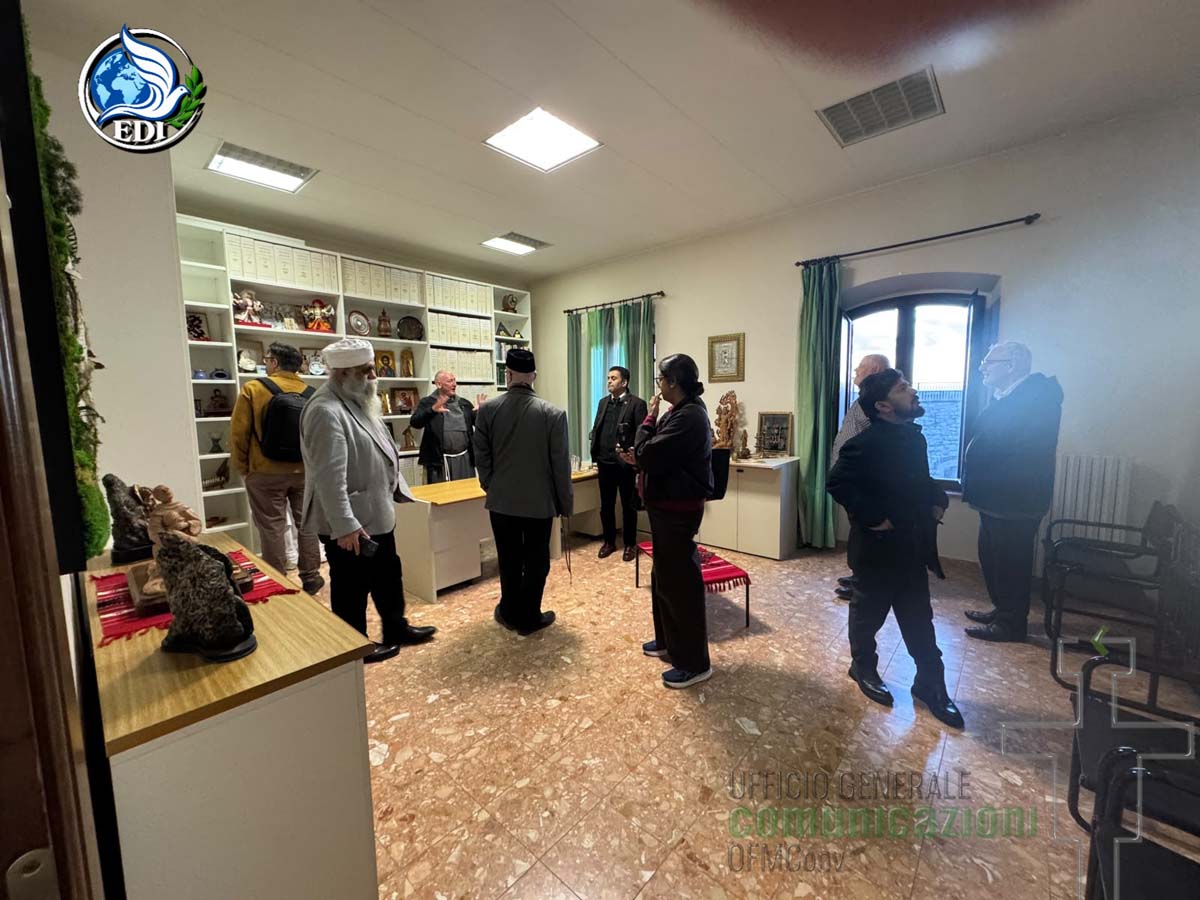
After the conference’s formal program ended, the idea of visiting Assisi arose spontaneously. This gave me an opportunity to show the participants the CEFID facilities at the Franciscanum. The participants were impressed by the Franciscanum’s beautiful setting and expressed interest in meeting there again. I was also pleased to receive invitations to attend future gatherings in other countries.
I would like to conclude this article with a brief reflection. Conferences of this kind are, above all, expressions of mutual acceptance and respect. Such an atmosphere allows us to listen attentively to others’ thoughts and religious experiences and, in turn, to draw inspiration from them. These encounters can enrich our reflections on life, humanity, and the world. One particularly valuable aspect of these conferences is something that many people today seem to have lost: the ability to listen!
Friar Sławomir KLEIN,
General Delegate for Ecumenism and Interreligious Dialogue (EDI)