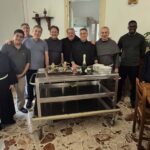




Regarding Donald Trump’s expansionist ambitions toward Greenland, Tra Cielo e Terra (Between Heaven and Earth: a journalistic blog focused on the intersection of religion and geopolitics) consulted Father Tomaž MAJCEN, OFM Conv., a Conventual Franciscan friar. Originally from Slovenia, Father Tomaž is a member of the Province of St. Joseph in Slovenia. Since 2023, he has been the Pastor of Christ the King Church located in the capital city of this artic island. “I believe that the vast majority of Greenlanders would oppose any move by Trump. The desire here is not to become Americans, but to be fully Greenlandic.” In any case, “the goal is independence, not annexation.” Moreover, “we want to decide for ourselves.”
Father Tomaž, what do you think of President Trump’s recent statements regarding the United States’ desire to take control of Greenland?
As someone who lives and works here in Nuuk, I find President Trump’s statements troubling. When a powerful leader speaks of Greenland as something “necessary” and even hints at the use of force, it is disturbing. For us, Greenland is not a strategic object on a map, but our home. These words touch real lives, real families, real communities. Greenland has patiently shaped its own identity and its own future. The people here do not want to replace one form of dependence with another. That is why such statements are deeply troubling.
What are the feelings of the island’s population? Is there alarm? Concern?
Yes, there is concern and sometimes even fear. People talk about it in shops, at work, and even after Mass. Most Greenlanders have a strong sense of identity and their right to decide their own future. The fact that such a large majority does not want to become part of the United States speaks volumes. At the same time, I also sense a quiet strength. People are worried, but they are also very clear: this is our land, our culture, our home.
What happened in Venezuela shows that Trump’s statements are not just “theatrical” announcements, but foreshadow concrete actions. In your opinion, is it possible at this time to imagine a sudden incursion by the United States to take control of the island?
Events in Venezuela have made many people more vigilant. They remind us that words can sometimes turn into actions. However, Greenland is not Venezuela. We are part of the Kingdom of Denmark, which is a democracy and an ally of the North Atlantic Treaty Organization (NATO). Any military action here would have very serious global consequences. That said, I understand why people no longer want to dismiss such talk as “just rhetoric.” The uncertainty itself creates tension, and that tension is felt here every day.
If this were to happen, do you think there would be some form of resistance from the population? Or are there also people who would welcome a possible political change in Greenland?
I believe that the vast majority of Greenlanders would oppose such a move. The desire here is not to become Americans, but to be fully Greenlandic. Of course, there are some who speak about possible economic benefits or that see international interest as a way to strengthen Greenland’s position vis-à-vis Denmark. But even among them, the goal is independence, not annexation. The common sentiment is very simple: we want to decide for ourselves.
In your opinion, apart from “security issues,” what are the real reasons behind Trump’s interest in Greenland?
Security is the most commonly used word, but it’s not everything. Greenland is rich in natural resources that are crucial to modern technology and global power. There is also the Arctic itself, which is becoming more accessible due to climate change. New sea routes, minerals, and strategic positioning all play an important role. These are global interests, but for us they are tied to our land, our environment, and our way of life.
What do you think of the Danish Prime Minister’s reaction to Trump’s words?
I think Prime Minister Mette Frederiksen spoke clearly and with dignity. She defended Greenland’s right to self-determination and made it clear that threats and pressure are unacceptable. At the same time, she has the difficult task of protecting an important alliance and establishing clear borders. From what I see, she has attempted to do both responsibly.
In your view, should the European Union take a stronger stance in countering these imperialistic ambitions?
Yes, I believe the EU should take a stronger stance. The European Union has reaffirmed its commitment to “national sovereignty and territorial integrity,” but more decisive action is needed. Denmark is an EU member, and Greenland is part of the European family even if it is not technically part of the EU. If the EU does not defend its members against territorial threats, what is the point of European solidarity? The United Kingdom and other European nations have supported Denmark, but the EU as a whole could be more vocal and united. This is not only about Greenland, but about upholding the principle that borders cannot be changed by force or threats.
How does this complicated political situation affect the Church’s pastoral commitment in Greenland?
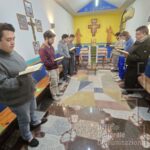
As a priest, I see how political uncertainty affects people’s hearts. It creates anxiety, especially regarding identity and the future of children and families. Our pastoral work today consists of listening more, comforting more, and helping people name their fears. The Church must be a place of peace and hope. We must defend human dignity, the rights of the Inuit people, and dialogue instead of threats. Above all, we pray for the wisdom of leaders, for peace among nations, and for the strength of our community. In difficult times like these, the Church’s role as a home for all becomes even more important.
Antonella PALERMO
Tra Cielo e Terra