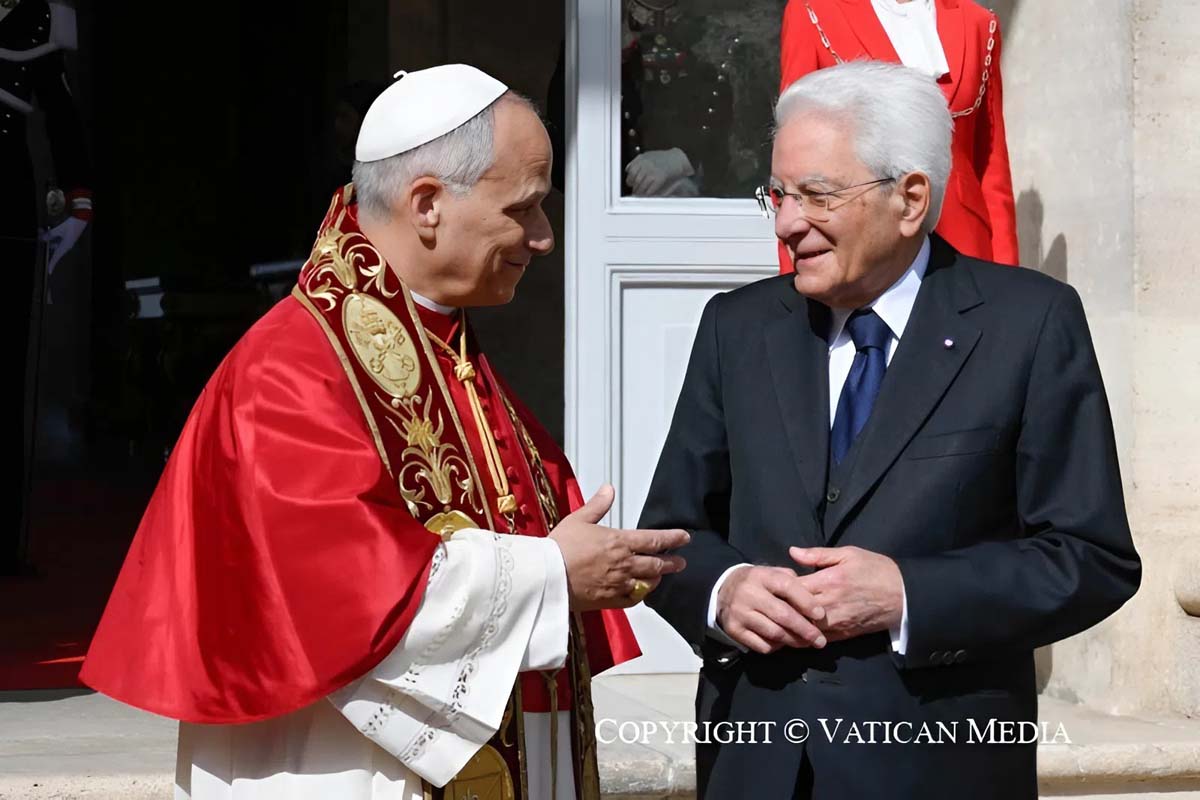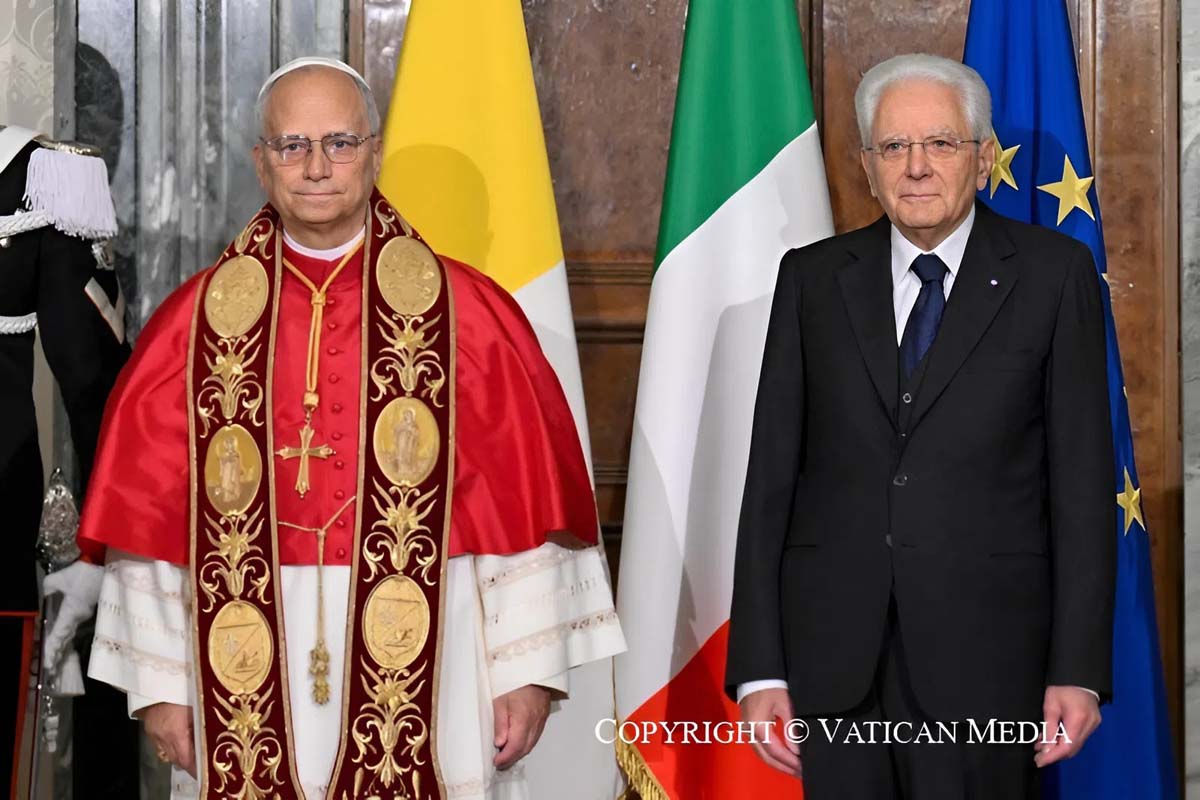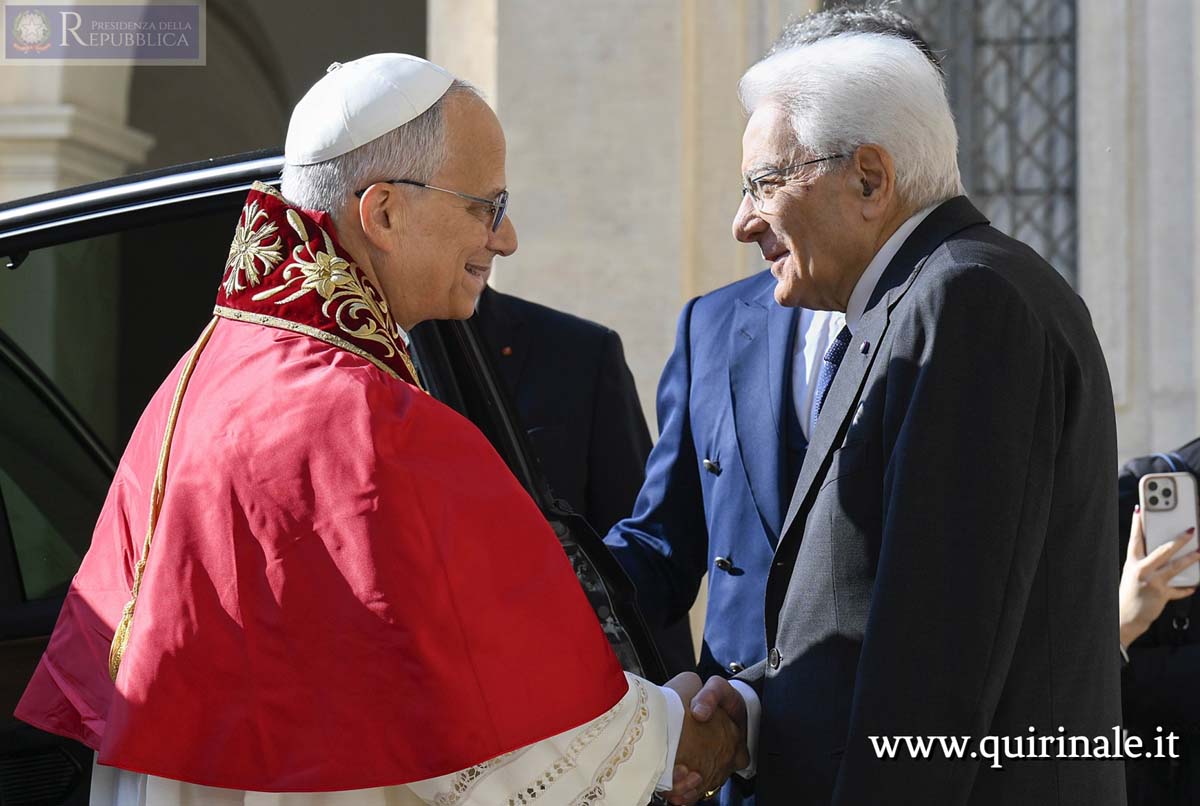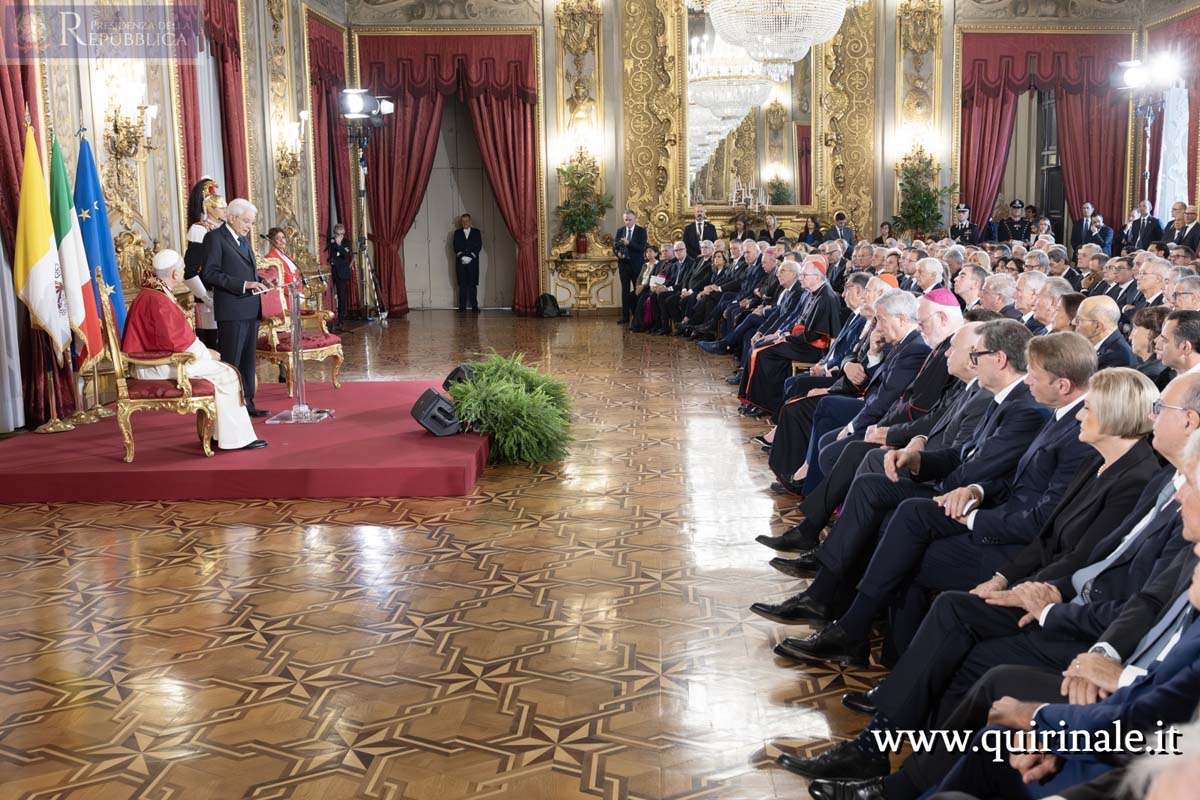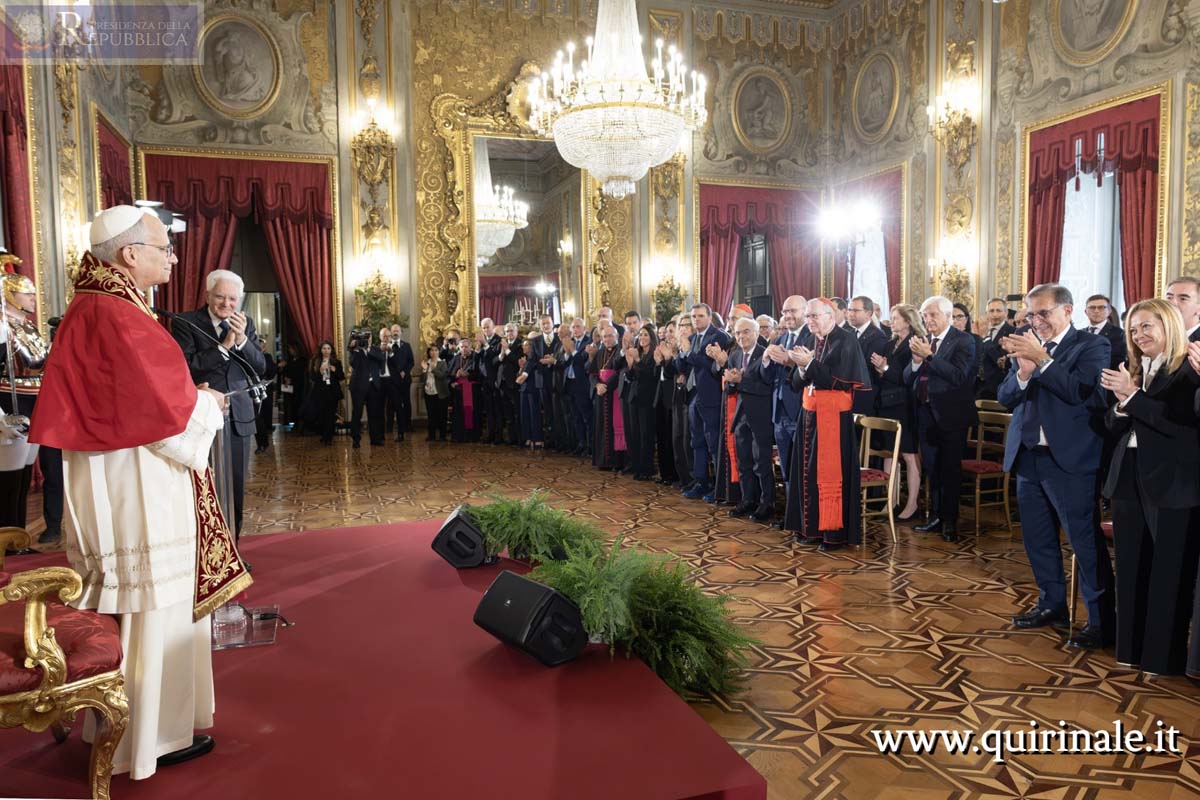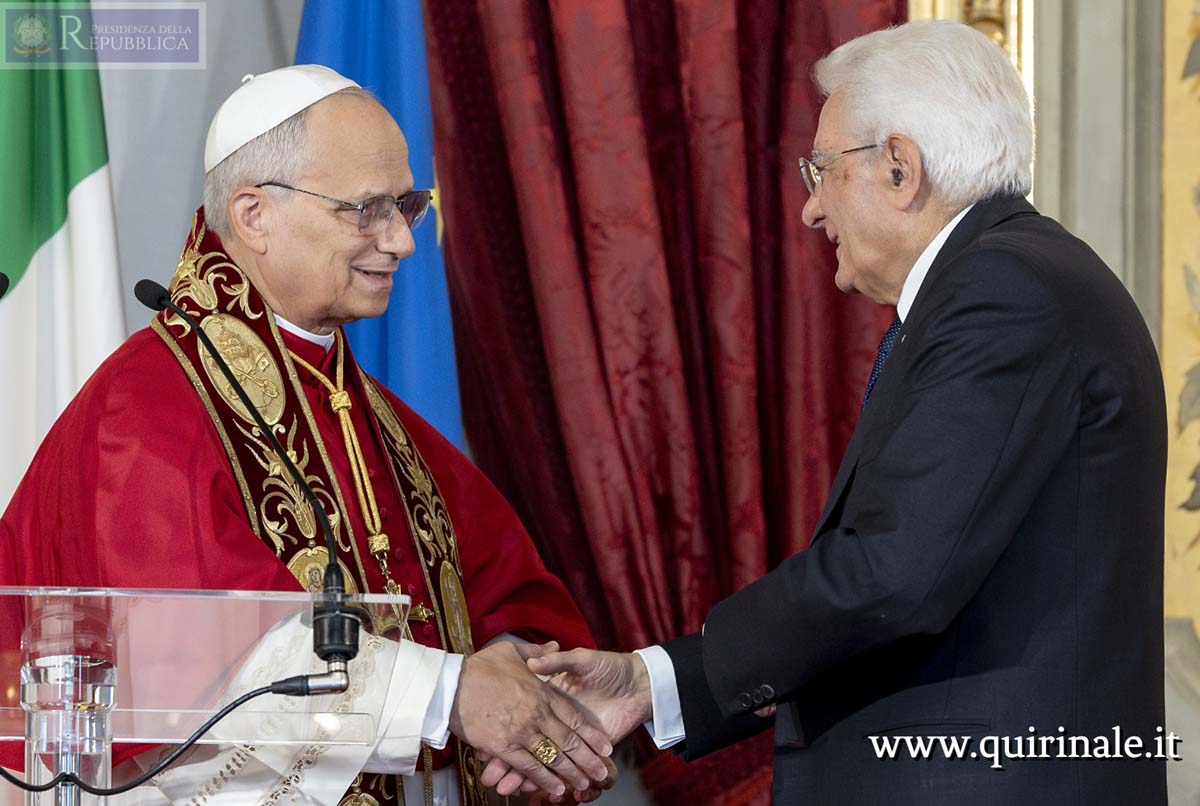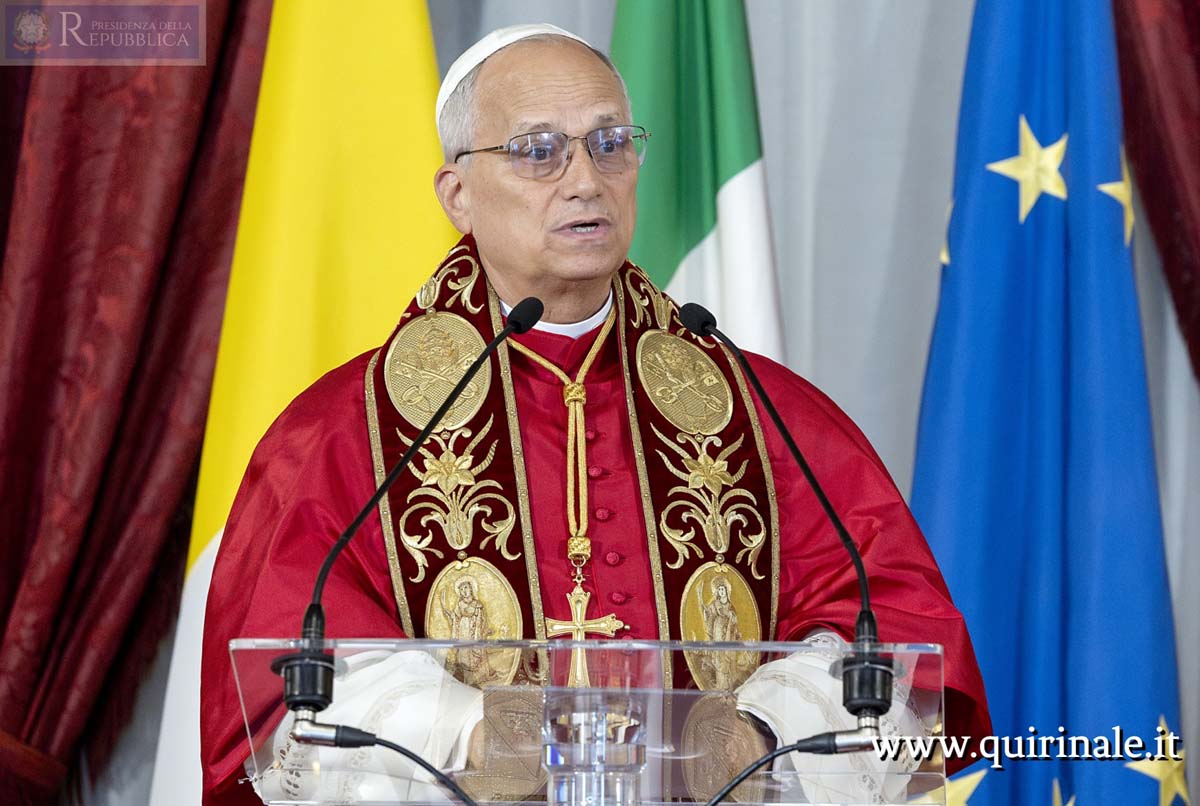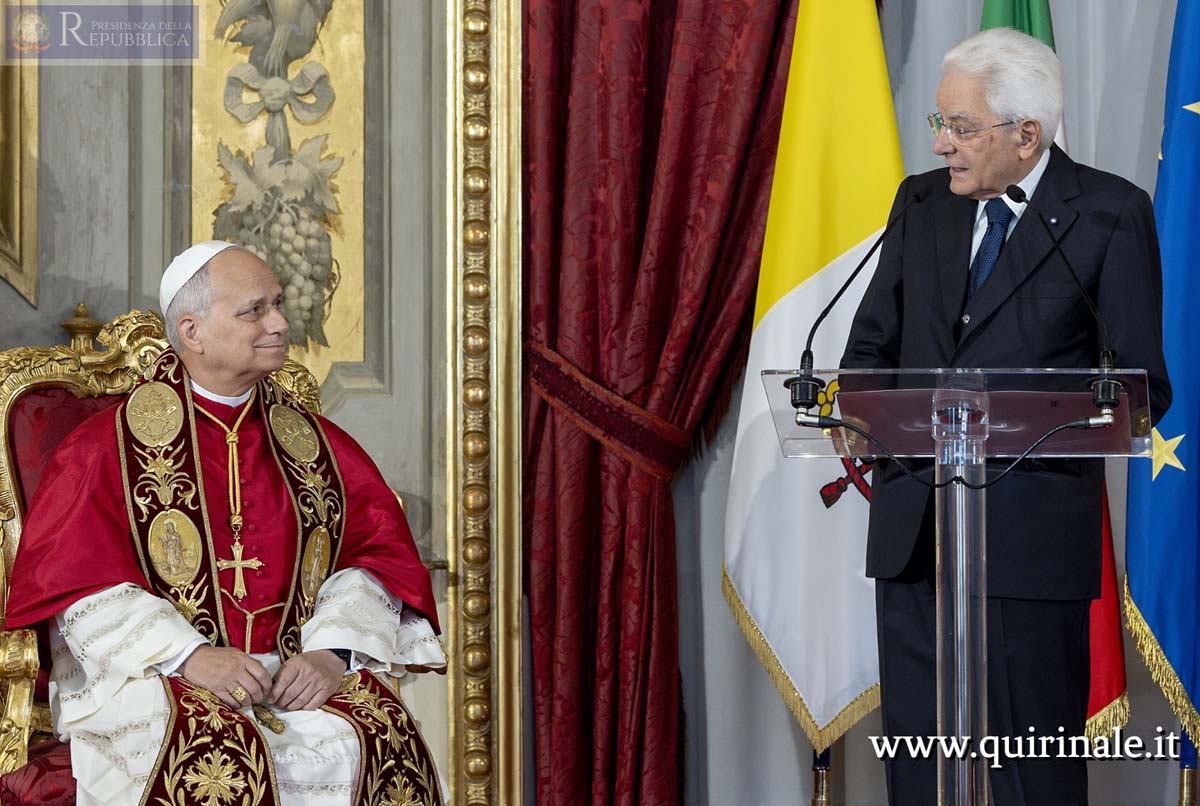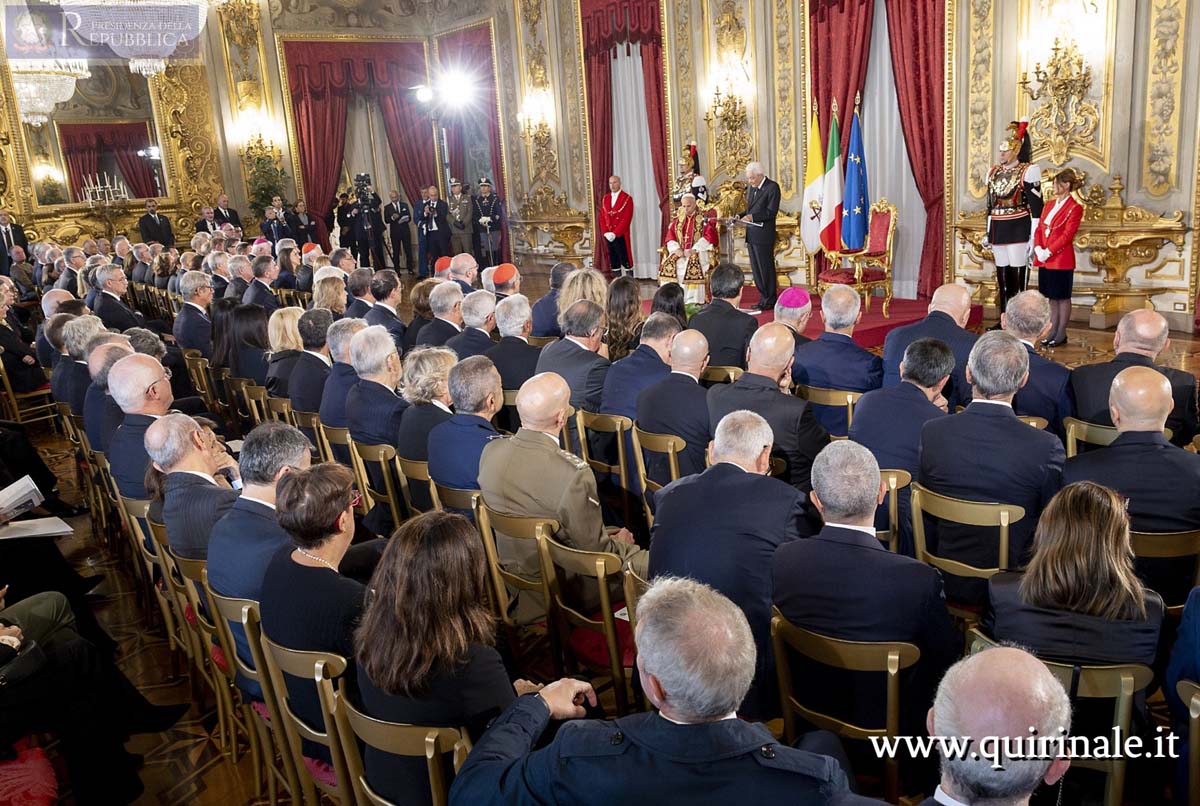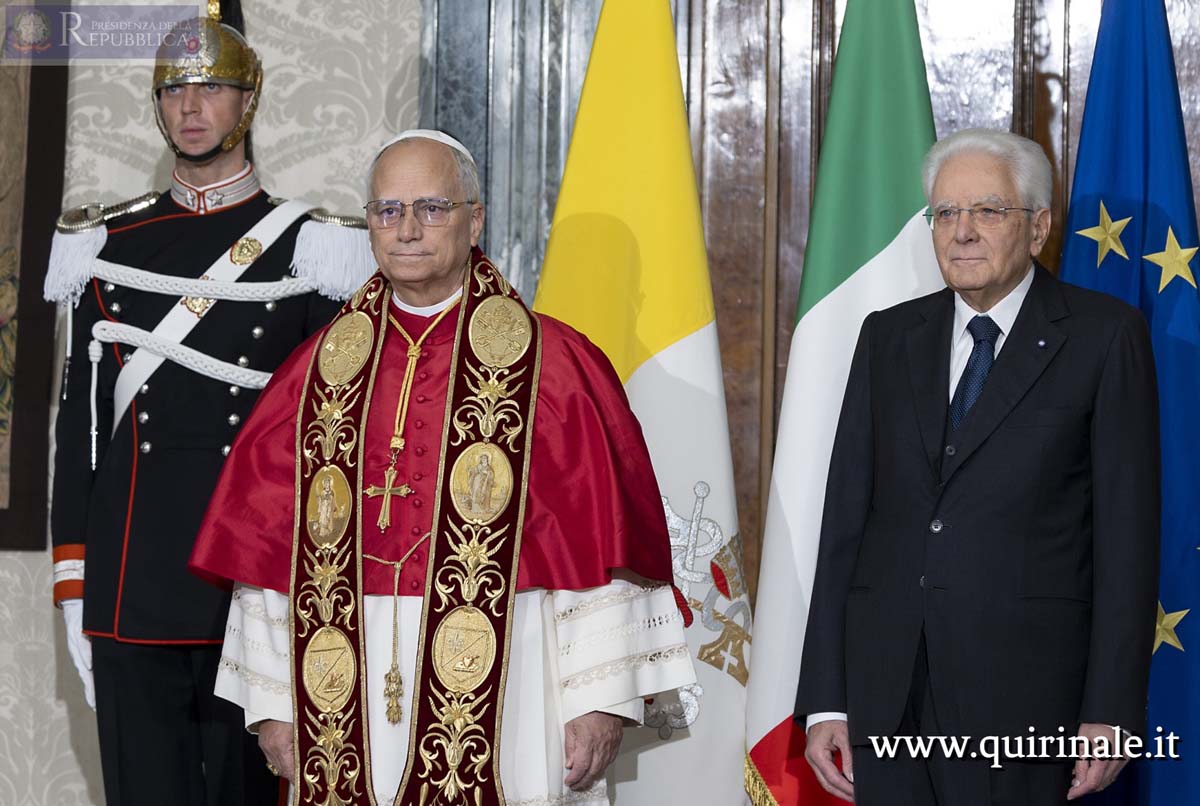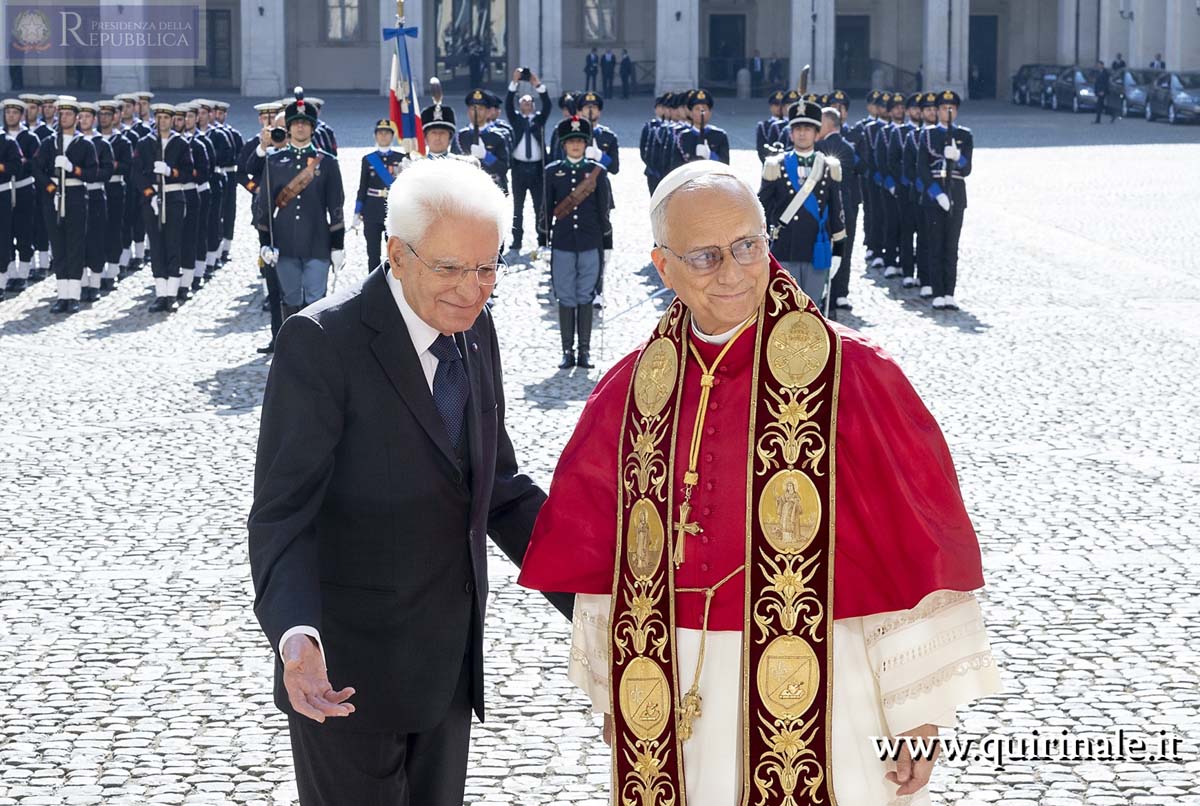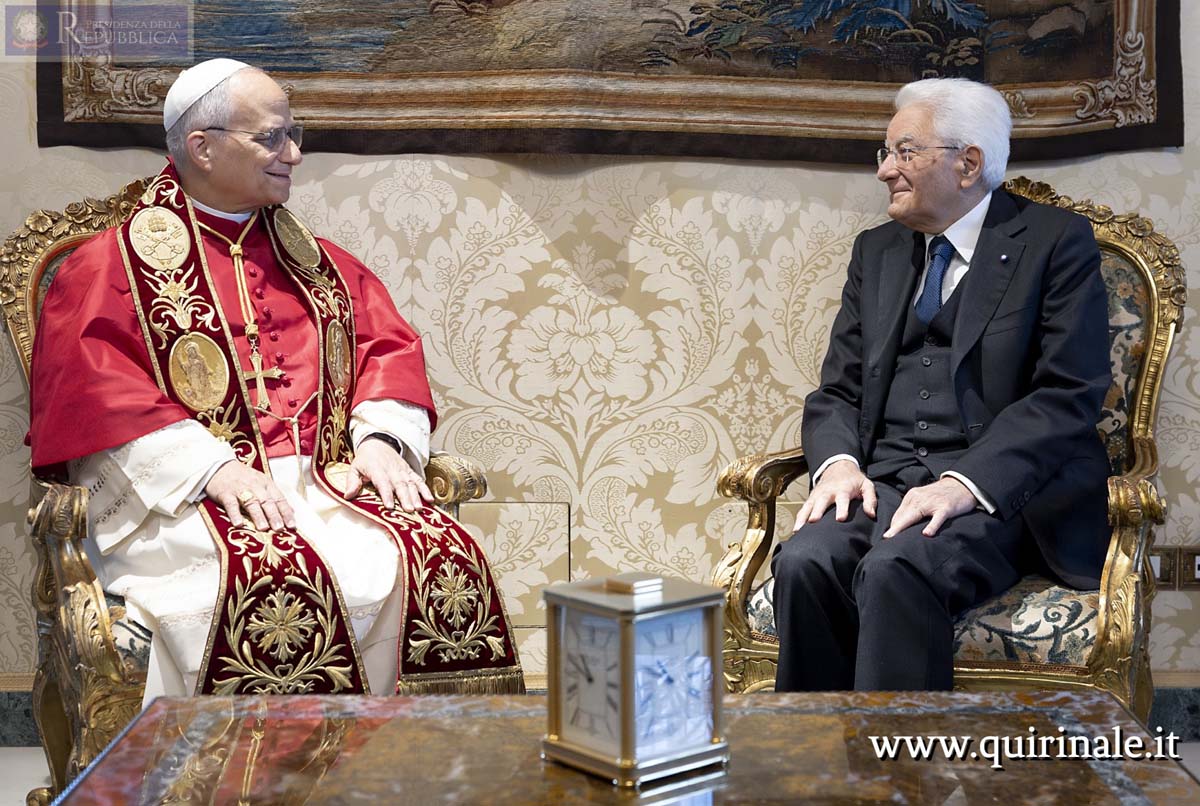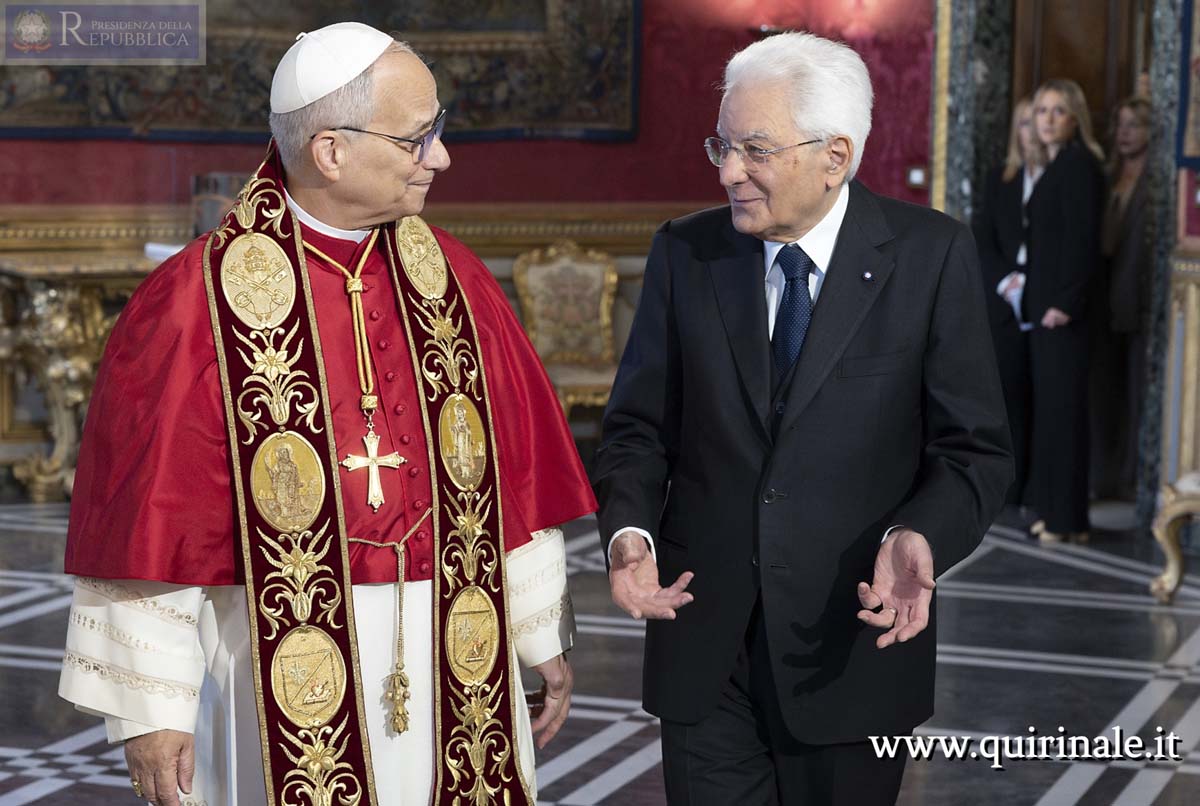



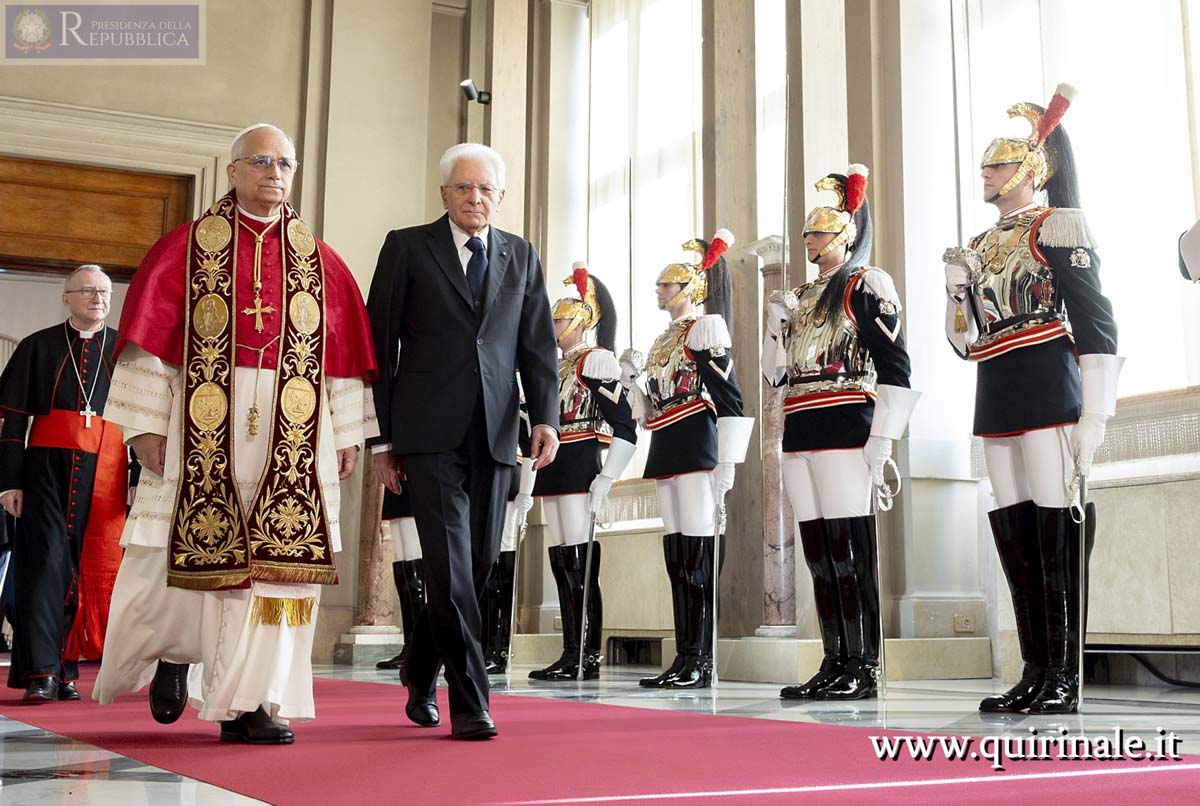
On Tuesday, October 14, 2025, at 11:00 a.m., Pope Leo XIV paid an official visit to the President of the Italian Republic, His Excellency Mr. Sergio MATTARELLA, at one of Rome’s most representative historic residences: the Quirinale Palace, seat of the Presidency of the Republic. The Holy Father was accompanied by an official delegation from the Holy See.
In his opening remarks, President MATTARELLA emphasized the value of the bond between Italy and the Holy See, calling his visit with the pope “a gesture of homage [towards the pope] on behalf of all of Italy,” one that reaffirmed the “fruitful alliance” between the Italian State and the Catholic Church, founded on mutual respect and a shared commitment to the common good. The president also spoke about Pope Francis, who passed away last April. He expressed his appreciation for Leo XIV’s commitment to “the centrality of the human person, peace, and dialogue,” principles that, he said, also form the basis of the Italian Constitution.
Ample time was devoted to international issues. The president denounced “the logic of the strongest” and the crisis of multilateralism. He regarded the war in Ukraine and the conflict in the Middle East as open wounds. Echoing the words of the pope, the president spoke about the need to sustain “a spark of hope” regarding “the ceasefire in Gaza” and to “relaunch the one-state solution for each of the two peoples.” The president also insisted on the need for a new humanism in the face of global challenges, such as, poverty, inequality, migration, climate change, and artificial intelligence. He praised Pope Leo XIV’s Apostolic Exhortation Dilexi te, which calls for “a change in mentality.” As he concluded his speech, he reaffirmed the value of Europe as a model of peace and stressed that peace starts with each one of us and thus it is essential that we “disarm hearts and disarm words.” (Official speech by the President of the Republic: https://www.quirinale.it/elementi/141163)
In response, Pope Leo XIV expressed deep gratitude for the welcome he had received and for the collaboration between Italian institutions and the Holy See, particularly surrounding the death of Pope Francis and in the context of the Jubilee Year of Hope. He emphasized the importance of the distinction between Church and State and, at the same time, the cooperation they should share “in the service of the human person, whose inviolable dignity must always come first.”
The pope then spent considerable time discussing peace, firmly condemning ongoing wars and renewing his call to “work to restore peace in every part of the world.” He praised Italy’s commitment, particularly “towards the children of Gaza,” and emphasized the need to revitalize multilateralism as a path to shared solutions.
A key point of his message was the upcoming 800th anniversary of the death of St. Francis of Assisi, an occasion the pope called “an invitation to reflect on the urgency of caring for our common home.” He spoke of St. Francis as a witness of harmony with creation and pointed to Italy’s mission to foster a “culture that recognizes the earth as ‘a sister… and a beautiful mother.’”
Among other topics addressed, the pope spoke of the declining birth rate in Europe, calling for support for families and dignified work. He reiterated the “fundamental importance of respecting and protecting life at all its stages” and expressed gratitude for Italy’s commitment to welcoming migrants and fighting human trafficking.
Finally, he warned against the loss of historical and cultural memory, urging people not to settle for “mass-produced, impermanent models,” but to preserve the values handed down to them “even at the cost of great sacrifice.” In conclusion, the pope offered his best wishes to the Italian people, and described Italy as “a country of immense, often humble and hidden, wealth.” He encouraged the people to look with confidence to the challenges of the present and the future.
(Address of the Holy Father Leo XIV:
Office of Communications