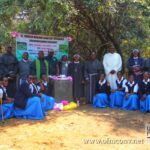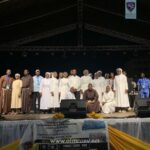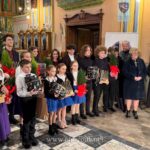




On December 12, 2025, an interesting interfaith meeting took place in Assisi. A group of Shiite Muslims from the Islamic Seminary of Qom, Iran, and others from the United States, Canada, and Oman, came to Italy for an interfaith dialogue event. This initiative was organized by the Focolare Movement (Sophia University Institute in Loppiano, Italy, the Focolare community in Assisi, and the Movement’s International Center for Interreligious Dialogue). The aim was to deepen the Muslims’ understanding of Christianity. They came to Assisi to learn about the spirituality of St. Francis and St. Clare.
The Muslims were hosted in Assisi by the Monastic Fraternity of St. Masseo, one of the monasteries of the ecumenical Monastic Community of Bose [Bose is a village in the Italian Province of Biella]. The monastery was founded in 1965 by Enzo Bianchi. The visiting Muslims were greeted and invited into various places in Assisi, namely, the Sacred Convent (Friar Sławomir KLEIN, OFM Conv.), the Porziuncola at St. Mary of the Angels (Friar Emanuele GELMI, OFM), the Protomonastery of St. Clare (Sister Marie CELINE), and the Shrine of the Spoliation (Friar Marco GABALLO, OFM Cap). During the first part of their visit to the Sacred Convent, I gave them a lecture in the Hall of Peace entitled: “Francis: The Transformation of His Life.” Let me reassure all my confreres who are experts in the field of Franciscan spirituality, that I deliberately chose the word “transformation” for the title [rather than conversion]. I was mindful that the lecture was being presented in an interreligious context, and thus, I needed to choose my vocabulary appropriately. Of course, during the lecture I also used the word “conversion” several times and explained its meaning in Catholic theology and spirituality. During the second part of the visit, we went to the tomb of St. Francis in the Lower Basilica. To my great joy, the guests showed deep respect for the resting place of our saint. They were very interested in the forms of devotion and worship that Christians practice in this place. Among the examples I gave them was the very Italian habit of touching, or perhaps caressing, the rock that encloses the sarcophagus. At one point, I noticed that the women (Muslim women no less!) also touched and caressed the rock surrounding the sarcophagus. Let me stress: the women were doing this, but not the men! Perhaps this is what unites men across all religious denominations and faiths: our tendency toward a more pragmatic, restrained way of expressing faith. At the end, something unexpected and unforeseen happened. We were in front of the chapel of St. Catherine and were about to leave, when our guests asked me for a prayer. I interpreted this as a request for barakah, so I invited them to gather in front of me and I intoned the words of blessing in the name of Almighty God the Creator. It was an unusual sight, especially for the pilgrims and tourists that were passing by: a Franciscan blessing Muslims. There was a warm farewell and a handshake among the men; I emphasize “among the men” because this time the women were being “more pragmatic.” However, this is due to Islamic custom and must be respected! Not long ago, Muslims never shook hands with non-Muslims. Lately, however, things have changed a lot. After the Muslims’ visit to Assisi was over, Marina ZOLA, a member of the Focolare Movement, sent me the group’s opinion. Let me quote just two sentences: “They greatly appreciated this immersion in Franciscan spirituality and the moments of sharing and exchange. While aware of the differences between us, they also valued what unites us as people of faith and prayer.”
In any case, this small event turned out to be a profound experience! Moreover, it was an invitation for us to give good witness. May we bless all who ask for our prayers and blessings!
Friar Sławomir KLEIN
General Delegate for Ecumenism and Interreligious Dialogue (EDI)