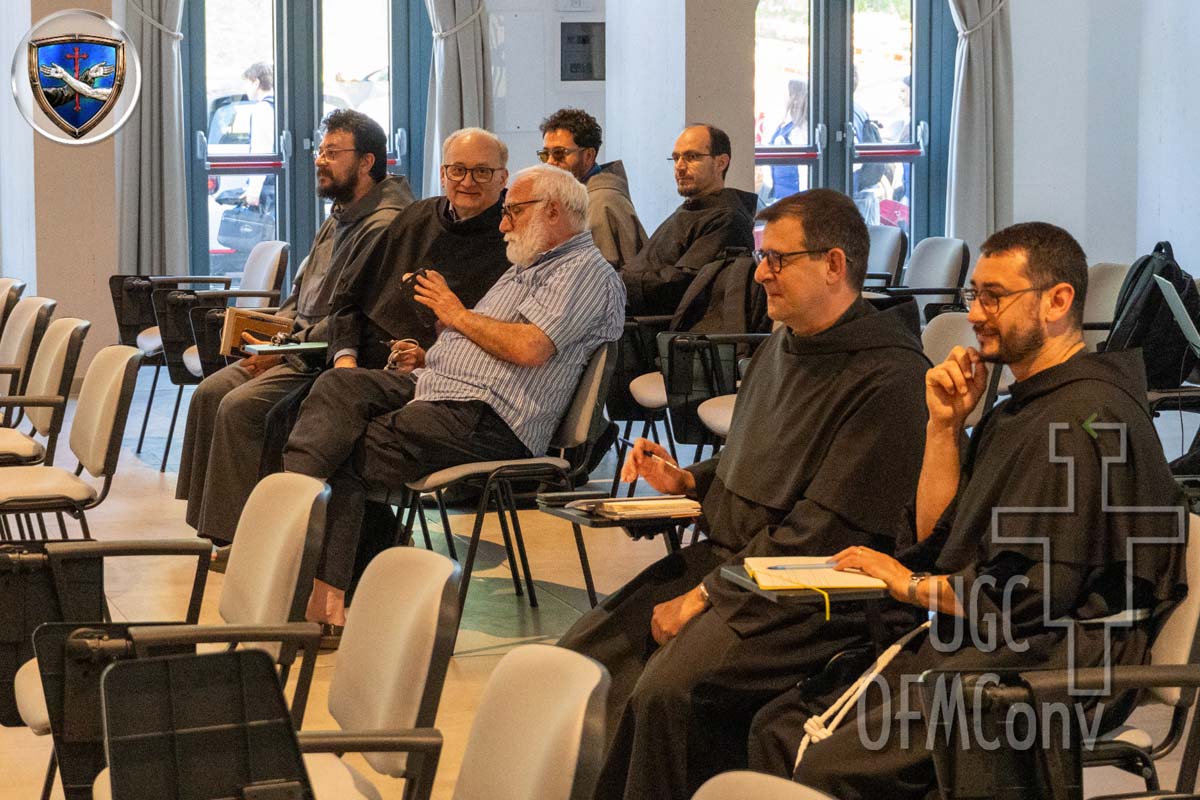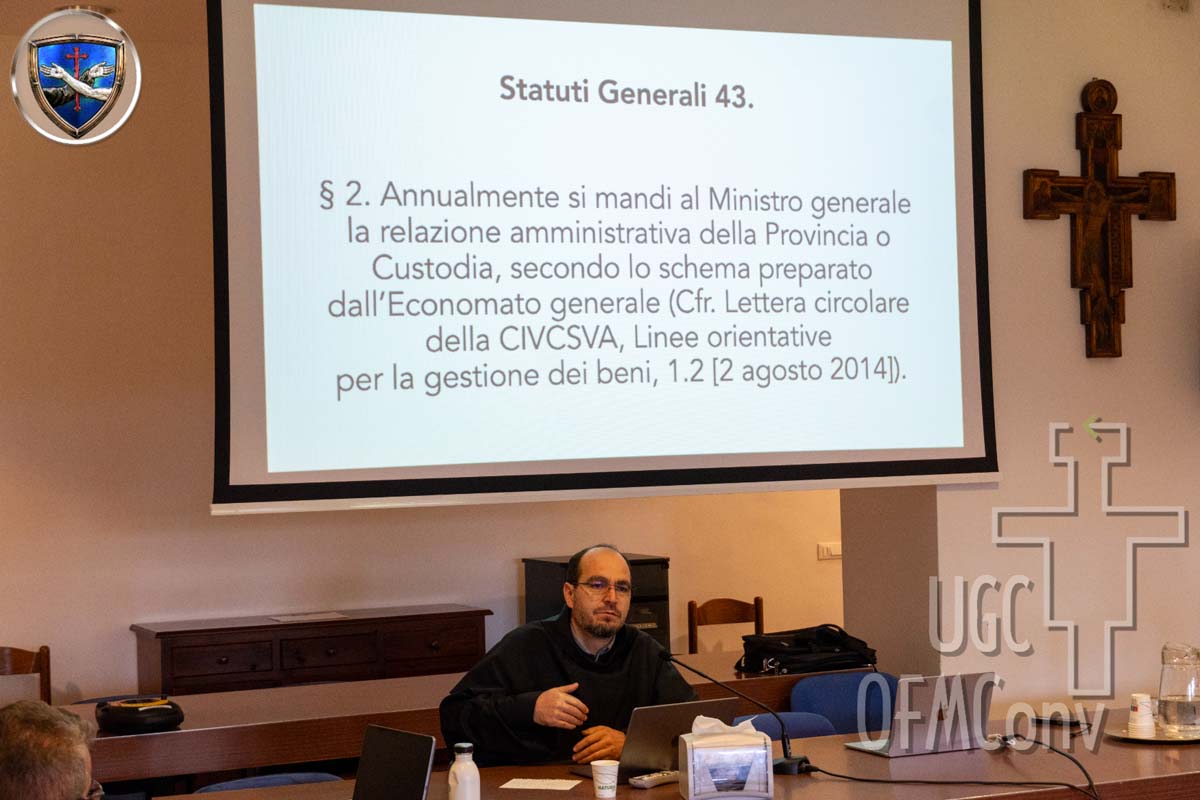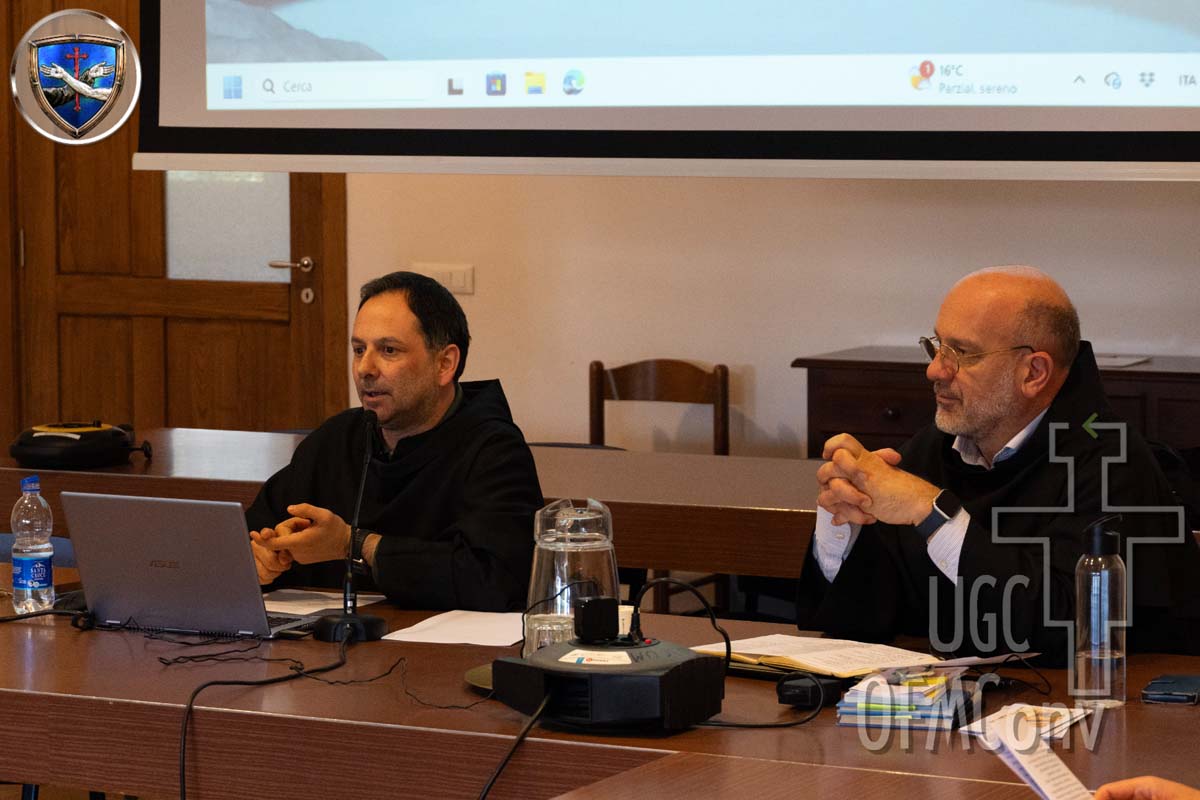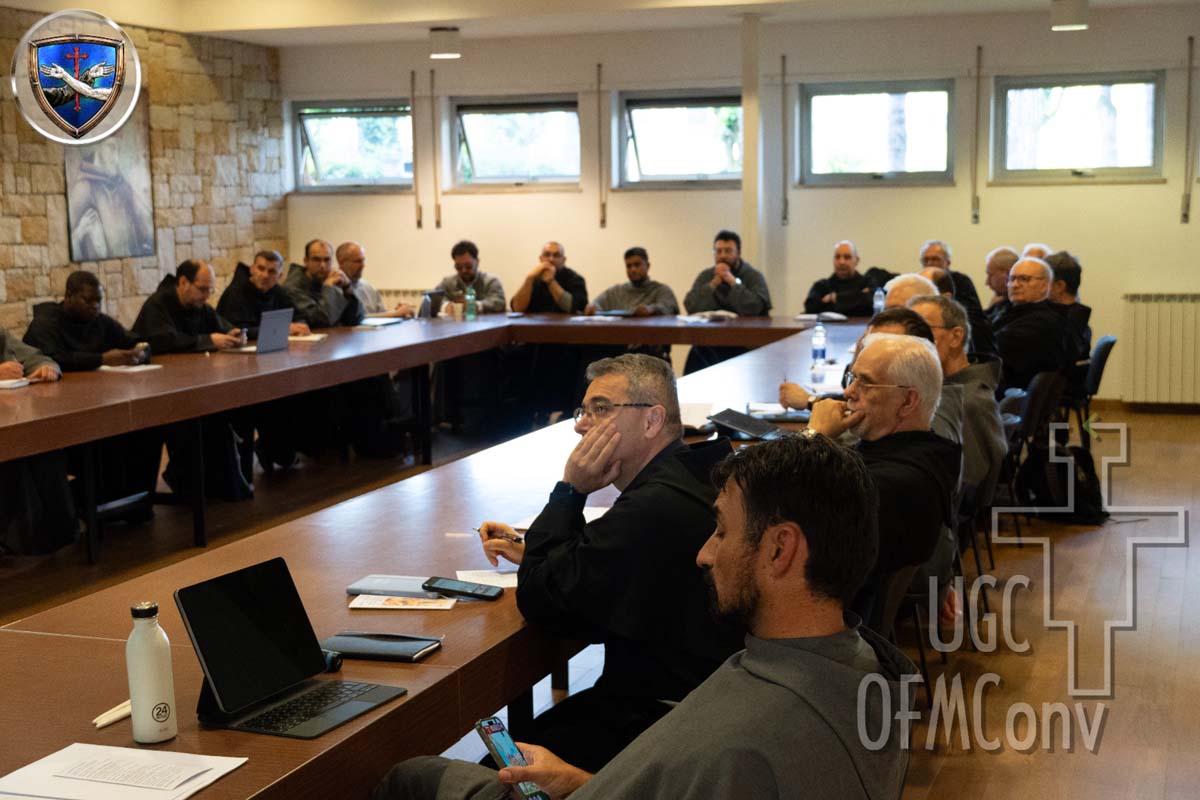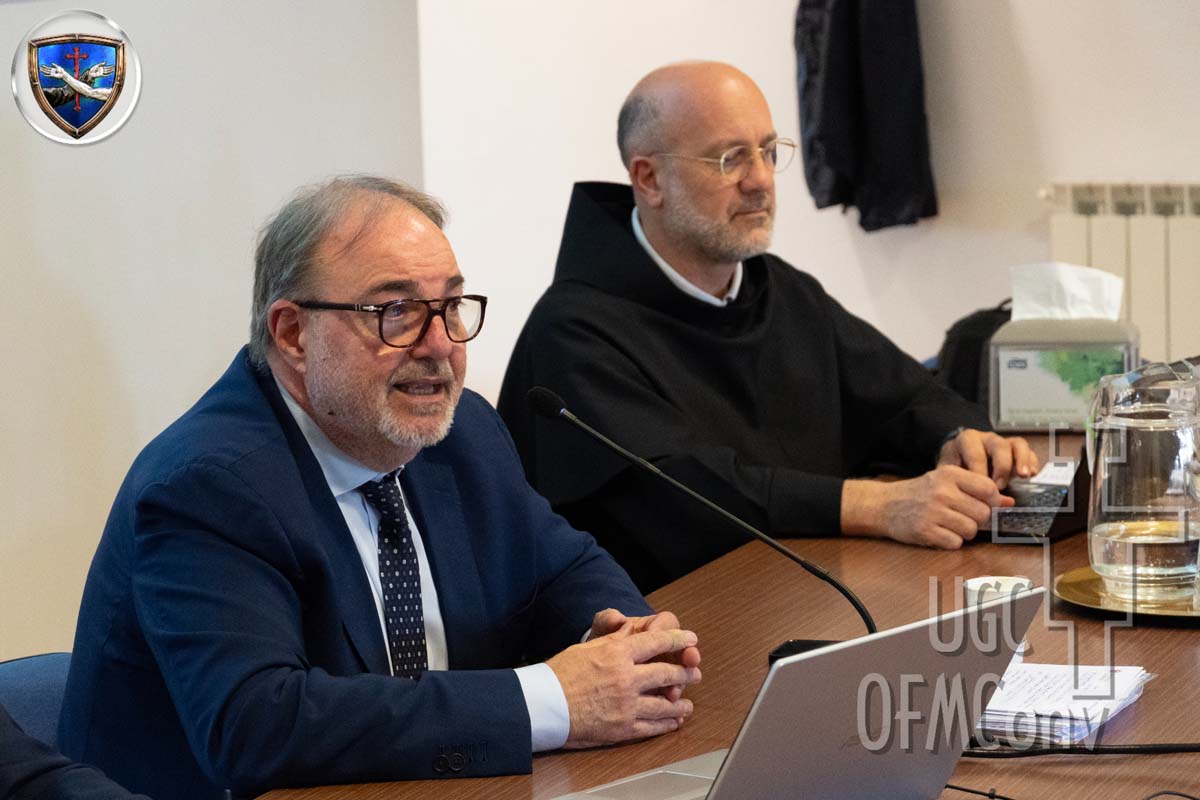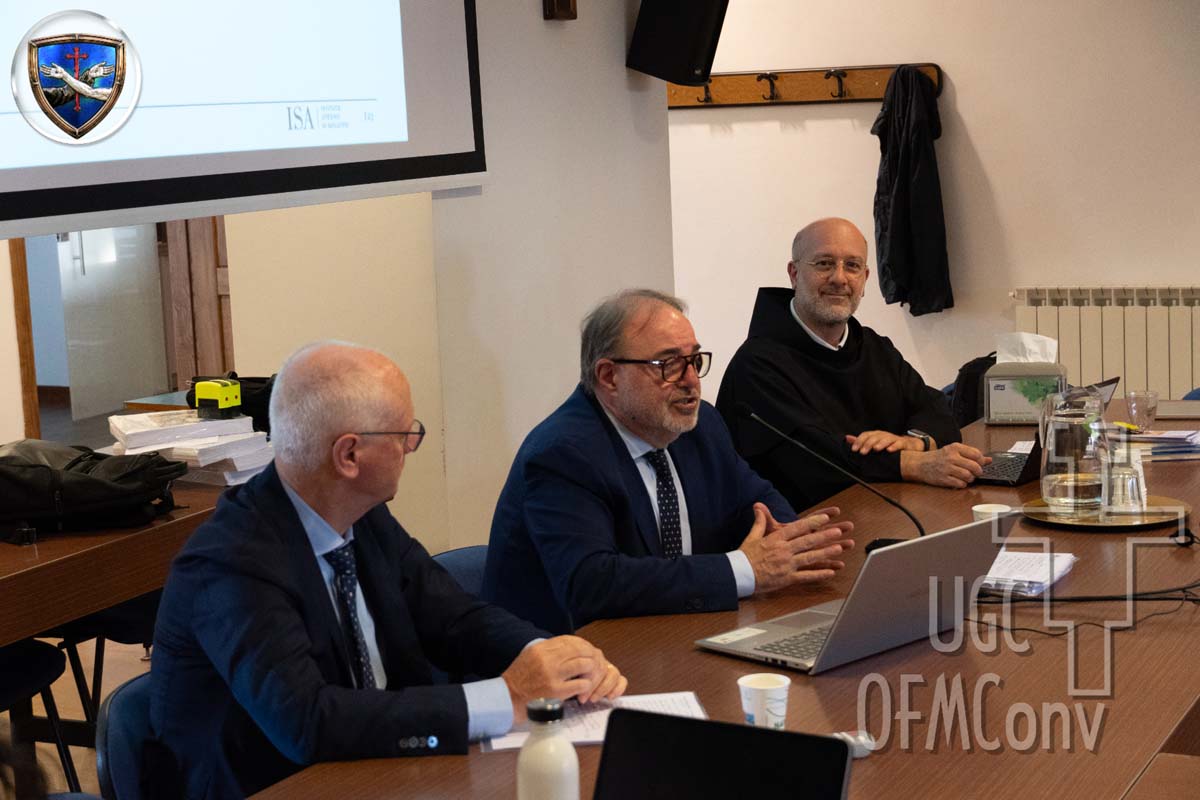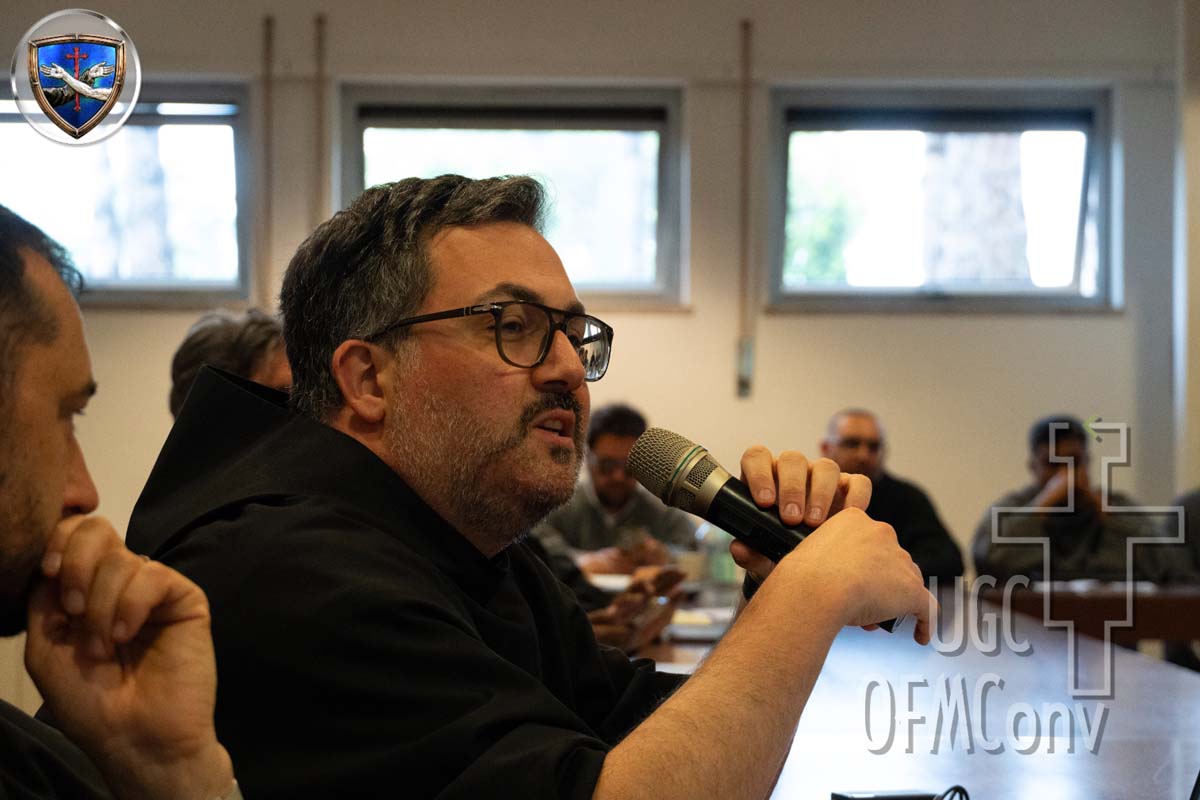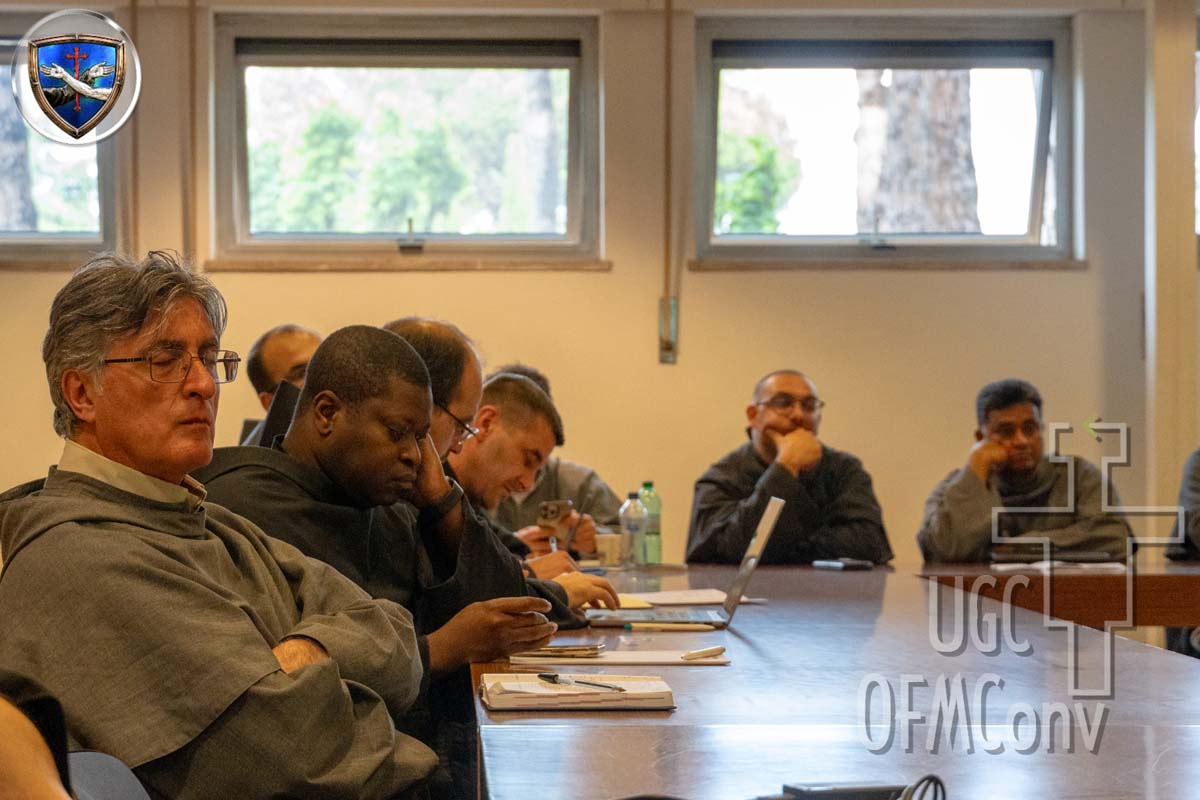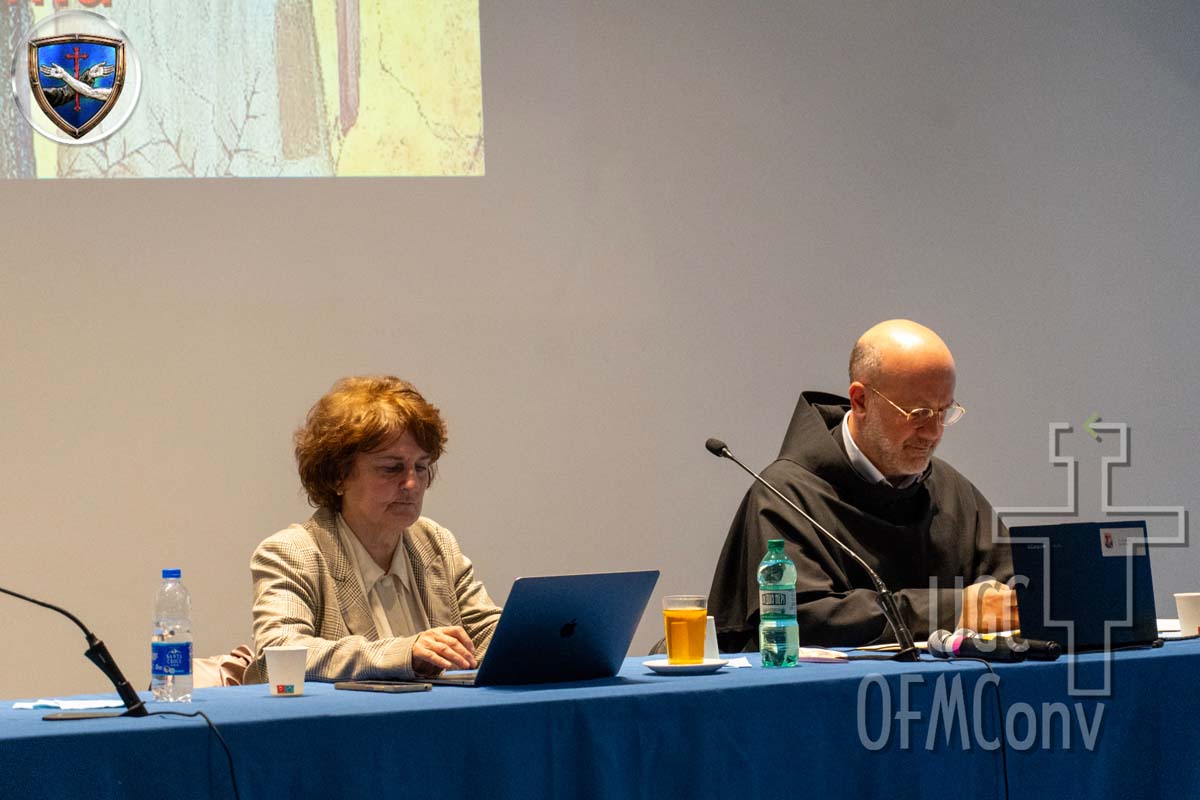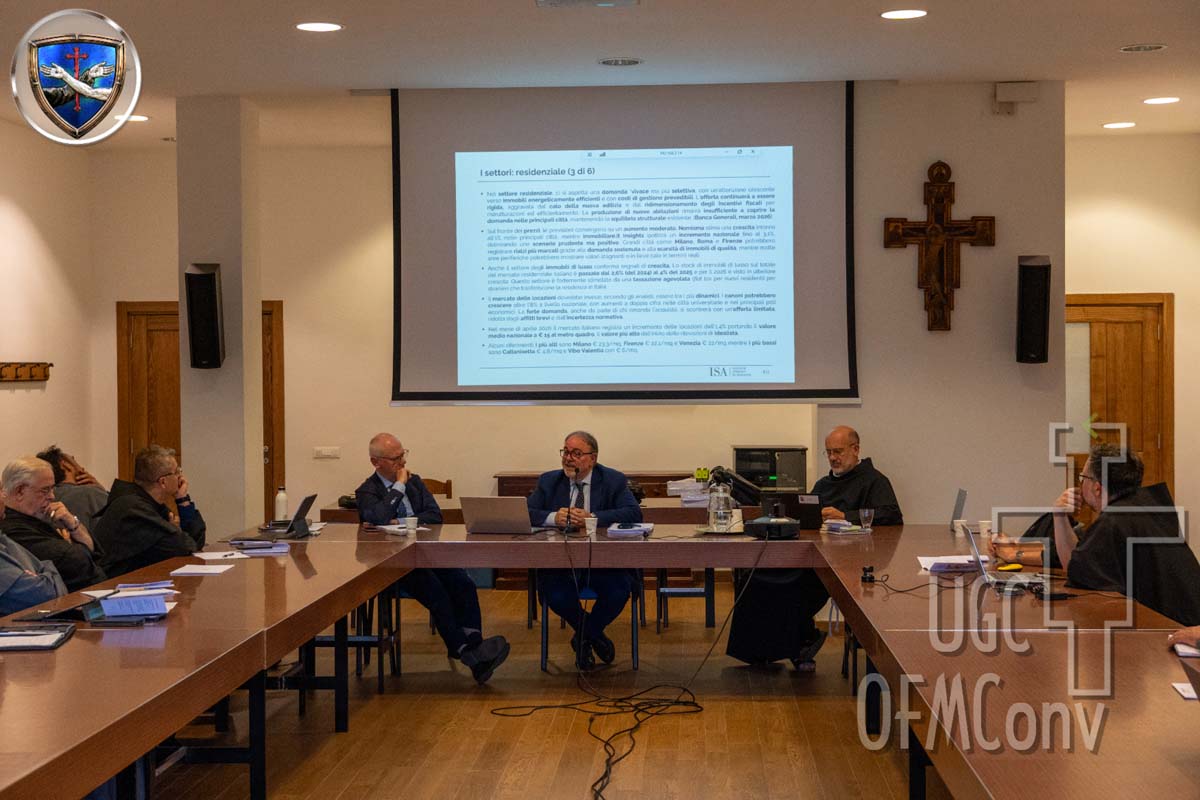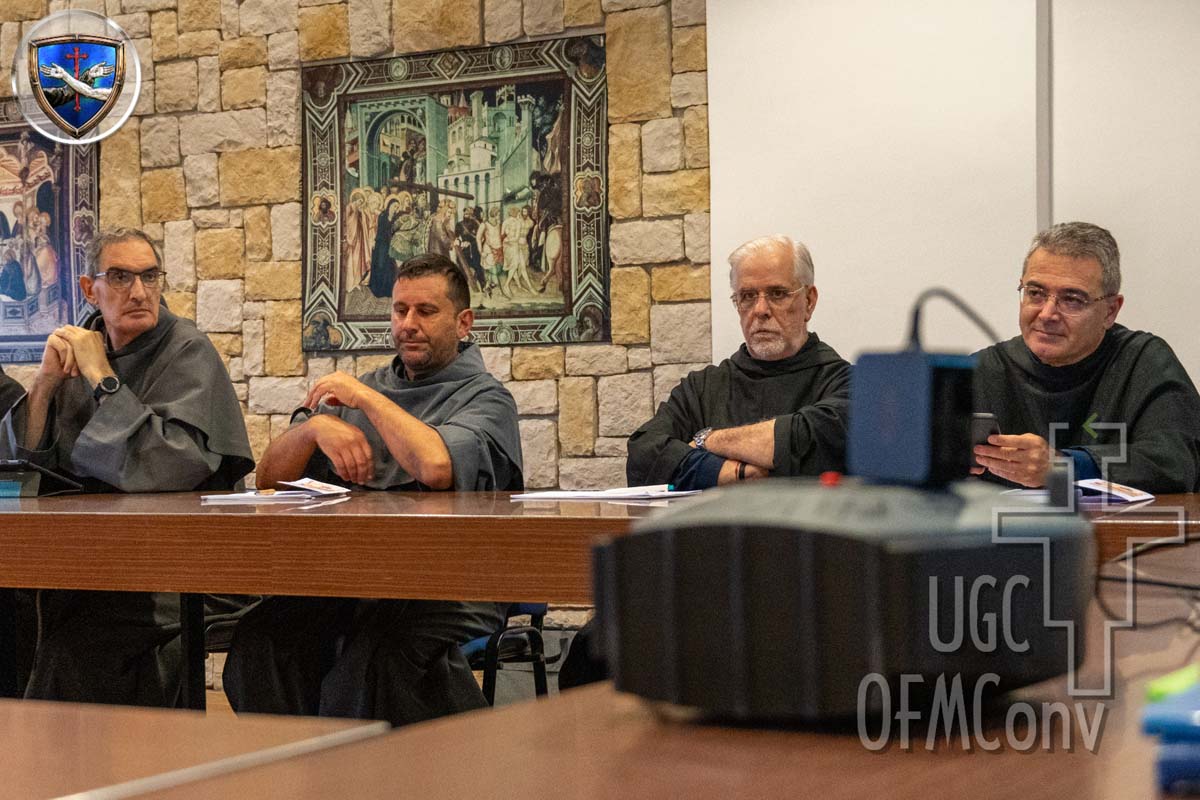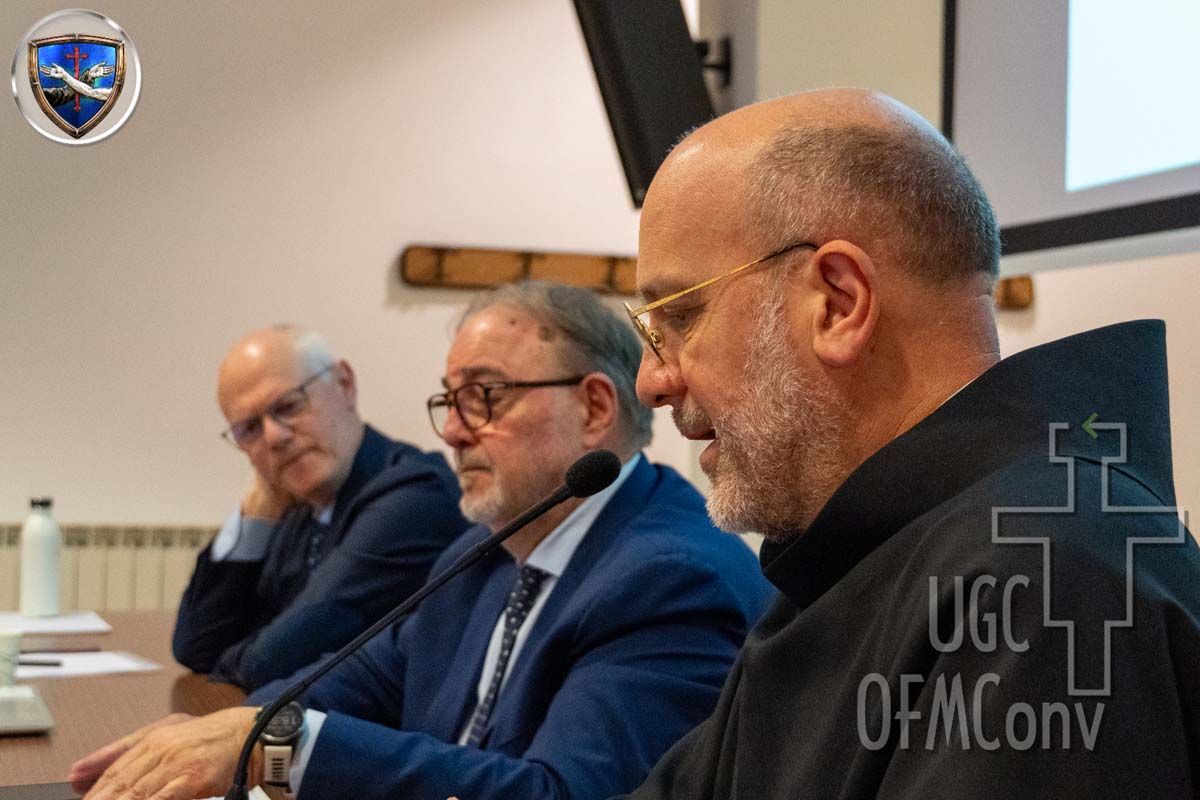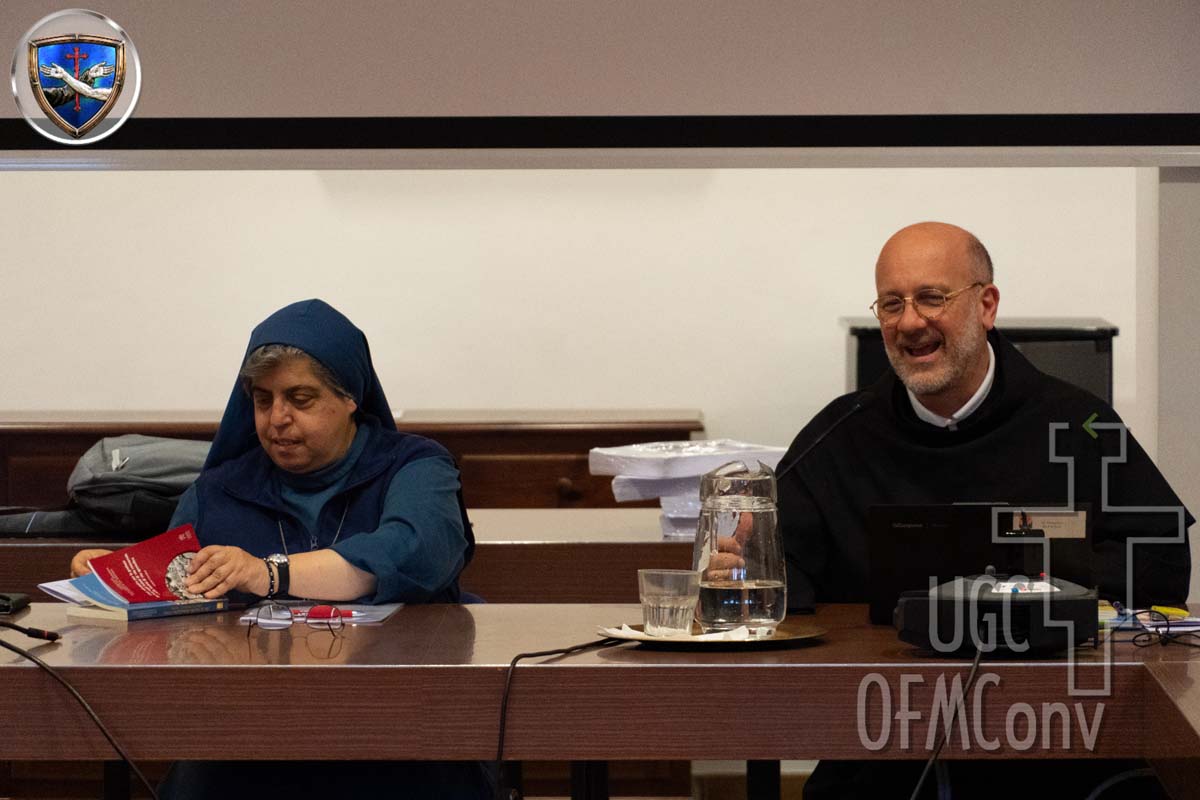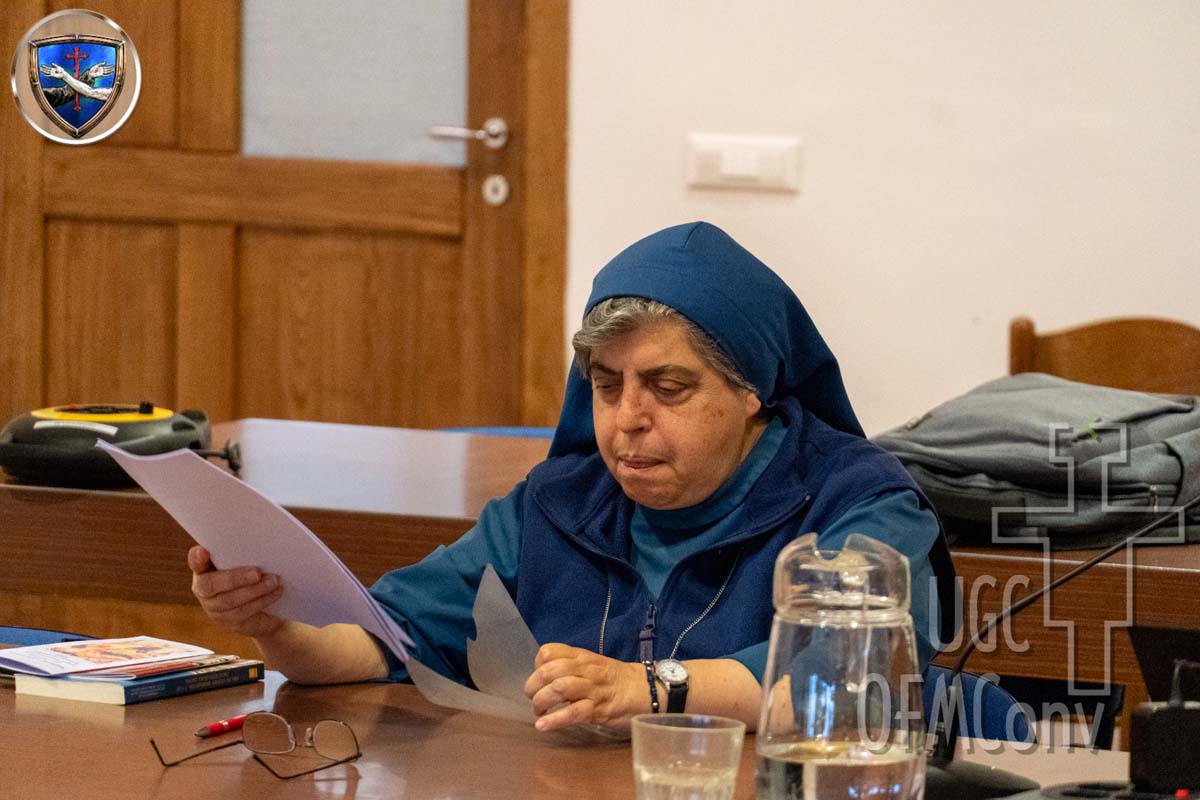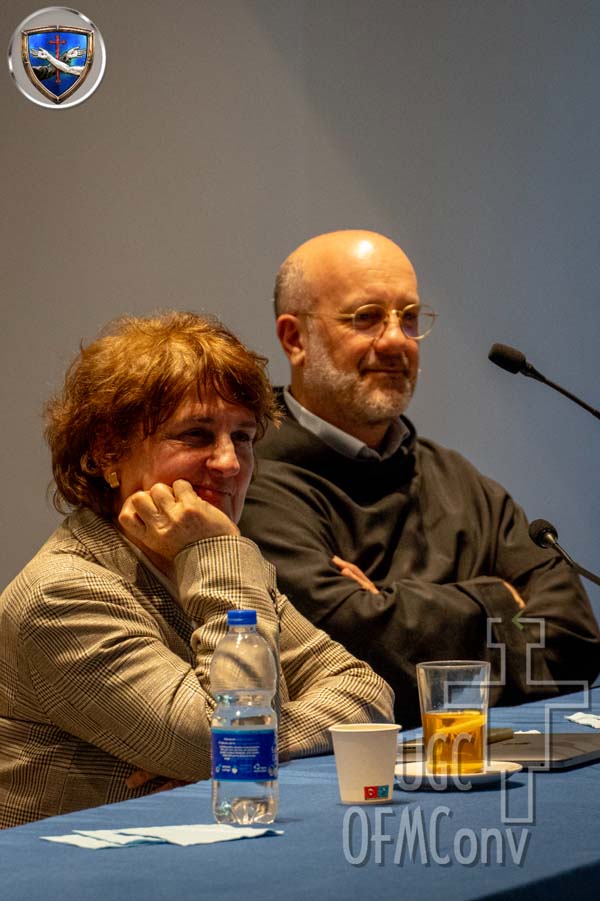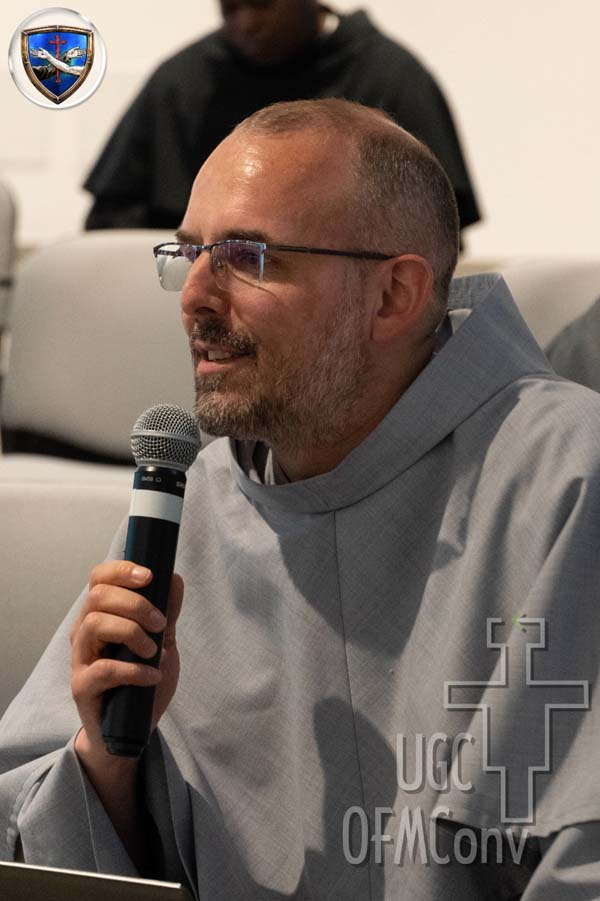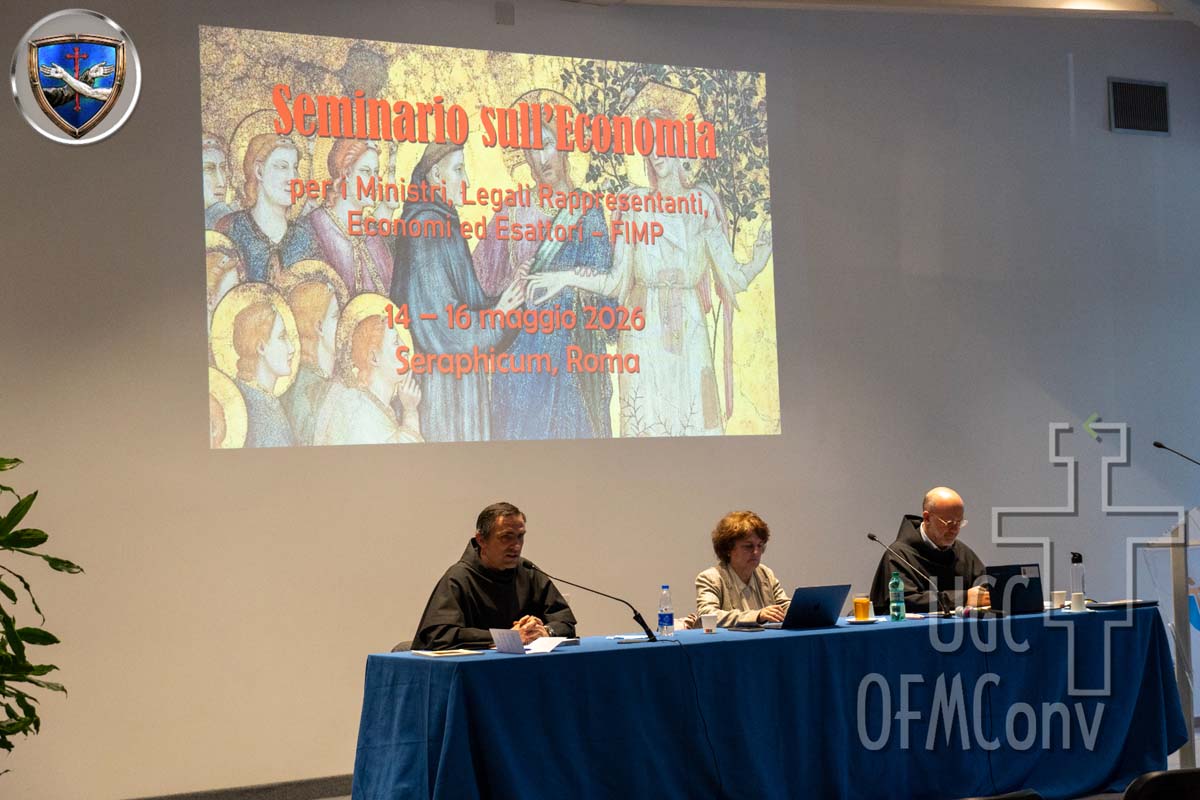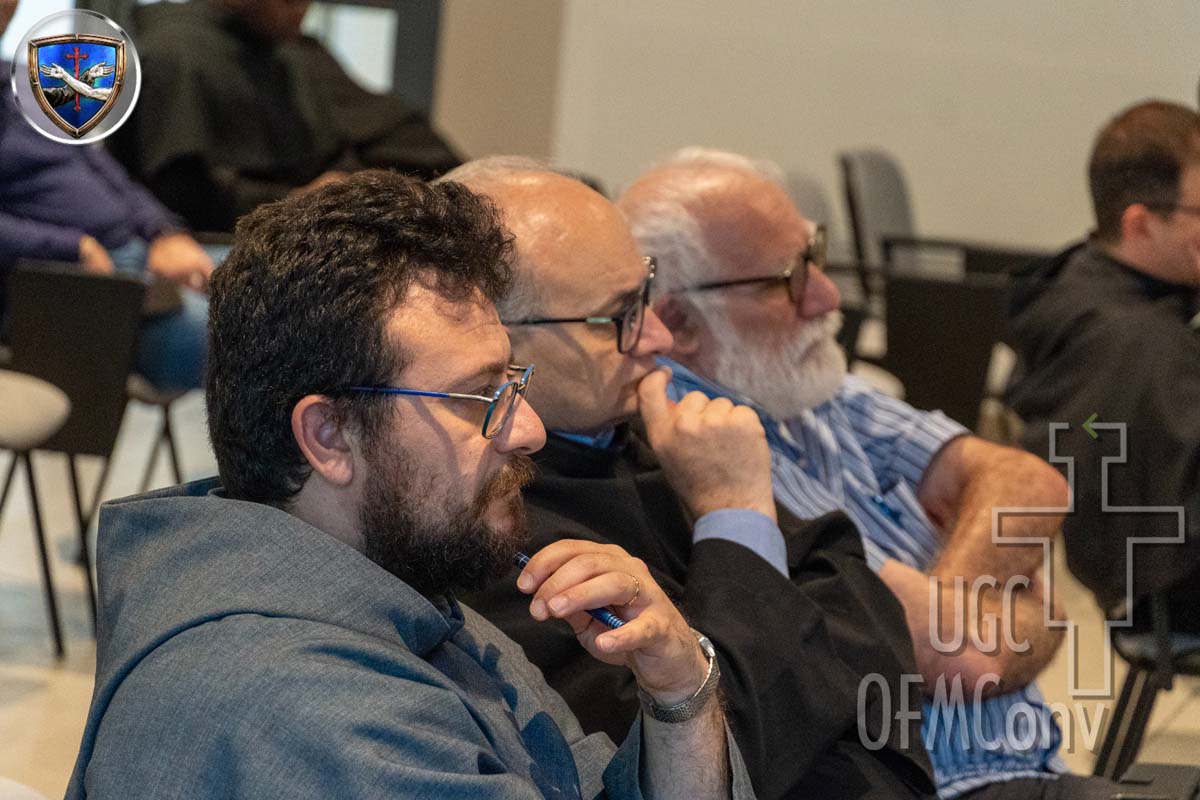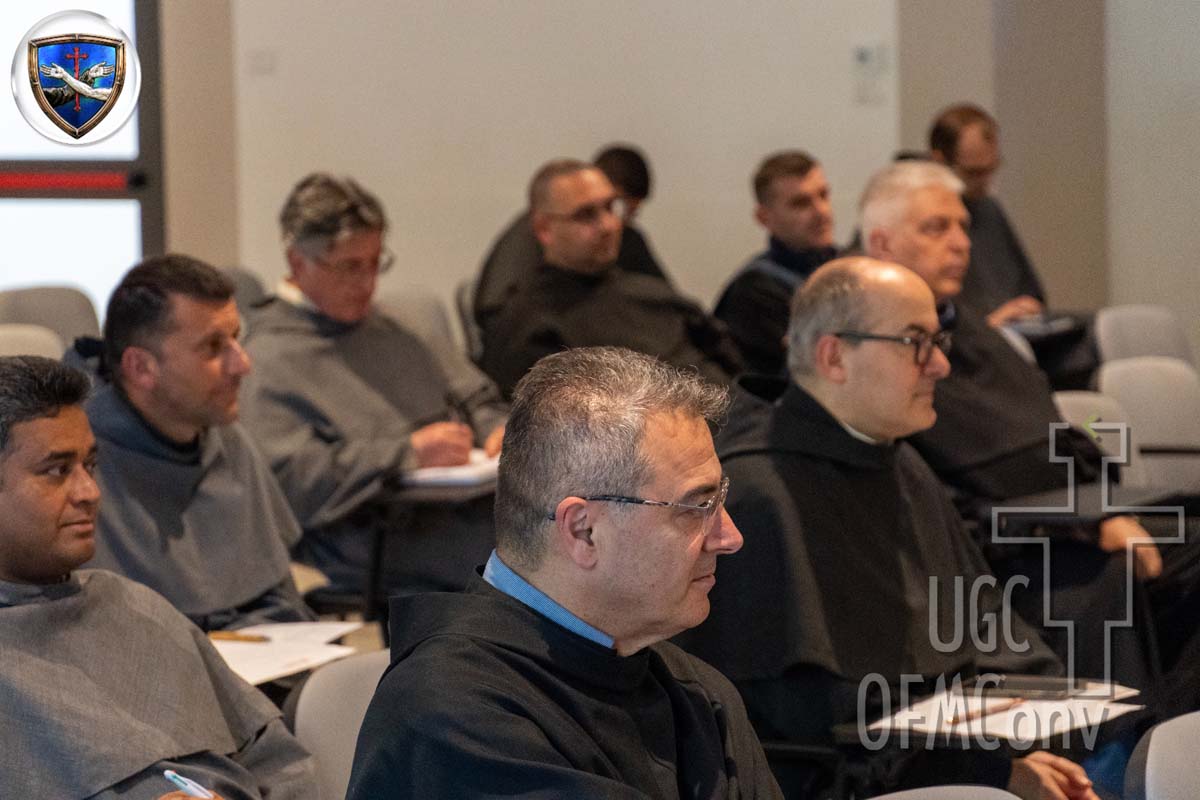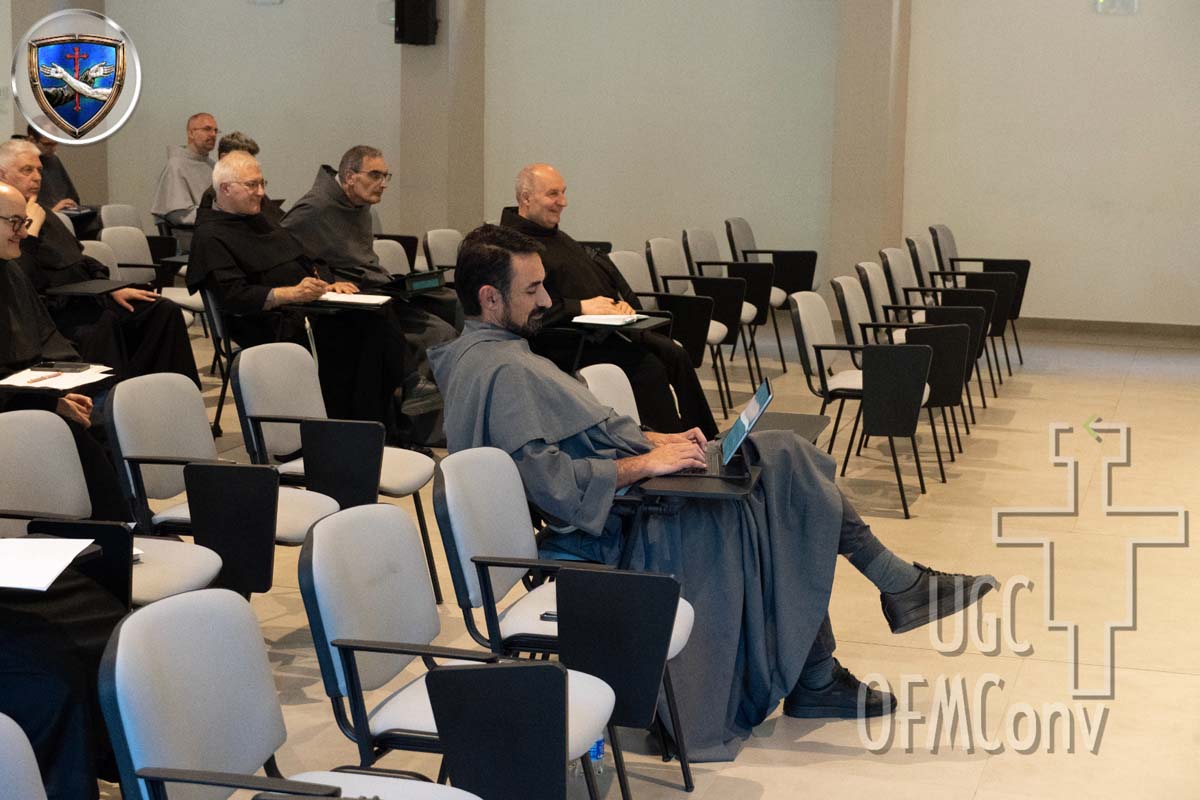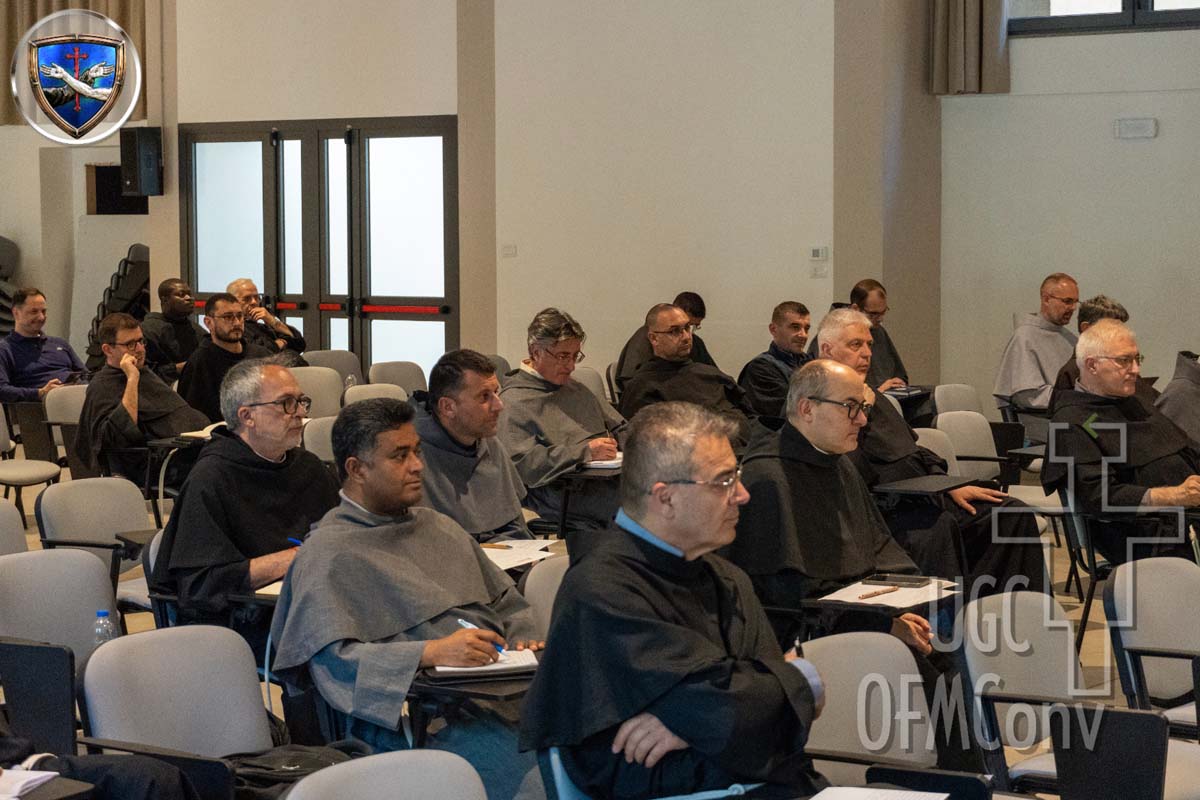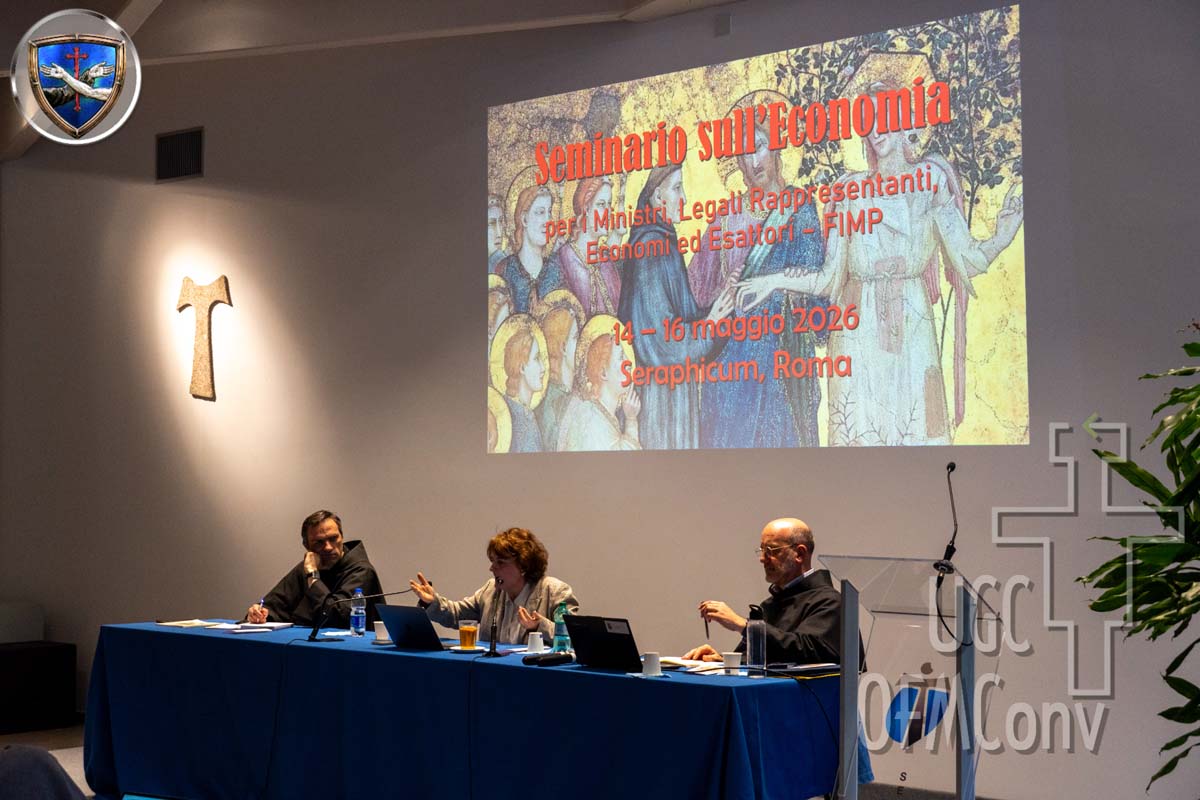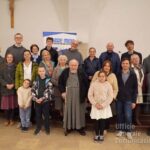




From Thursday, May 14 to Saturday, May 16, 2026, a refresher course for the Ministers Provincial, Legal Representatives, Economs, and Exactors of the Federazione Intermediterranea Ministri Provinciali (FIMP) took place at the Seraphicum College in Rome. The course focused on the sustainability of our friaries and structures. Decisions about the future use of our spaces were guided by a renewed commitment to our charism and mission.
What should we do with the structures we inherited from the past? How should we repurpose friaries that have unused spaces? The seminar focused on real estate, its management, and sustainability. The Assistant General for the FIMP Federation, Friar Colin SAMMUT, and the Procurator General, Friar Maurizio DI PAOLO, organized the event.
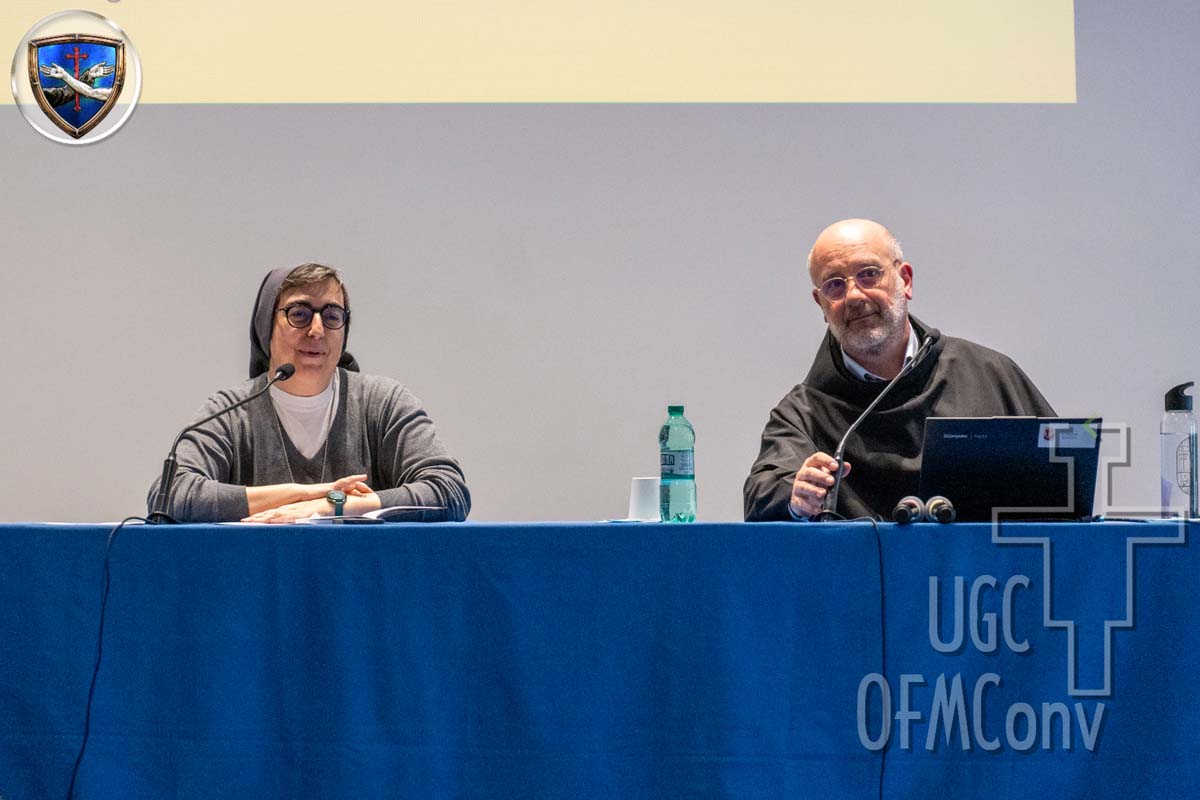
The three-day course opened with lectures by various speakers. Sister Alessandra SMERILLI F.M.A., Secretary of the Dicastery for Promoting Integral Human Development, gave a broad overview of the topic. She stressed the need to return to the questions that inspired the founders of the religious orders and highlighted that sustainability is not only financial but also environmental, relational, and spiritual.
Professor Rosanna VIRGILI showed how, in the Book of Proverbs, the ideal woman (Proverbs 31) appears as a capable manager who cares for the good of the whole community and the well-being of all. Her biblical reflection also showed how the word “patrimony” (from pater, father) reflects an ancient, male-centered view of economy focused on family and preservation. She noted that Jesus challenges this system, and that the value of poverty reminds us that everything—land and people—belongs to God.
On the second day, the focus turned more directly to real estate management. Friar Roberto BONGIANNI, OFM, an economist and lecturer, spoke about “Sustainability and Risk in Economic Administration.” He suggested that there is often an inverse relationship between financial growth and fidelity to a charism: in the history of consecrated life, greater wealth has often led to a weakening of the original charism. By learning to manage risk well, communities can return to discernment and recover shared criteria for making ethical decisions. These decisions should place fraternal life, minority, and poverty at the center.
Sister Annunziata REMOSSI of the Dicastery for Institutes of Consecrated Life and Societies of Apostolic Life reminded the participants that buildings are only tools for a mission. Properties can become either a burden or an opportunity depending on how clearly a project and its role in carrying out the mission have been defined.
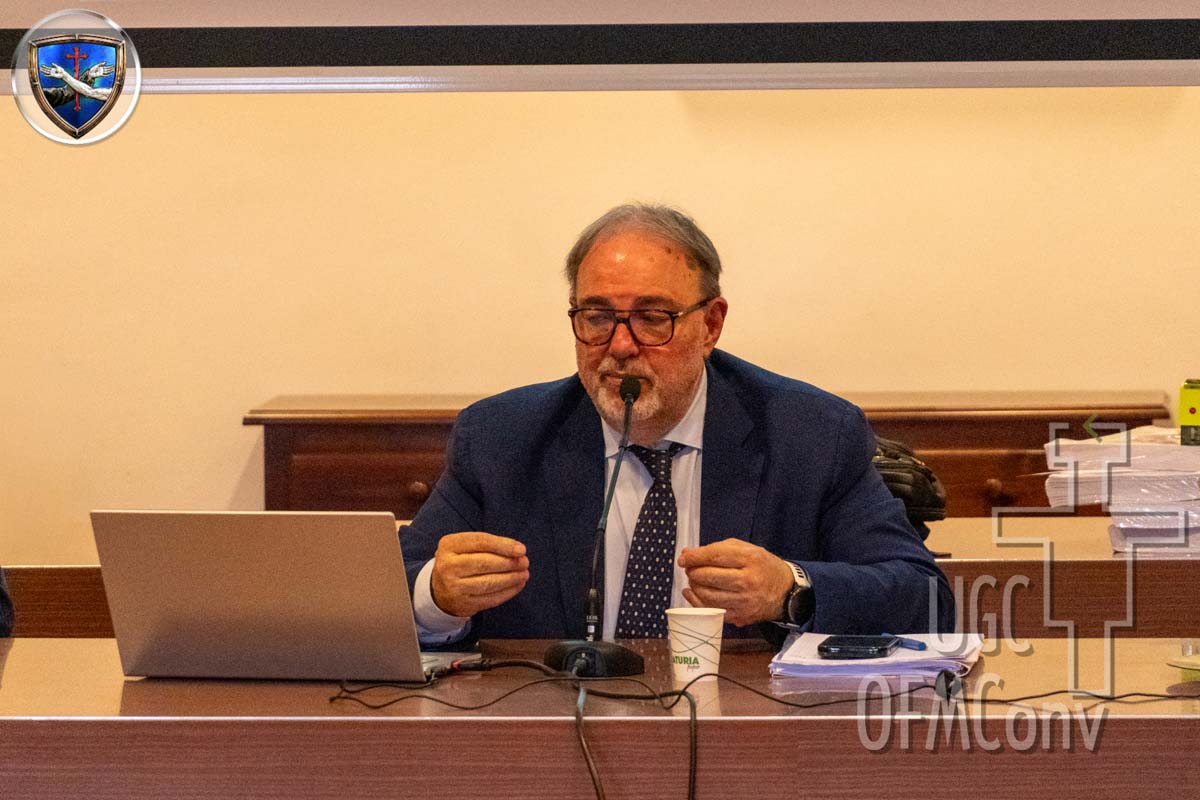
Giorgio FRANCESCHI, from the Atesino Development Institute is a consultant for the Italian Bishops’ Conference (CEI) and the Administration of the Patrimony of the Apostolic See (APSA). He offered an overview of the real estate sector at both national and international levels. He warned that in real estate, delays in decision making often have a high cost. He encouraged communities not to postpone decisions in order to avoid losing value on their properties, and to invest in updating buildings—for example, improving energy efficiency.
The final day focused on our own experience with the Seraphicum. Friar Enzo GALLI, the Econom of the Seraphicum, illustrated how several areas of the College have been developed over the last twenty years. These include the creation of the guest house and the upcoming launch of a student residence with housing for university students. He described this as a long-term investment that fits the academic and cultural mission of the Seraphicum complex.
Finally, the General Econom, Friar Leszek ŁUCZKANIN, and the General Exactor, Friar Cătălin FABIAN, encouraged all Economs to keep accurate and transparent financial records. They reminded them of their responsibility to report clearly, work in cooperation with their Superiors, and help prevent waste in the service of the fraternity.
Friar Riccardo GIACON