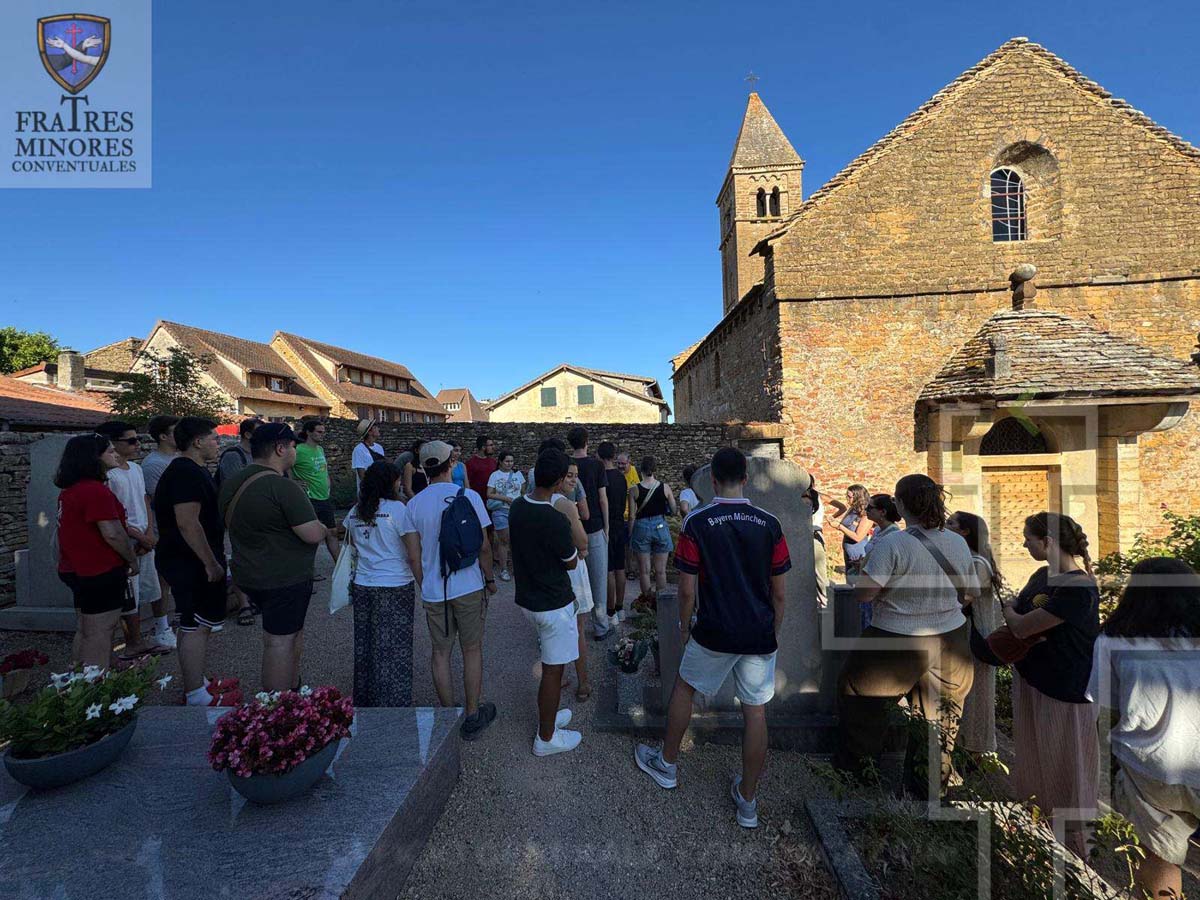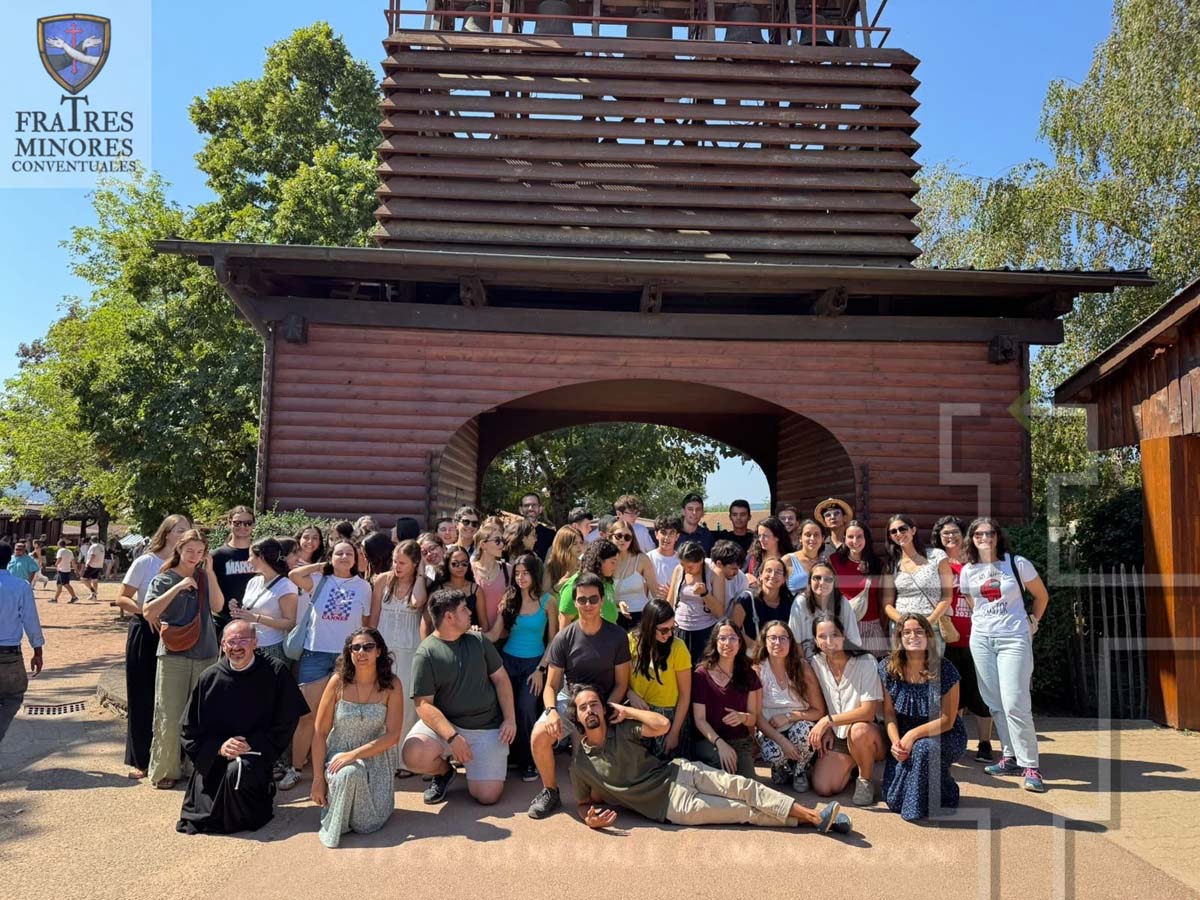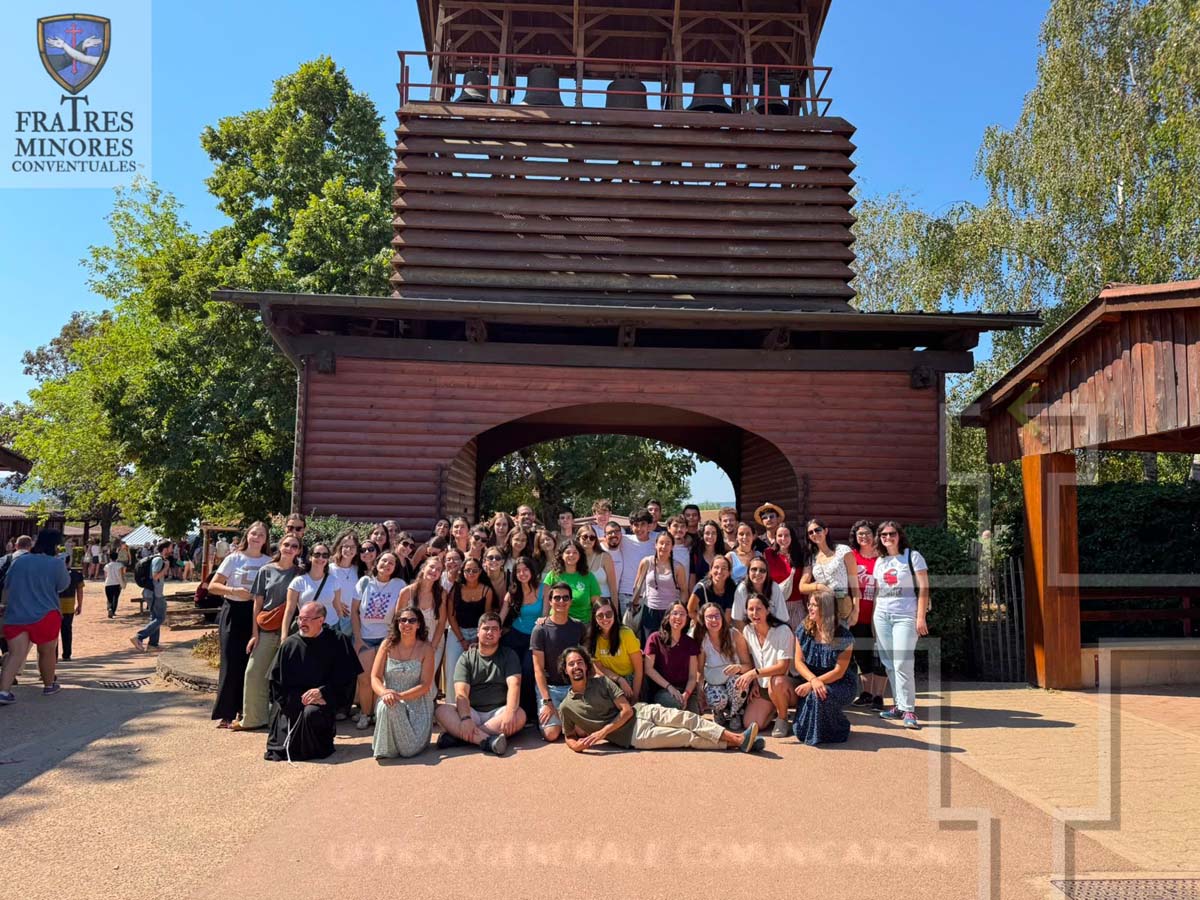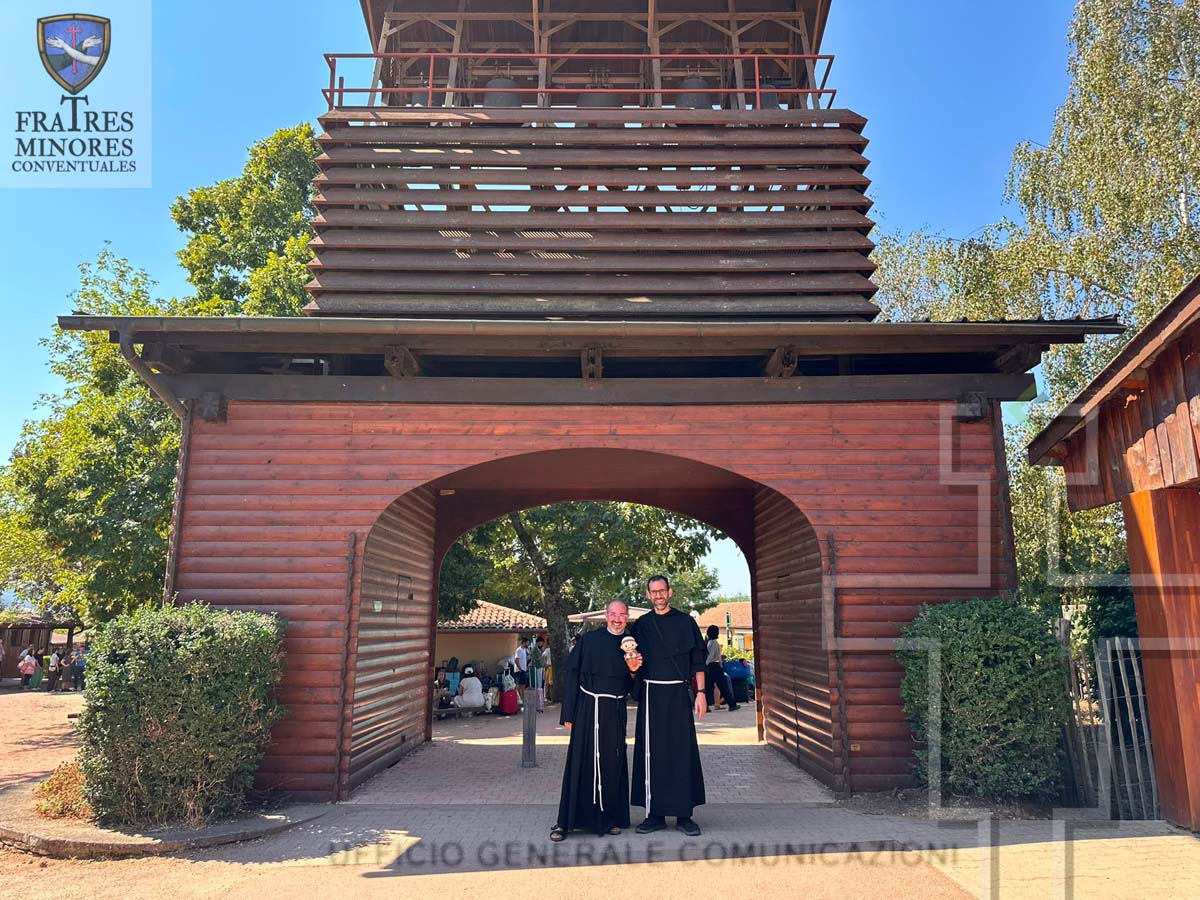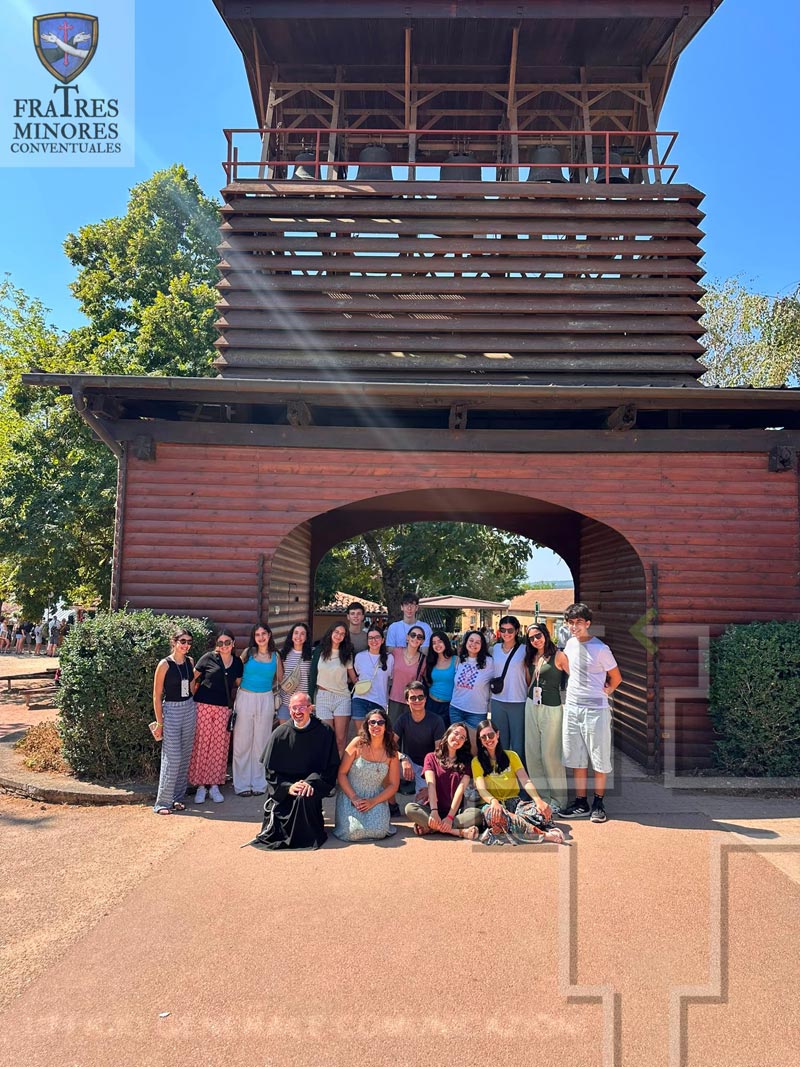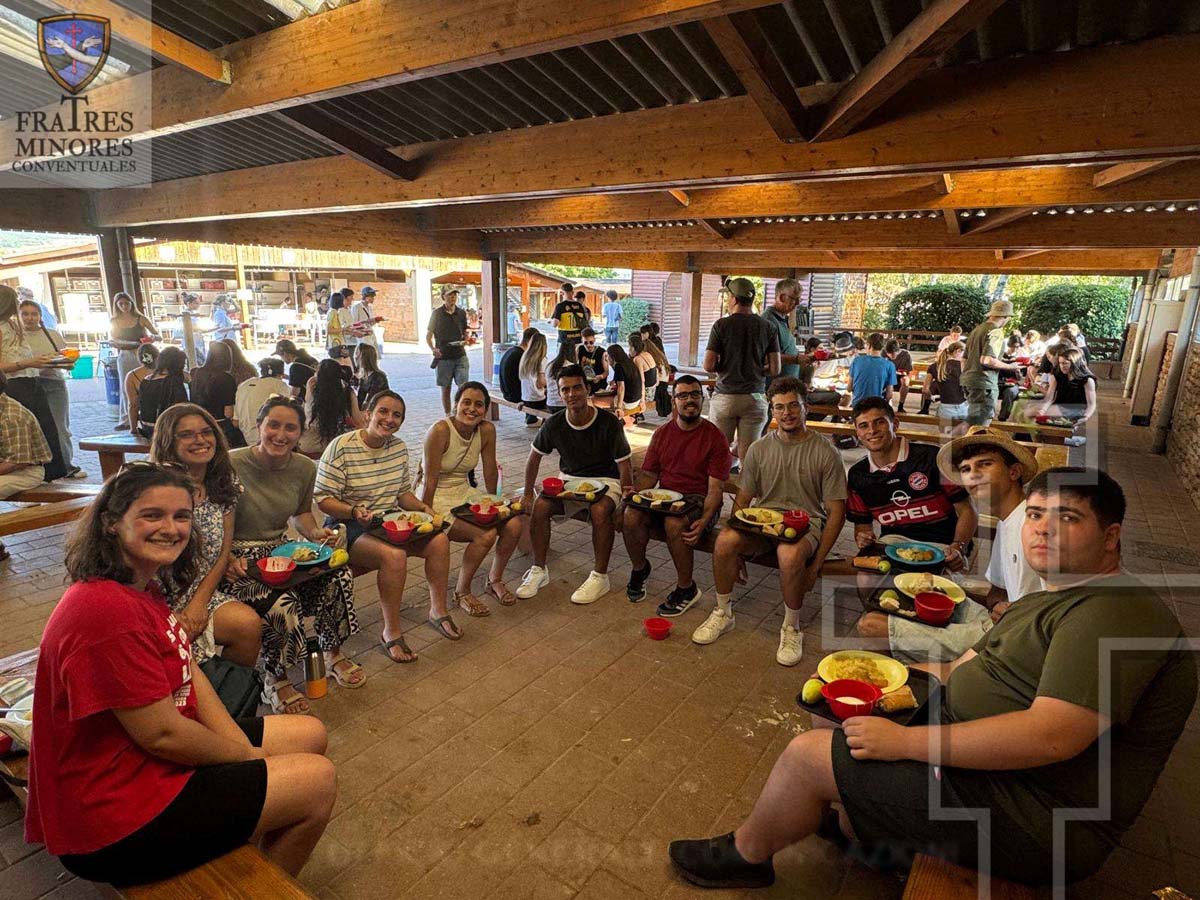



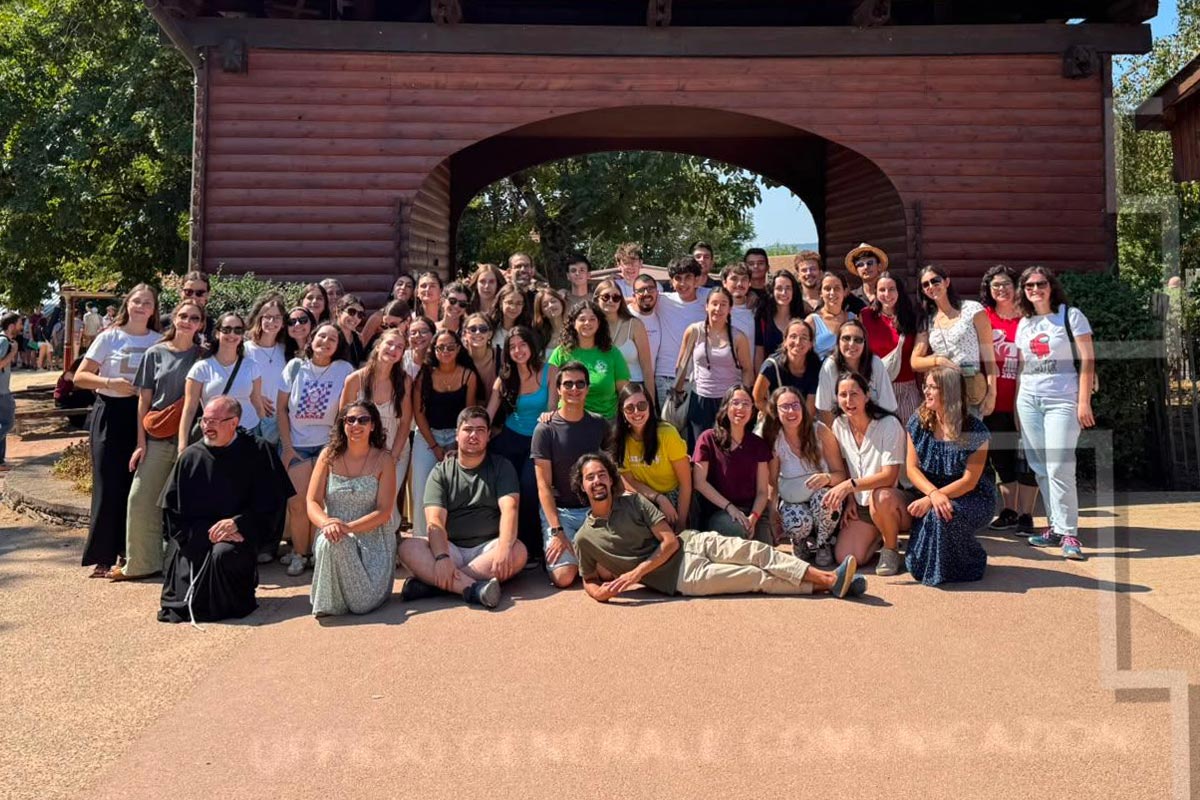
From July 25 to August 2, 2026, fifty-six pilgrims took part in a week-long pilgrimage to Taizé, France. The group was composed of young people, youth ministers, and two friars from the Conventual Franciscan Provincial Delegation in Portugal: Friar José Carlos CERDEIRA MATIAS and Friar Tiago FIGO FREITAS.
Most of the participants came from pastoral communities entrusted to the Friars Minor Conventual in Portugal, including the Santo António dos Olivais Parish in Coimbra and the São Maximiliano Kolbe and Santa Beatriz Parishes in Lisbon. Several young people from Viseu, Portugal, also joined the pilgrimage.
This event was an important time of youth ministry and fraternity for our Conventual Franciscan community in Portugal. One member of the community, Friar Tiago FIGO FREITAS, currently lives at the Sant’Antonio Dottore friary in Padua, Italy, where he completed his second year of theology studies. Together with Friar José Carlos CERDEIRA MATIAS, he guided the young people during the week.
The pilgrims prepared for the pilgrimage by first holding three meetings during the summer that gave them an opportunity to get to know one another, prepare for the journey, and reflect on its meaning. The group set out after attending a Mass of Sending Forth. The long bus ride from Coimbra to Taizé became part of the experience: many hours were spent together, filled with conversation, music, laughter, discussion, and moments of silence.
Taizé is a small village in the Burgundy region of eastern France. Over the years, it has become a gathering place for thousands of young people from around the world. The Taizé Community, founded by Brother Roger SCHUTZ, welcomes young people from different cultures, languages, and Christian denominations. The Community offers a simple experience of prayer, listening, discussion, service, and fraternity.
For many of our young people, this was their first visit to Taizé. Encountering such a large international community allowed them to discover a Church lived out in diversity and communion.
One significant aspect of the week was its three daily prayer sessions. A church filled with young people seated on the floor, united in song and prayer and, at the same time, immersed in long moments of silence, was one of the most powerful images of the experience.
In a world marked by noise, haste, and constantly being online, the silence of Taizé created a place to pause, listen to the Word of God, and understand what each person carries within themselves.
“Manuel,” one of the young participants, wrote: “At Taizé, silence stopped being simply the absence of sound. It became a place where I could hear my thoughts and feelings.”
The week was not just about prayer. Participating in catechesis and biblical reflections, doing small-group work, performing services, and meeting young people from around the world made it possible to experience fraternity in a practical way.
There were also times of celebration, music, fellowship, and joy. The simplicity of daily life and participation in small community activities helped the participants understand that a community is built through everyone’s willingness to contribute and play a part.
The opportunity to meet young people from different cultures and Christian denominations was particularly meaningful. The participants did not experience diversity as a barrier but as a source of richness.
“Camila,” another young participant, wrote: “Everyone lives their faith in their own way, and the true beauty of our religion is being able to share that faith with one another.”
Taizé is not necessarily a place for immediate answers. Rather, it can be a place where one learns to stop, listen, and ask questions.
Camila came to Taizé seeking “peace and answers,” but she also experienced the reemergence of an “inner chaos,” returning home with new questions. Her testimony shows how the same experience can affect each person in very different ways.
Manuel expressed this with a particularly meaningful phrase: “Taizé did not necessarily give me answers to everything, but it gave me the opportunity to ask questions.”
On August 2, the participants began the journey back to Portugal. They left Taizé, but they returned with memories of friendship, encounter, prayer, silence, questions, and many shared experiences.
Now begins the real challenge: to incorporate the Taizé experience into one’s daily life; to continue to seek; to learn to listen; to preserve moments of silence; to live in fraternity; and to nurture our faith within our communities.
The Taizé experience has ended, but the journey continues.
The Provincial Delegation in Portugal