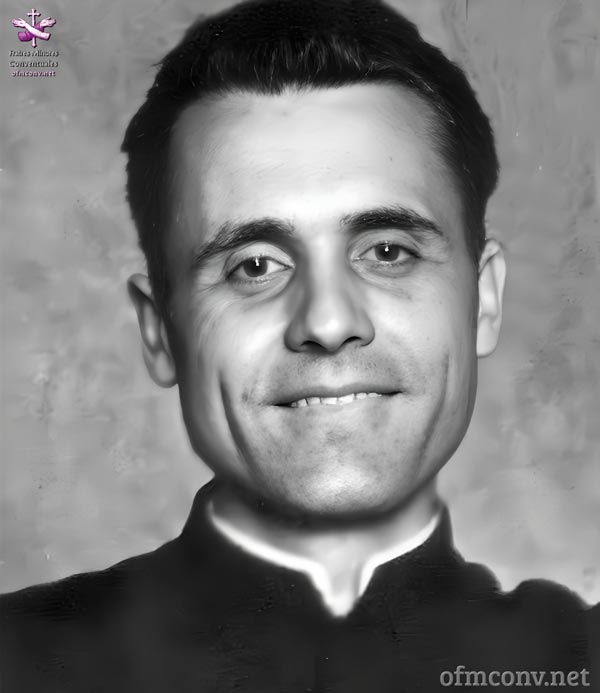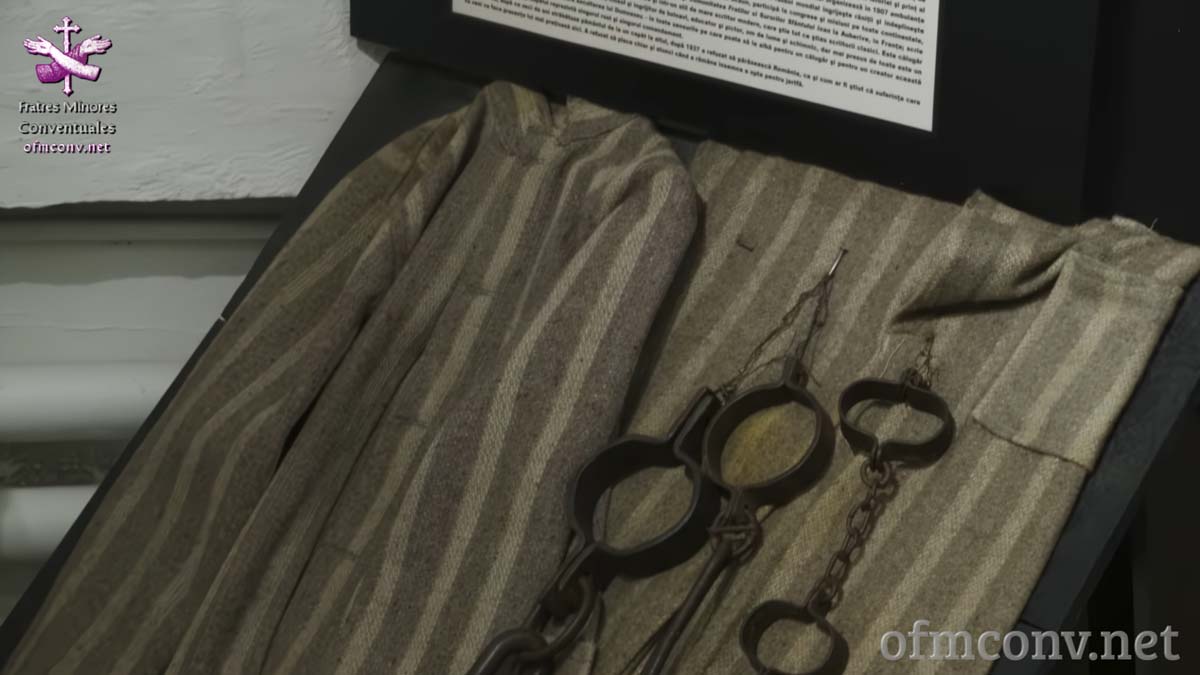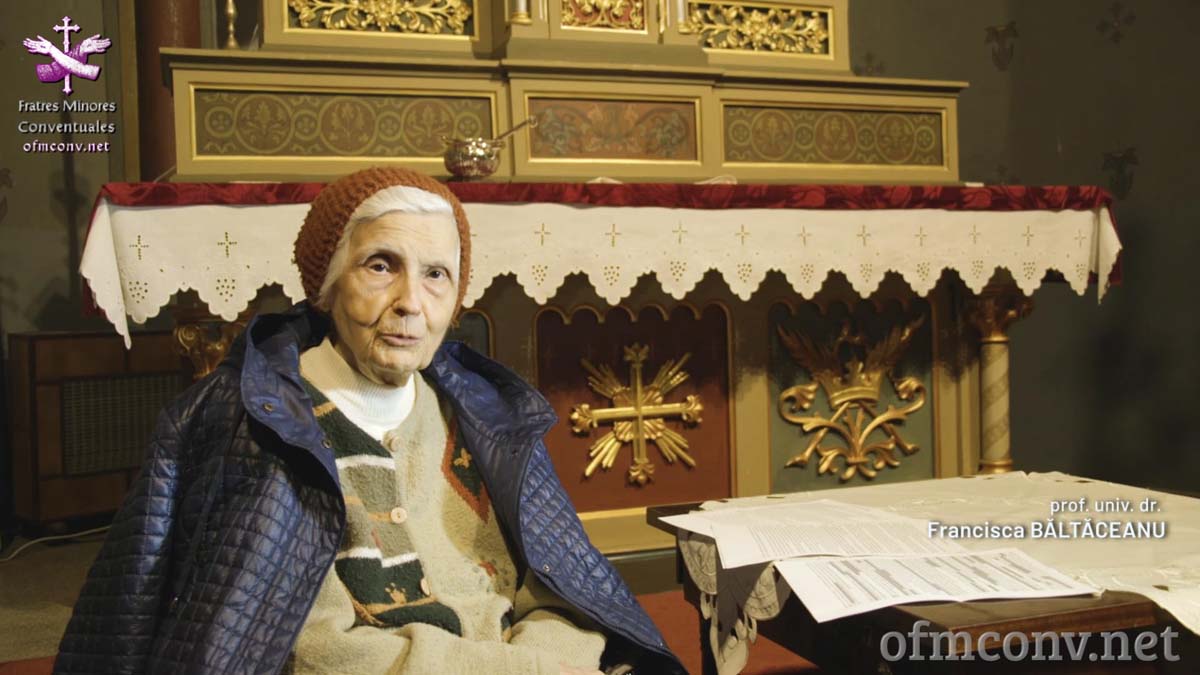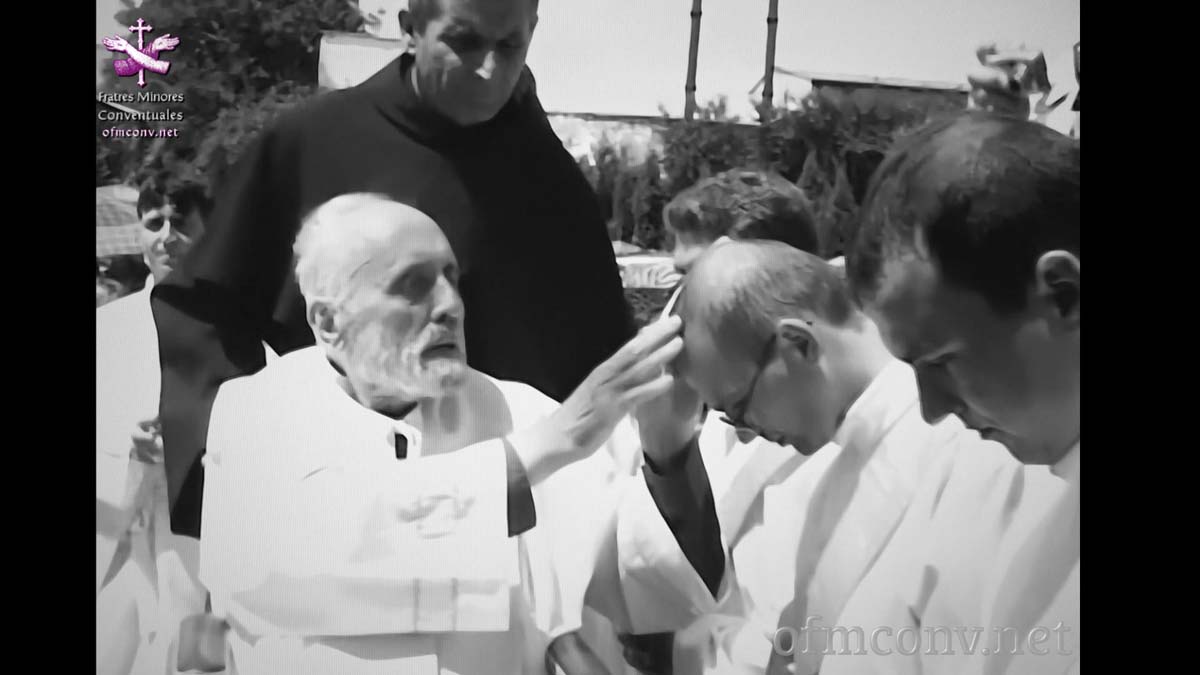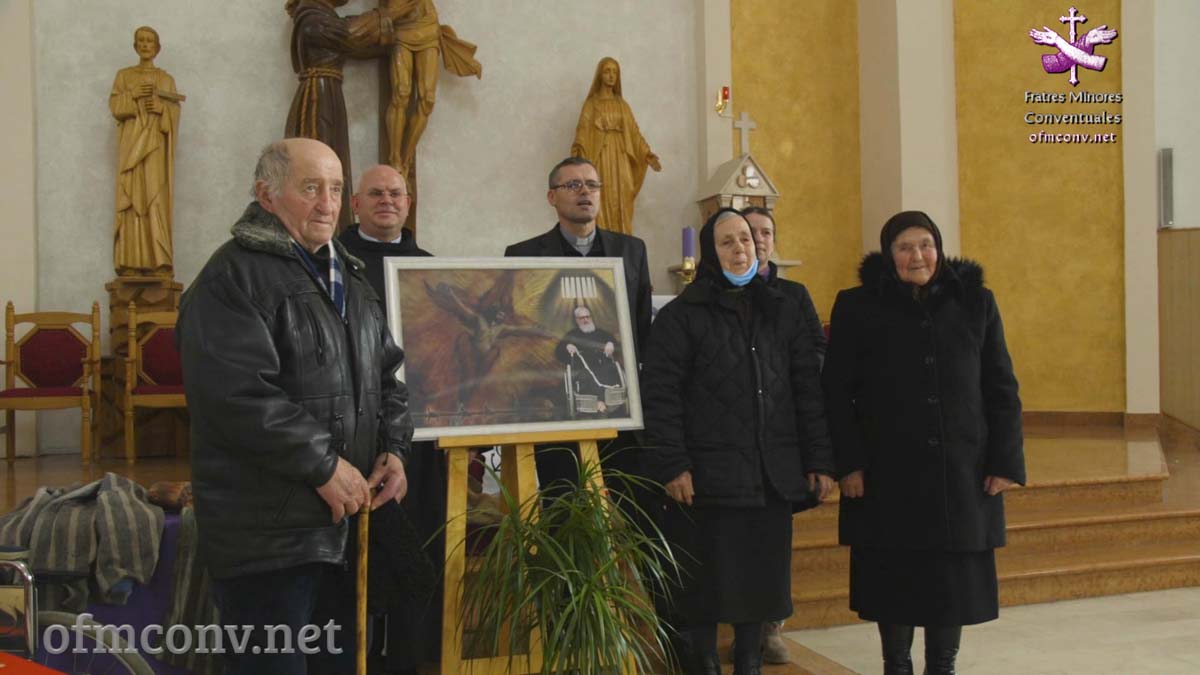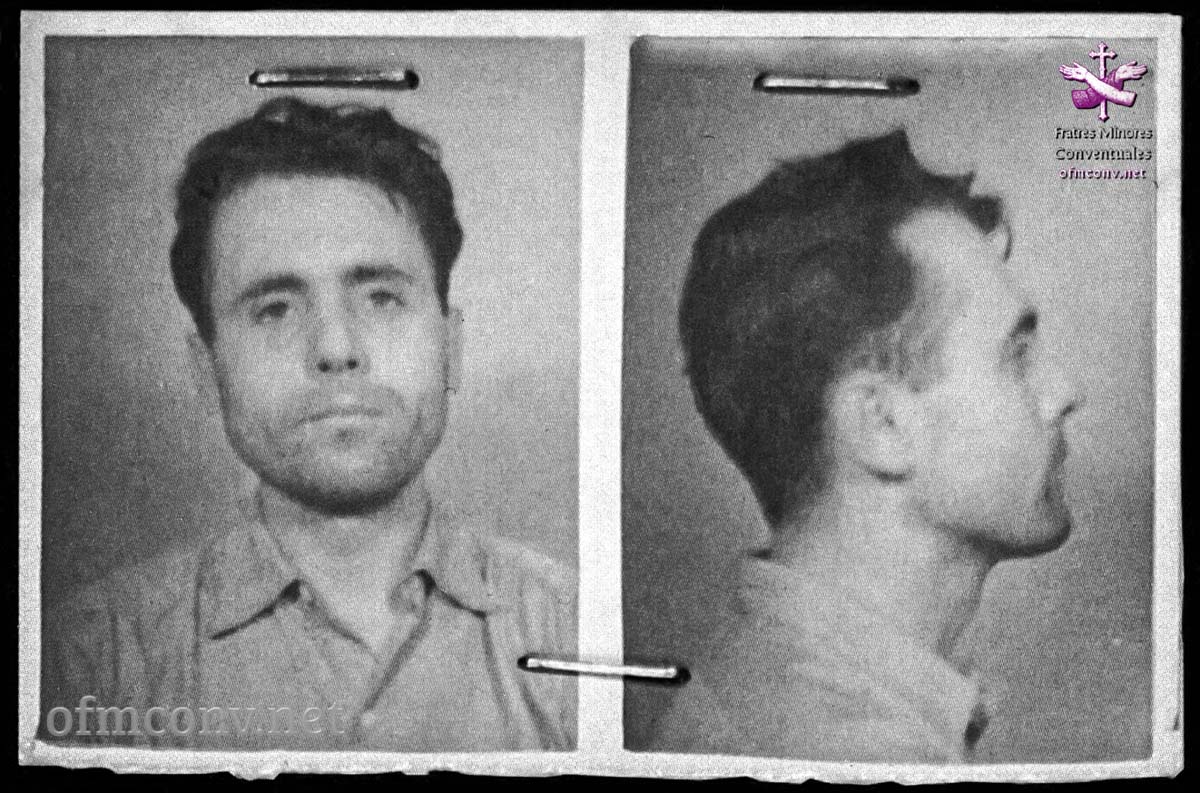




On June 7, 2025, a documentary film entitled A Franciscan in Chains: Anton Demeter, the Priest Without Legs, premiered at the Ateneu Cinema in Iași, Romania. The film was directed by Romanian filmmaker Dragoș ZĂMOȘTEANU and was part of the 2025 International Festival of Psychoanalysis and Cinema. After being screened at other film festivals, the movie can finally be viewed on YouTube, with Italian and English subtitles, at the following link: https://www.youtube.com/watch?v=Hi6tXCSYV0s.
The director, Dragoș ZĂMOȘTEANU, is passionate and tenacious when it comes to documenting the exceptional humanity and spirit of lesser-known or even forgotten people in Romania’s recent history. The director’s new film is about the Servant of God and Conventual Franciscan priest, Friar Anton DEMETER. The director invites us to listen attentively and observe carefully how the words spoken by Our Lord to his disciples were fulfilled in the life of the “priest without legs.” “No slave is greater than his master.’ If they persecuted me, they will also persecute you” (John 15:20).
The perennial truth contained in those divine words transforms the watching of Mr. ZĂMOȘTEANU’s film into a true event of faith. For the viewer, it is an event which lets them personally experience the actualization of the mystery of the Passion of Our Lord Jesus Christ.
Indeed, the documentary’s skill in combining Father DEMETER’s direct testimony with the statements of those who suffered the same torment with him or experienced his ordeal, together with the film’s audiovisual elements, amplifies the film’s emotional and spiritual impact. The viewer shares, on a visceral level, the main character’s experience.
Again, we agree with writer Simone WEIL who astutely observed that: “through joy, the beauty of the world enters our soul. Through suffering, it enters our flesh.” That is, of course, the beauty that “will save the world” (Dostoevsky), which Friar Anton DEMETER makes perceptible, as he states on the documentary’s soundtrack: “I did not feel anger or have thoughts of revenge toward the interrogators who insulted me, or the lieutenant who struck my back with a hammer. I prayed for them and said: ‘Lord, forgive them!’”
I believe that the supernatural grace of holiness and intercession, which many people recognize in Friar Anton DEMETER, supported and made this cinematic work possible.
Let us hope that for a long time to come, the film will achieve the purpose for which it was created: “To do justice to the people who gave meaning to our country and upon whom, in fact, our country rests, by ensuring they are never forgotten” (Dragoș ZĂMOȘTEANU).
Screening the film during catechetical programs or other Christian formation meetings, and spreading it to as many people as possible, can help achieve the purpose for which the film was made. Moreover, it will help spread the fame of holiness of the Servant of God and priest Friar Anton DEMETER, whom we hope will soon be raised to the honor of the altars.
Friar Virgil BLAJ