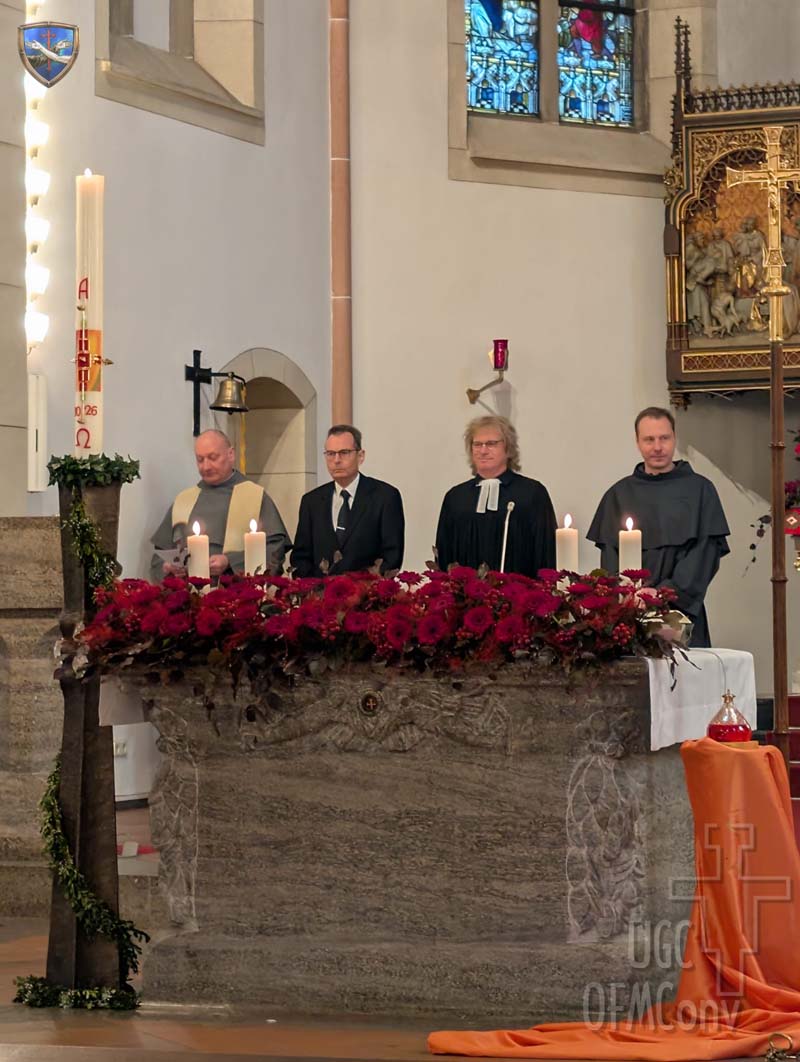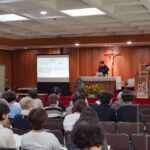




On May 25, 2026, a jubilee year celebration in the form of a prayer service marking ecumenical cooperation in the region was held in Werdohl, Germany (Diocese of Essen).
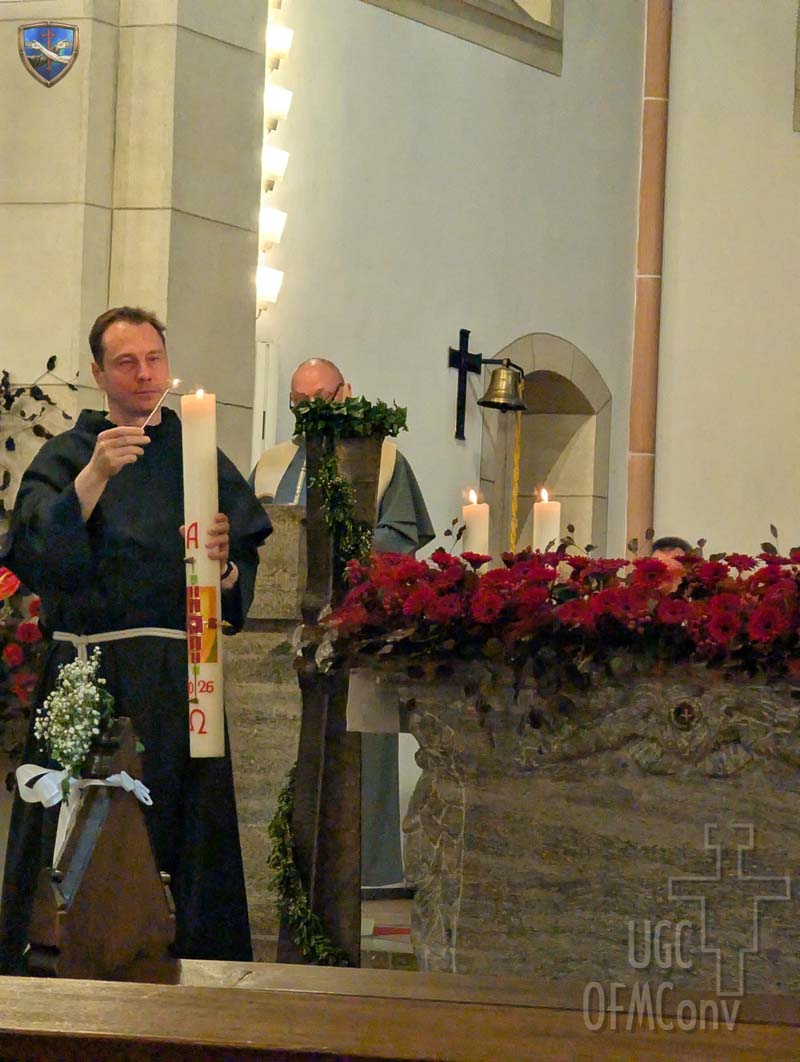
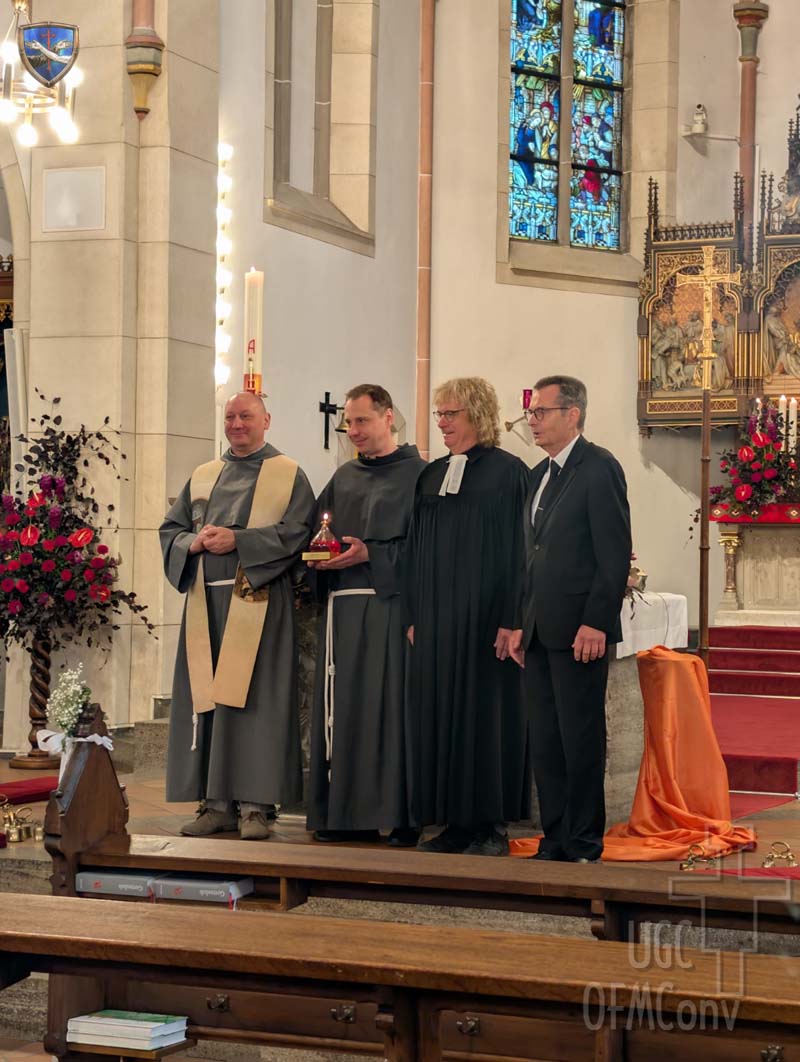
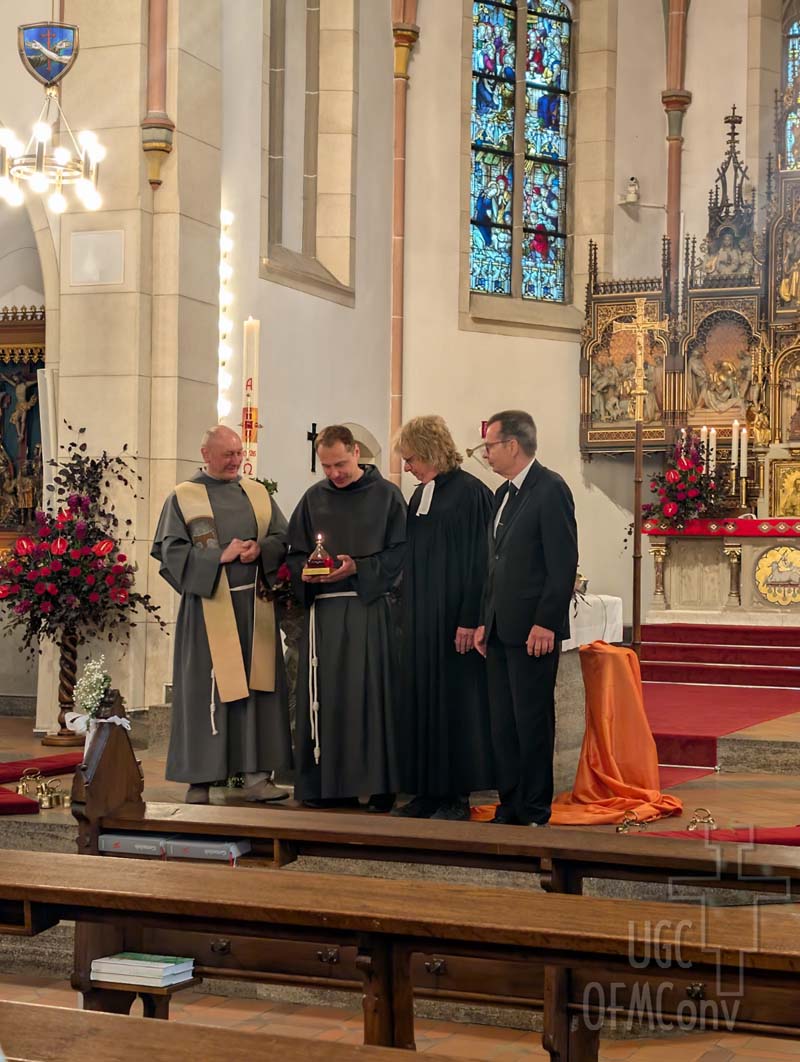
In 2001, two Pastors, Georg GÖRKE (Catholic) and Rüdiger SCHMALE (Lutheran), initiated ecumenical collaboration in the form of prayer services, thematic meetings, and social initiatives. When the Conventual Franciscans of the Province of St. Maximilian Kolbe in Poland (Gdańsk) arrived in Werdohl in 2003, they further strengthened this collaboration. A new structure was then created, the “Ecumenical Forum.” Friar Ireneusz WOJTKO, then Guardian and Pastor, was, on behalf of the Conventual Franciscans, strongly committed to this initiative. On May 25, 2026, a solemn ecumenical prayer service was celebrated in our local Church of St. Michael. During the service, I presented a Light of Assisi Lamp as part of the Spirit of Assisi initiative. I also had the great joy and privilege of giving the homily for the event.
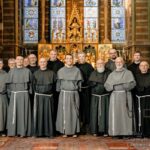
The ecumenical prayer service was hosted by the Conventual Franciscans and moderated by Friar Grzegorz CHMIELEWSKI, Guardian and Pastor. Representing the Protestant community, Pastor Dirk GRZEGOREK of the Evangelical Church and Siegfried HEINRICH of the New Apostolic Church took part in the service. The Mayor of Werdohl, Dirk MIDDENDORF (CDU), also attended.
Other friars from the local friary contributed both logistical and spiritual support, namely. Friars Andrzej LENGENFELD, Tadeusz PYTKA, and Ryszard ŚWIĄTKOWSKI.
The prayer service acquired a special character thanks to an ecumenical baptism: the child’s parents, in fact, come from the Catholic and Evangelical communities respectively. The sacrament was administered by an Evangelical pastor, but—as many of those present noted—in a Catholic church.
At this point, I would like to make a brief digression, which I ask you not to take too seriously. Ecumenical work has enormous global significance, yet small issues—though meaningful to many people—still persist. These issues highlight the autonomy and distinctive character of individual traditions.
My reflection arises from conversations with members of different Christian denominations who quietly remarked to one another: “The baptism was administered by an Evangelical pastor…but in a Catholic church…and the homily was given by a Catholic…and the music was led by an Evangelical woman…”
As I have already noted, we should not take these observations too literally. Nevertheless, they reveal a remarkable mechanism that brings all of us—Catholics, Evangelicals, and Christians of other denominations—closer together, often more effectively than official structures and organized ecumenical events. In each of us lies a profound desire for unity, equality, and mutual respect, even if achieving it can be a daily challenge.
Perhaps this is precisely what St. Francis meant when he started repairing the Church by beginning with himself, clearly pointing out the path: conversion! Finally, in the spirit of ecumenism, it is worth quoting Albert SCHWEITZER: “Prayers do not change the world, but prayers change people, and people change the world.”
Friar Sławomir KLEIN
General Delegate for Ecumenism and Interreligious Dialogue (EDI)
P.S. For those who understand German, a brief press release about the event is available at: https://www.evangelisch-im-sauerland.de/website/de/kirchenkreis/kirchenkreis-gemeinden/aktuelles/aktuelle-artikel?article_id=5746.